Hindus threatened with death for lighting Karthigai Deepam at Thiruparankundram by Muslim man
 Madurai, Tamil Nadu, India
 13 November, 2026
Case Summary
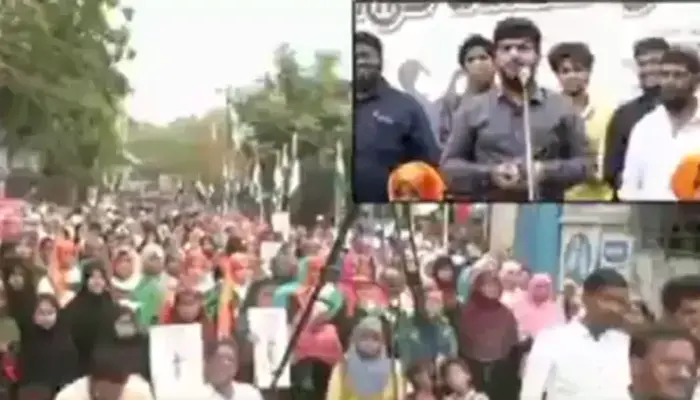
Amid the legal dispute over the lighting of the traditional Karthigai Deepam at Thiruparankundram, Madurai, a Muslim man named Bilaluddin, an Aikya Jamat functionary, publicly threatened Hindus and gave death threats if they visited the hill to light the lamp and warned judges of consequences if they ruled against Muslims. A video recorded at a public gathering in Palanganatham, Madurai, on 14 November 2026, showed Bilaluddin, the Madurai district president of Aikya Jamat (United Jamaat), issuing death threats against Hindus and threatening judges in connection with the ongoing Thiruparankundram Karthigai Deepam controversy. During his address, Bilaluddin openly warned judges that they would meet the same fate as a Bihar judge who was killed while out on his morning walk if they delivered a verdict against Muslims. He also issued a direct threat to Hindus who wished to light the traditional Karthigai Deepam at Thiruparankundram, warning that although they might go there to light the lamp, they would not return alive. The threats came amid the ongoing legal dispute over the lighting of the traditional Karthigai Deepam at the Deepathoon (lamp pillar) on Thiruparankundram hill, regarded as the sacred abode of Bhagwan Murugan. The video subsequently circulated widely on social media, triggering outrage and demands for police intervention. Solaikannan, the Madurai district president of Indu Makkal Katchi, condemned Bilaluddin for openly threatening judges and Hindus in a public gathering. He demanded that the police arrest the Aikya Jamat functionary for issuing death threats publicly. The incident brought attention to the intimidation directed at Hindus seeking to exercise their religious rights at Thiruparankundram, as well as the threats against members of the judiciary over the outcome of a legal proceeding.
Why it is Hate Crime ?
This case has been added to the tracker under the primary category of - Hate speech against Hindus. Within it, the sub-category selected here is - Violent threats. Violent threats, explicit, implicit or implied, is the most dangerous form of hate speech since it goes beyond discriminatory and prejudicial language to express the intent of causing harm to an individual or a group of people based on their religious identity and faith. There could be several different kinds of threats that are issued to Hindus based on religious animosity. An explicit threat would mean the direct threat of violence towards an individual Hindu, a group of Hindus or Hindus at large. Physical violence, death threats, threats of destruction of property belonging to Hindus and threats of genocide would mean explicit threats against Hindus for their religious identity. Implicit threats may not be a direct threat but implied through the use of symbols of actions – for example – in the Nupur Sharma case, other than explicit threats, there were also implicit threats when Islamists took to the streets to burn and beat her effigies. It implies that they want to do the same to Nupur Sharma – thereby is considered an implicit threat. Violent threats can be delivered in person, through letters, phone calls, graffiti, or increasingly through social media and other online platforms. It would be important to understand that a threat – explicit or implicit, online or offline – to an individual who happens to be a Hindu does not qualify as a religiously motivated threat. Such a threat, while vile and dangerous, could be owing to non-religious reasons and/or personal animosity. To qualify as a religiously motivated threat, it would need to exhibit an indication that the individual is being targeted for religious reasons and/or owing to his/her religious identity as a Hindu. The incident constituted a hate crime because the threats were directed at Hindus specifically on account of their religious identity and their intention to practise and uphold a Hindu religious tradition. The threat involved the use of explicit threats of lethal violence to intimidate members of the Hindu religious community and deter them from exercising their religious rights. By warning Hindus that they would not return alive if they went to Thiruparankundram to light the Karthigai Deepam, Bilaluddin sought to create an atmosphere of fear around the observance of a Hindu religious ritual. Such intimidation directly targeted the community's freedom to worship and participate in its religious traditions, making their religious identity and practice the basis for the threatened violence. Karthigai Deepam occupies a special place in Hindu religious tradition and is observed by millions of devotees as a celebration of the divine manifestation of Lord Shiva in the form of sacred fire. The festival is marked by the lighting of oil lamps, symbolising the triumph of divine light over darkness and the removal of ignorance. At Thiruparankundram, one of the six sacred abodes of Bhagwan Murugan (Arupadai Veedu), the lighting of the traditional lamp at the Deepathoon holds particular religious significance for devotees. The observance is not merely a ceremonial activity but an expression of their faith, devotion and connection to a sacred Hindu tradition passed down through generations. Preventing Hindus from performing this ritual through threats and intimidation therefore amounted to an attack on their religious freedom and their ability to practise an important aspect of their faith. The religious motive behind the threat was evident from its explicit targeting of Hindus seeking to light the traditional lamp. Hindus were threatened while exercising their religious freedom by participating in an important Hindu observance associated with Bhagwan Murugan. Threatening to kill them for performing this ritual was a direct attempt to intimidate Hindus and prevent them from practising their faith. The ongoing legal dispute over the site did not give anyone the right to threaten Hindu devotees with death or obstruct their religious observance through violence. Any disagreement over the site or the judicial proceedings had to be resolved through lawful means, not by using threats of lethal violence to deny Hindus their religious rights. The threat against judges also carried a significant communal dimension. By warning members of the judiciary of the fate of a murdered judge if they delivered a verdict against Muslims, Bilaluddin sought to intimidate judicial authorities through the spectre of religiously motivated violence. This was particularly serious because it sought to portray an adverse judicial decision as grounds for violence against the judge concerned. Such threats undermine the principle that courts must be able to adjudicate disputes independently, without intimidation from religious groups or other external pressure. In the context of the Deepam controversy, the warning also reinforced the intimidation directed at Hindus by suggesting that even the legal process through which they sought to secure their religious rights could be met with threats of lethal violence. Bilaluddin's threats constituted an attempt to use communal intimidation to restrict Hindu religious practice and influence the outcome of a dispute concerning Hindu religious rights. The explicit targeting of Hindus, the threat of death for undertaking a religious observance, and the warning to judges against delivering a verdict that favoured Hindus established the clear religious dimension of the intimidation. This was not merely a disagreement over a place of worship or a judicial ruling. It involved the use of threats of lethal violence against individuals because of their Hindu religious identity and their exercise of that identity, making the incident a case of targeted anti-Hindu intimidation and a hate crime. This incident was not an isolated development but formed part of a series of documented instances involving restrictions on Hindu religious practices, disputes over Hindu sacred spaces and attempts to undermine the religious significance of Thiruparankundram Hill. The Hinduphobia Tracker has documented several related incidents at the same site, including the Tamil Nadu government's obstruction of the Karthigai Deepam ritual despite High Court orders, the hoisting of an Islamic flag on the temple's sacred Kallathi tree, the VCK's use of the sacred Vel to target Hindus through inflammatory rhetoric, and the Waqf Board's assertion of ownership over the Deepathoon. These successive incidents demonstrated that the dispute extended beyond a single administrative decision or isolated act of trespass. They reflected a pattern of actions rooted in religious animosity towards Hindus, targeting their worship, sacred symbols and religious rights at Thiruparankundram Hill.


Case Status
Unknown


Perpetrators Details
Perpetrators
Muslim Extremists
Perpetrators Range
One Person
Perpetrators Gender
male
 Sources



