Hindus face fresh restrictions on centuries-old religious tradition as Tamil Nadu government challenges Karthigai Deepam ritual in Supreme Court
 Madurai, Tamil Nadu, India
  10 June, 2026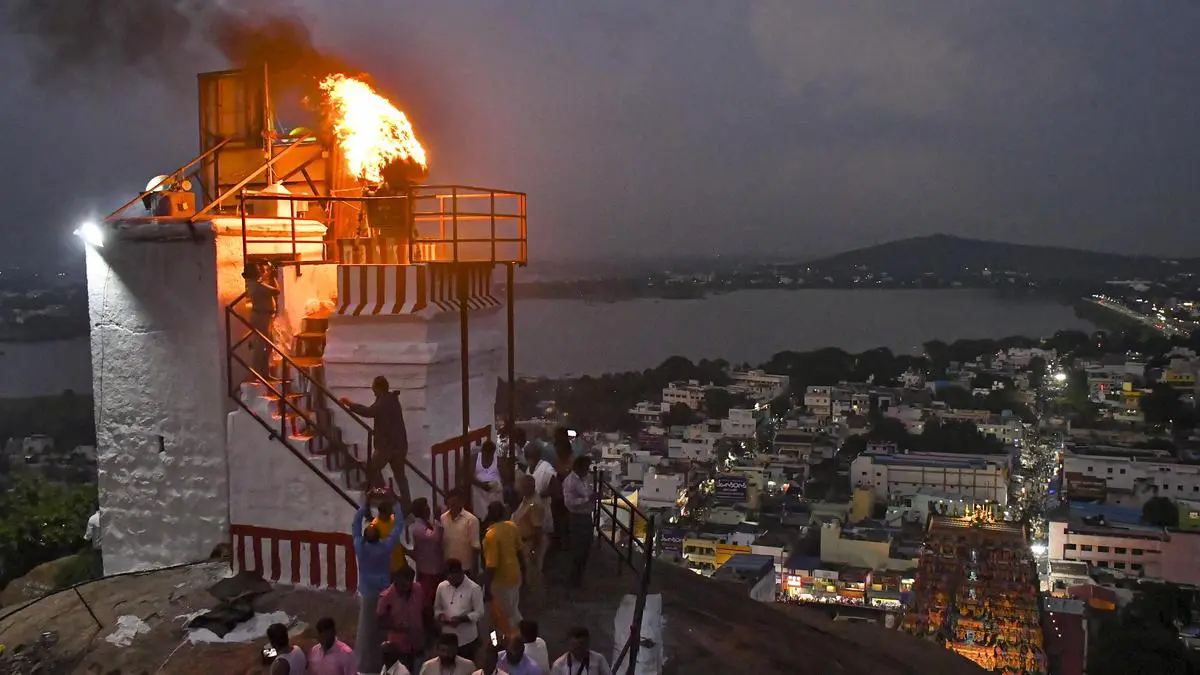
Case Summary
In Tamil Nadu, a legal dispute emerged over the continuation of the centuries-old Karthigai Deepam ritual at Thirupparankundram Hill, one of the six sacred Arupadai Veedu temples of Lord Murugan. The Tamil Nadu TVK government, led by Vijay, approached the Supreme Court to challenge a Madras High Court order permitting devotees to light the ceremonial Deepam on the hill during the annual Karthigai Deepam festival. The petition, filed by the state government on 11 June 2026, challenged the judgment of the Madurai Bench of the Madras High Court, which had upheld an earlier order directing authorities to facilitate the lighting of the sacred lamp. The High Court had observed that the practice was a long-standing religious custom associated with the temple and held that it could not be prohibited without compelling justification. It further directed the administration to ensure that the ritual was conducted with appropriate safety measures and in a manner that maintained public order. The dispute centres on the lighting of the ceremonial lamp at an ancient stone pillar atop Thirupparankundram Hill during the Karthigai Deepam festival, a practice devotees regard as integral to the religious observances associated with Lord Murugan. The ritual has been performed for generations and holds deep spiritual significance for devotees who gather annually to witness and participate in the event. In its appeal before the Supreme Court, the Tamil Nadu government claimed that Thirupparankundram Hill is a centrally protected monument under the Ancient Monuments and Archaeological Sites and Remains Act. The state contended that lighting the Deepam could damage ancient rock-cut caves, inscriptions, and other heritage structures on the hill. It also cited environmental, security, crowd management, and law-and-order concerns in support of its challenge. The original petitioner, Rama Ravikumar, had approached the courts seeking permission to continue the traditional ritual. He has separately challenged aspects of the High Court's judgment before the Supreme Court, particularly the requirement that the ritual be made subject to consultation and clearance from the Archaeological Survey of India and the police authorities. The development has raised concerns among Hindu devotees, who view the Karthigai Deepam ceremony as an integral part of the religious traditions associated with the sacred Murugan shrine. Many devotees fear that restrictions on the ritual could affect the continuation of a practice that has been observed for centuries and forms part of the temple's religious heritage. The current dispute is rooted in an earlier controversy in which the earlier DMK government had disallowed Hindu devotees from performing the traditional Karthigai Deepam ritual at Thirupparankundram Hill. Karthigai Deepam, celebrated during the full moon of the Tamil month of Karthigai, is one of the most significant Hindu festivals and commemorates Lord Shiva in his Agni (fire) form. The lighting of the Maha Deepam at the Arunachaleswarar Temple in Tiruvannamalai draws millions of devotees from across India and around the world. The restrictions imposed on the Thirupparankundram ritual sparked widespread opposition from Hindu organisations, religious groups, and devotees, who argued that preventing the lighting of the Deepam amounted to interference with a long-standing Hindu religious practice and violated the community's religious rights. The controversy led to large-scale mobilisation by Hindu groups, following which multiple petitions were filed before the Madurai Bench of the Madras High Court seeking permission to continue the traditional practice. On 1 December 2025, the High Court heard four separate petitions and ruled that the Karthigai Deepam lamp could be lit on the ancient stone pillar, locally known as the Deepathoon, situated atop Thirupparankundram Hill. The court recognised the historical and religious significance of the custom and directed the authorities to facilitate the ritual while ensuring necessary safety arrangements. At the time of documenting this case, the matter was before the Supreme Court, which was expected to examine the competing claims of monument preservation and the protection of long-standing Hindu religious traditions at one of the most revered Murugan temples in Tamil Nadu.
Why it is Hate Crime ?
The primary category selected is: Restriction/ban on Hindu practices. The sub-category selected under it is: Administration restricting religious practice. In several cases, it is seen that the administration/state disallows a religious practice owing to prejudicial orders and concerns, targeted specifically against the Hindu community. Such restriction/prohibition would be considered documented as a hate crime because the orders are often a result of pressure by groups that harbour animosity towards Hinduism and Hindus. Often, the restriction by the authorities is driven by bias, hostility, or prejudice against the specific community being stopped from holding a religious practice, by pressure groups that harbour animosity towards Hindus, intrinsic to their faith. Since practices are intrinsic to the faith of the Hindus, such prejudicial restriction is considered a curtailing of the fundamental rights of the Hindu community. In several cases, for example, the authorities ban a Hindu religious practice due to pressure from groups opposed to the religion. In other instances the prohibition is selectively enforced against one religious group (Hindus) while others are allowed to proceed. There are still other cases where the authorities preemptively restrict a religious practice by Hindus because those who hold animosity towards Hindus may get “provoked” leading to them being violent, thereby assuaging the sentiments of those who hold animosity towards Hindus by curtailing the religious rights of Hindus. Such acts and orders are prejudiced, indicating discriminatory motives owing to the capitulation to groups that harbour animosity towards Hindus and therefore, would be categorized as a religiously motivated hate crime since the original pressure leading to the order itself is a result of hatred/bias/prejudice/religious hate against Hindus. The other sub-category selected is: Restriction on expression of Hindu identity. An example of the state-affected prejudicial and targeted orders against the Hindu community would be a government denying the right of a Hindu or a group of Hindus to hold a religious procession owing to the animosity of non-Hindu groups. Denial of the religious right of the Hindus to assuage the non-Hindu group which harbours animosity to a point where it could lead to violence against Hindus is not only a failure of law and order but is a prejudicial order against Hindus, denying them their fundamental rights to express their religious identity. An example of a hate crime against Hindus by a non-Hindu would be a non-Hindu institution forcing its Hindu employees to abandon religious symbols that a Hindu would wear as an expression of faith owing to inherent prejudice against the faith professed by the victim or a non-Hindu group of people restricting a Hindu group from constructing a place of worship simply because the demography of the area in which the temple is being built is dominated by non-Hindus. Such actions are driven by religious animosity and/or prejudice against Hindus and their faith and would therefore be categorized as a hate crime. This case constitutes a religiously motivated hate incident because it concerns attempts to restrict a long-standing Hindu religious practice that forms an integral part of the religious identity of devotees associated with the Thirupparankundram Murugan Temple. The dispute is not over a newly introduced activity but over the continuation of a centuries-old ritual that devotees regard as a sacred expression of their faith. Karthigai Deepam occupies a special place in Hindu religious tradition and is observed by millions of devotees as a celebration of the divine manifestation of Lord Shiva in the form of sacred fire. At Thirupparankundram, one of the six most revered abodes of Lord Murugan, the lighting of the Deepam atop the hill has historically been intertwined with the site's religious character and worshippers' devotional practices. Preventing devotees from carrying out such a ritual directly impacts their ability to publicly manifest and practise their faith. A particularly significant aspect of the case is that the restrictions were imposed despite the ritual being recognised by the Madras High Court as a long-standing religious custom. The High Court observed that the practice had been followed for generations and directed the authorities to facilitate its performance while ensuring necessary safety measures. The Tamil Nadu government's subsequent decision to challenge this permission is an attempt to curtail a traditional Hindu religious observance. The background of the dispute further underscores these concerns. Prior restrictions on the lighting of the Deepam triggered widespread protests and mobilisation by Hindu organisations and devotees, who argued that preventing the ritual amounted to interference in their religious affairs and denied them the right to practise a centuries-old tradition. For devotees, the issue extends beyond the lighting of a lamp. It concerns the preservation of a sacred custom that serves as a visible expression of Hindu faith, continuity, and religious identity. Religious freedom includes not only the right to privately hold beliefs but also the right to publicly observe, express, and participate in religious traditions. When a historic religious practice is restricted, the impact is felt not only in ritual observance but also in community identity. The inability to perform a customary act of worship at a sacred site diminishes the community's ability to maintain and transmit its religious heritage. For these reasons, the incident is being documented as a case involving the restriction of Hindu religious practice and the curtailment of the public expression of Hindu identity. The challenge to a centuries-old ritual at one of Hinduism's most sacred Murugan shrines raises concerns about devotees' ability to freely practise and preserve their traditional religious customs. Such arbitrary actions taken against Hindus are prejudicial to the rights of Hindus and stem from animosity and prejudice against Hindu beliefs, which is why this case is being categorised as a religiously motivated hate crime.


Case Status
Unknown


Perpetrators Details
Perpetrators
State and Establishment
Perpetrators Range
Unknown
Perpetrators Gender
unknown
 Sources




