Hindu devotees prevented from performing sacred ritual at Madurai's Thiruparankundram Hill as DMK government overrides court order
 Madurai, Tamil Nadu, India
  2 December, 2025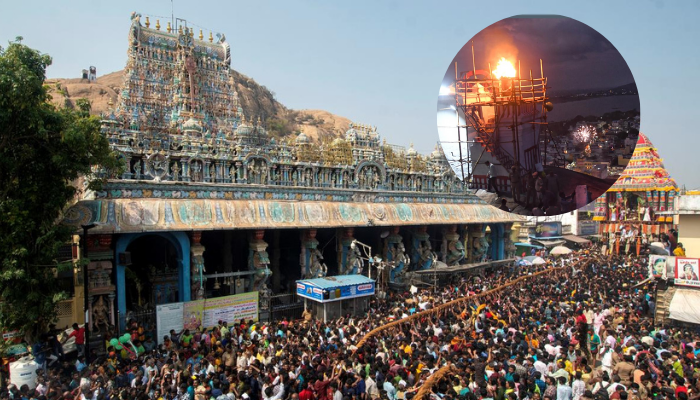
Case Summary
Tamil Nadu's DMK government disallowed Hindu devotees from performing the traditional Karthigai Deepam ritual at Thiruparankundram Hill in Madurai. Karthigai Deepam, celebrated during the full moon of the Karthigai month, honours Shiva in his Agni form, and the Maha Deepam lighting at the Arunachaleswarar Temple attracts millions of devotees globally. This arbitrary order came even after the Madurai Bench of the Madras High Court ruled that the Karthigai Deepam lamp can be lit on the ancient stone pillar located on Thiruparankundram hill in Madurai. The order came on Monday (1st December, 2025) after the court heard four petitions requesting permission to light the lamp at this traditional spot, known locally as the Deepathoon. While hearing the plea, Justice G.R. Swaminathan said that lighting the Deepam on a hilltop is an old Tamil practice, and the very purpose of the Deepam is to hold a ceremonial flame. Some groups had opposed using the pillar this year because it is close to the Sikandar Badusha Dargah and because the lamp is usually lit at another spot near the Uchipillaiyar temple. However, the judge dismissed these objections and emphasised that lighting the lamp at the Deepathoon would not harm the rights of the dargah or the Muslim community in any way. Justice Swaminathan also pointed out that refusing to light the lamp there could actually weaken the rights of the Subramaniya Swamy temple over parts of the hill that are currently unoccupied. The court noted that there have been attempts by the mosque trustees to expand into these areas, and practising the tradition at the Deepathoon would help maintain the temple’s claim over the land. The court has now directed the temple administration to light the Deepam at the Deepathoon from this year onwards, in addition to the usual locations. It also ordered the police to protect to ensure that the ritual is carried out peacefully. At the same time, the judge cancelled an earlier decision taken by the temple’s Executive Officer, who had decided to hold the ritual only at the usual Deepa Mandapam. Despite this clear court order permitting Hindus to practice their faith, officials of the Hindu Religious and Charitable Endowments Department and police working at the behest of the DMK Government, physically prevented lamp lighting on the ancient hill lamp post. Tamil Nadu BJP leader K Annamalai criticised the government’s actions, stating that deploying hundreds of police personnel to stop a lawful Hindu ritual revealed the extent of the regime’s appeasement politics. He questioned why Sanatan Dharma is repeatedly targeted and whether court orders carry any meaning for the current administration. In a post on X, he argued that the hostility of the DMK government toward Hindu traditions is no longer a matter of debate but an undeniable fact, pointing out that the very department meant to support Hindu devotees had challenged a court order safeguarding the lighting of the sacred Deepam atop Thiruparankundram Hill. Thiruparankundram Hill’s religious importance to Hindus has been recognised for centuries. In fact, a British-era court ruling confirmed that the hill is the property of the Subramaniya Swamy Temple. Despite this, Tamil Nadu authorities and groups like the SDPI have continuously tried to undermine the hill’s sacred status. On January 22, 2025, Tamil Nadu authorities imposed stringent restrictions on Hindus wishing to offer Annadhanam (food offerings) at the Palani Dhandayuthapani Swamy Temple on the Thiruparankundram hill. Similarly, on January 18, 2025, it was reported how the Social Democratic Party of India (SDPI), the political wing of the banned terrorist outfit Popular Front of India (PFI), attempted to carry out animal slaughter (Qurbani) at the Sikandar Badushah Dargah on Thiruparankundram Hill. Local Hindus, time and again, have expressed concerns that, under the guise of religious festivities, there has been a systematic encroachment on the hill, pushing for it to become an Islamic religious site. In response to these developments, Solaikannan of the IMK called for greater protection of the hill, proposing that the Archaeological Department manage the area to safeguard the Jain temples and inscriptions located there.
Why it is Hate Crime ?
This incident has been added under the category- Restriction/ban on Hindu practices. Within this, the subcategory selected is- Administration restricting religious practice. In several cases, it is seen that the administration/state disallows a religious practice owing to prejudicial orders and concerns, targeted specifically against the Hindu community. Such restriction/prohibition would be considered documented as a hate crime because the orders are often a result of pressure by groups that harbour animosity towards Hinduism and Hindus. Often, the restriction by the authorities is driven by bias, hostility, or prejudice against the specific community being stopped from holding a religious practice, by pressure groups that harbour animosity towards Hindus, intrinsic to their faith. Since practices are intrinsic to the faith of the Hindus, such prejudicial restriction is considered a curtailing of the fundamental rights of the Hindu community. In several cases, for example, the authorities ban a Hindu religious practice due to pressure from groups opposed to the religion. In other instances the prohibition is selectively enforced against one religious group (Hindus) while others are allowed to proceed. There are still other cases where the authorities preemptively restrict a religious practice by Hindus because those who hold animosity towards Hindus may get “provoked” leading to them being violent, thereby assuaging the sentiments of those who hold animosity towards Hindus by curtailing the religious rights of Hindus. Such acts and orders are prejudiced, indicating discriminatory motives owing to the capitulation to groups that harbour animosity towards Hindus and therefore, would be categorized as a religiously motivated hate crime since the original pressure leading to the order itself is a result of hatred/bias/prejudice/religious hate against Hindus. The other subcategory selected is- Restriction on expression of Hindu identity. An example of the state-affected prejudicial and targeted orders against the Hindu community would be a government denying the right of a Hindu or a group of Hindus to hold a religious procession owing to the animosity of non-Hindu groups. Denial of the religious right of the Hindus to assuage the non-Hindu group which harbours animosity to a point where it could lead to violence against Hindus is not only a failure of law and order but is a prejudicial order against Hindus, denying them their fundamental rights to express their religious identity. An example of a hate crime against Hindus by a non-Hindu would be a non-Hindu institution forcing its Hindu employees to abandon religious symbols that a Hindu would wear as an expression of faith owing to inherent prejudice against the faith professed by the victim or a non-Hindu group of people restricting a Hindu group from constructing a place of worship simply because the demography of the area in which the temple is being built is dominated by non-Hindus. Such actions are driven by religious animosity and/or prejudice against Hindus and their faith and would therefore be categorized as a hate crime. The events at Thiruparankundram reflect a direct attempt to curb Hindu religious life by blocking devotees from performing a centuries old ritual that is central to their faith. Even after the High Court affirmed the community’s right to light the Karthigai Deepam at the ancient pillar, the administration intervened to stop the ceremony, deploying police and issuing directives that prevented Hindus from carrying out their lawful tradition. By treating a sacred and court sanctioned ritual as something to be suppressed, the authorities signalled that Hindu worship could be constrained at will, regardless of legal protection or historical continuity. The interference went beyond procedural overreach. The traditional Deepam lighting is a visible expression of Hindu identity and devotion, and obstructing it effectively targeted the community’s ability to assert its presence on a hill that has deep religious significance for them. When state officials physically prevented the carrying of lamps to the ancient pillar, they were not just blocking a festival activity but actively restricting the outward expression of a Hindu ritual that affirms cultural memory, territorial connection, and faith. This pattern of state action created an environment in which Hindus were forced to defend the legitimacy of their own practices, even after a judicial endorsement. The administration’s choice to challenge and then suppress a tradition that harms no other community but strengthens the temple’s longstanding claim to the hill contributed to the broader sense that Hindu identity is being selectively constrained. For devotees who gathered in good faith and with legal sanction, the obstruction was not a neutral administrative step but part of an ongoing suppression of Hindu worship in a space deeply tied to their heritage. This incident merits inclusion in the Hinduphobia tracker because the state authorities actively obstructed a lawful and time honoured Hindu ritual even after the High Court upheld the community’s right to perform it. By physically preventing devotees from lighting the Karthigai Deepam and challenging the practice through administrative action, the government targeted a clearly identifiable Hindu tradition and restricted its public expression. The interference did not arise from security needs or procedural requirements but from a pattern of suppressing Hindu religious activity, making this a clear case of institutional bias directed at Hindu identity and worship.


Case Status
Unknown


Perpetrators Details
Perpetrators
State and Establishment
Perpetrators Range
Unknown
Perpetrators Gender
unknown
 Sources




