Hindu Temple of Lord Murugan attacked: Emerald idol stolen in Chengalpattu, Tamil Nadu
 Chingleput, Tamil Nadu, India
  1 September, 2026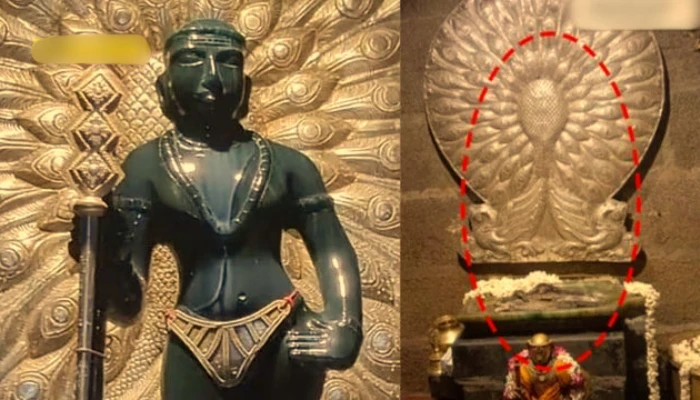
Case Summary
In Chengalpattu district, Tamil Nadu, an emerald idol of Bhagwan Murugan was stolen from the sanctum sanctorum of Sri Maragadha Bala Dhandayuthapani Murugan Temple. Two Unidentified persons broke into the hilltop temple, disabled the alarm, sprayed paint on the CCTV cameras and removed the idol despite multiple security measures. The theft took place in the early hours of Wednesday, 02 September, 2026, and the idol was found missing when temple priests and administrators arrived that morning. The stolen idol was around 2¼ feet tall and carved entirely from emerald. It was brought from Mysuru and installed at the temple in 2008. Its exact value was yet to be ascertained, although reports indicated that it could be worth several lakhs of rupees or even crores. The temple was located on a hill in the village of Perukaranai and was popularly known as Nadu Palani. Devotees used this name because the temple was situated between the Vadapalani Murugan Temple in Chennai and the Palani Murugan Temple. The temple was managed by a private trust. The sanctum sanctorum was secured by three iron doors and was equipped with security sirens and CCTV cameras. Despite these safeguards, the perpetrators broke into the sanctum and stole the idol. The manner in which the idol was removed despite the security arrangements indicated that the theft was deliberate and targeted the sacred object of worship. The temple authorities subsequently lodged a complaint with the police. The Chithamur police reached the temple and began investigating the incident. Two special teams were formed to identify and arrest those responsible. This wasn’t the first time that a temple dedicated to Bhagwan Murugan was deliberately targeted. As recorded by the Hinduphobia Tracker team, there have been systematic and targeted attacks continuously against Murugan temples and the religious traditions associated with Bhagwan Murugan in Tamil Nadu. For example, in June 2026, in Madurai, the centuries-old Karthigai Deepam ritual at Thirupparankundram Hill, one of the six sacred Arupadai Veedu temples of Bhagwan Murugan, was stopped by the Tamil Nadu TVK government despite the ruling by the Madras High Court. The government, led by Vijay, approached the Supreme Court to challenge a Madras High Court order permitting devotees to light the ceremonial Deepam on the hill during the annual Karthigai Deepam festival. In the order, the High Court observed that the practice was a long-standing religious custom associated with the temple and held that it could not be prohibited without compelling justification. It further directed the administration to ensure that the ritual was conducted with appropriate safety measures and in a manner that maintained public order. Contrary to the earlier stand taken by the Tamil Nadu government, an ancient 200-year-old Railadi Vinayagar temple in Kurumbur, Thoothukudi district, Tamil Nadu, was demolished overnight near Kurumbur Railway Station under the garb of a court order, despite appeals by Hindu organisations. It is noteworthy that a nearby church was left untouched. The matter came to light after railway authorities used an earthmover to demolish the temple during the intervening night of 19 and 20 August 2026, following a court order concerning alleged encroachment on Railway land. Hindu Munnani stated that its functionaries had met railway authorities on the morning of 19 August 2026 and had appealed against the demolition, but the temple was subsequently razed that night. Further, in July 2026, the gates of a 100-year-old Hindu Lord Murugan temple in Tiruppur were broken by leaders of the Communist Party of India (Marxist) [CPI(M)] to occupy the temple land while the ownership dispute was pending before the court. The incident followed an earlier episode in January 2026, when the temple was encroached upon, and the idol of Lord Murugan was removed from the shrine. The incidents sparked protests from Hindu organisations, which demanded legal action against those involved and criticised the police for failing to protect the temple and its property. According to reports, the Kumaran Kundru Murugan Temple, located in Tiruppur district, was a more than 100-year-old Hindu temple situated on Kumarankundru Hill. The temple complex included shrines dedicated to Lord Murugan, Lord Vinayagar, a Sivalingam, and Nandi, making it an important place of Hindu worship for devotees in the region. The temple land later became the subject of a legal dispute, which remained pending before the court. In another instance in August 2026, a 400-page Tamil-language evangelical handbook published in Tamil Nadu depicted Hindu beliefs and traditions through a Christian theological framework, equating Bhagwan Murugan with Jesus, in an apparent effort to weaken Hindus' connection with their own faith, reshape their understanding of Hindu traditions, and ultimately facilitate religious conversion. The publication stated that St Thomas brought Jesus to India, that Jesus was "Tamil Indianised", and that Murugan represented Jesus. The book described Devasena as representing Jewish Christians and Valli as representing Gentiles awaiting conversion. The text further stated that Murugan’s 12 hands represented the 12 apostles, and that the Hindu practice of kavadi was a forgotten reenactment of Christ carrying the Cross. These instances illustrate that Bhagwan Murugan and the religious traditions associated with him have been systematically and repeatedly subjected to various forms of targeting in Tamil Nadu.
Why it is Hate Crime ?
At the outset, the incident appeared to be a case of theft or robbery, as the available information did not establish an explicit religious motive for stealing the idol. However, the incidents recorded by the Tracker clearly documented repeated and systematic targeting of Bhagwan Murugan and the religious traditions associated with him in Tamil Nadu. These included the obstruction of the centuries-old Karthigai Deepam ritual at Thirupparankundram Hill, the demolition of the 200-year-old Railadi Vinayagar Temple in Kurumbur, the breaking of the gates and earlier removal of the idol from the more than 100-year-old Kumaran Kundru Murugan Temple in Tiruppur, and the publication of an evangelical handbook that equated Bhagwan Murugan with Jesus and sought to reinterpret his religious identity through a Christian theological framework. Taken as a whole, these incidents showed that temples dedicated to Bhagwan Murugan and the religious traditions associated with him had faced various forms of targeting in Tamil Nadu, including the disruption of religious practices, the destruction and interference with temple property, the removal of idols, and attempts to reinterpret the religious identity of Bhagwan Murugan. In this context, the theft of an idol of Bhagwan Murugan from the sanctum sanctorum of a Hindu temple, particularly after the perpetrators breached three iron doors and bypassed security sirens and CCTV cameras, warranted scrutiny beyond the ordinary circumstances of a property offence. The circumstances therefore raised a reasonable concern that the incident could be part of a broader pattern of targeting Hindu religious institutions and objects of worship associated with Bhagwan Murugan. However, this contextual pattern alone did not establish the motive for this particular theft. The case was therefore categorised under “Undecided”, as, at the time of writing the report, no explicit religious motive had been established. The available information did not conclusively establish whether the idol was stolen because of its religious significance or for its monetary value as an emerald object. The classification therefore reflected the absence of sufficient evidence to conclusively determine the motive at that stage, rather than a finding that the incident was or was not religiously motivated. Should further investigation establish the identity of the perpetrator or bring to light evidence of a religious motive behind the theft, the case would be updated accordingly.


Case Status
Unknown


Perpetrators Details
Perpetrators
Unknown
Perpetrators Range
From 2 To 5
Perpetrators Gender
unknown
 Sources




