Anti-Hindu bias on display; Muslim 'journalist' maligns schools run by revered Hindu organisation, claiming they teach hatred of religious minorities
 India
India  7 August, 2026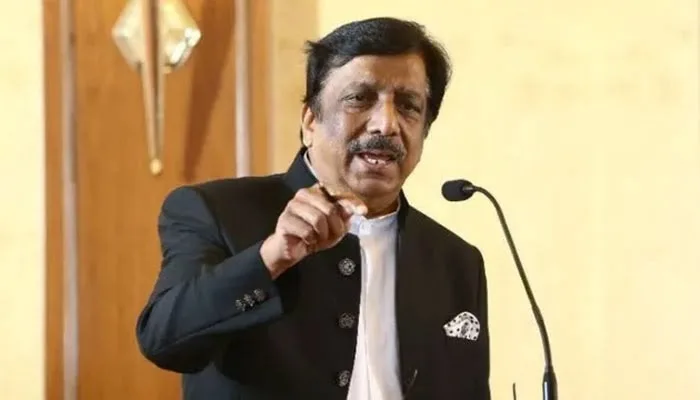
Case Summary
Anti-Hindu hate was propagated by Muslim journalist and former Member of Parliament Shahid Siddiqui, former Chief Editor of the Urdu daily Nai Duniya, on 8 August 2026. The perpetrator made derogatory statements about schools and hostels run by the Rashtriya Swayamsevak Sangh (RSS), a prominent Hindu organisation, during a podcast on his YouTube channel, I Witness with Shahid. In a clip from the podcast that circulated on social media, Siddiqui claimed that people linked to the RSS brought children, particularly girls, from Northeast India, kept them at different locations and trained them to develop hatred towards religious minorities. Siddiqui claimed that girls from the Northeast were brought to different places, kept there and trained, while children were being taught to hate minorities, including Muslims and Christians. He further claimed that around 10 lakh children had been taken over a period of 10 years. He claimed that the children were taken with their parents’ permission, but that the parents were not given the full picture about what would happen to them. According to Siddiqui, parents were told that their children were being taken for education and to help them secure employment opportunities, without being fully informed about the activities in which they would be involved. A clip of Siddiqui’s statement went viral on social media. Following this, RSS ideologue Ratan Sharda criticised Siddiqui’s claims and questioned the basis of the allegations. Sharda had always been vocal about misinformation and claims concerning the RSS and its activities. This was not an isolated instance of the RSS being unfairly vilified by the Islamo-leftist cabal. The Hinduphobia Tracker previously documented multiple such instances. For example, in the wake of the 10 November 2025 Delhi Red Fort terror attack, Congress leader Husain Dalwai attempted to redirect attention away from the Islamic terrorists by raising questions about the role of the Rashtriya Swayamsevak Sangh. He demanded an investigation into the RSS and linked the blast to unrest in Kashmir, framing the incident as an outcome of political conditions in the Valley rather than acknowledging the role of the Islamic terrorists. In another instance, the RSS was vilified by Karnataka Congress President Mallikarjun Kharge, a Buddhist by faith and a follower of Ambedkarism. He falsely accused the RSS of being responsible for the country’s law and order problems. Following this, he called for a ban on the RSS. In another instance, a genocidal call against Hindus and the Hindu organisation was made by Congress President Mallikarjun Mallappa Kharge in a speech delivered during a public rally at Nilambazar, Assam, ahead of the 2026 Assam Assembly elections. The case came to light when a video of the speech went viral on social media on 7 April 2026. In the video, Kharge, while referring to Hindus, the Rashtriya Swayamsevak Sangh and the Bharatiya Janata Party, cited the Quran and said, “Agar yeh zehreela saanp, aapke saamne se guzar raha hai aur aap namaz padh rahe hai, namaz chhodke uss zehreeli saanp ko maarna, yeh Quran mein kaha hai. Aur main yahi kahunga, aap namaz todne ki parvah nahi, yeh zehreela saanp hai RSS aur BJP. Isko agar aap nahi maarenge, aap kabhi bachenge nahi,” roughly translating into English as, “If a poisonous snake crosses someone’s path during Namaz, the prayer should be stopped and the snake killed. The RSS and the BJP are that poisonous snake. If you do not kill them, you will not survive.” In another instance, on 16 March 2026, the Hindu organisation RSS (Rashtriya Swayamsevak Sangh) and India’s internal intelligence agency, the Research and Analysis Wing (R&AW), were targeted by the United States Commission on International Religious Freedom (USCIRF). A report released by USCIRF attacked India and recommended banning the RSS. The report also vilified Hindu nationalism and claimed that it had worsened the lives of religious minorities in India. The Indian National Congress seized the opportunity to criticise the RSS, promoting the report as justification for banning the organisation.
Why it is Hate Crime ?
The primary category for this case is: Hate speech against Hindus. The first subcategory for this case is: Anti-Hindu subversion and prejudice. Hate speech is defined as any speech, gesture, conduct, writing, or display that is prejudicial against a specific individual and/or group of people, which is leading to or may lead to violence, prejudicial action or hate against that individual and/or group. Media plays a specific and overarching role in perpetuating prejudicial attitudes towards a community owing to unfair, untrue coverage and/or misrepresentation/misinterpretation, selective coverage and/or omission of facts of/about issues affecting a specific religious group. This type of bias can dehumanise the victim group, making it easier for others to justify harmful actions against them, which aligns with the objectives of hate speech laws aimed at preventing such harm. It is often observed that the media takes a prejudicial stand against the Hindu community, driven by their need to shield the aggressor community, which happens to be a numeric minority; however, it is the one perpetrating violence against Hindus. For example, the media is often quick to contextualise religiously motivated crimes against Hindus, omit or misrepresent facts that point towards religiously motivated hate crimes, justify and/or downplay religiously motivated hate crimes, or simply present fake news to stereotype Hindus. Such media bias leads to the denial of persecution and is often used to dehumanise Hindus, leading to justification for violence against them. For example, the media covered several fake allegations of Hindus targeting Muslims and forcing them to chant Jai Shree Ram. Most of these cases were proved false and fabricated after police investigation. These fake news reports were subsequently never retracted or clarified. Such fake news led to the justification of violence and dehumanisation of Hindus based on the argument that since Hindus targeted Muslims and forced them to chant Jai Shree Ram, the dehumanisation of Hindus and violence against them was par for the course and merely a retaliation. Such media bias leads to prejudicial portrayal of Hindus and offers a justification for violence against them and therefore, is considered hate speech under this category. This case was a clear example of religiously motivated hate speech against Hindus and Hindu organisations. The Muslim perpetrator attempted to vilify the Rashtriya Swayamsevak Sangh (RSS) by portraying its schools and hostels as institutions that indoctrinated children and taught them to hate religious minorities. By making sweeping and unsubstantiated accusations that the RSS systematically trained children to hate Muslims and Christians, he sought to portray a prominent Hindu organisation as an extremist institution driven by communal hatred. The allegations therefore went beyond criticism of a particular activity or policy and amounted to an attack on a Hindu organisation because of its religious and ideological identity. The RSS holds considerable religious, cultural and social significance within the Hindu community and is one of the most prominent organisations associated with Hindu collective identity and social mobilisation. It follows the principle of Hindutva, a civilisational and political ideology that is pro-Hindu in character and advocates the preservation, protection and advancement of Hindu civilisational, cultural and national interests. Hindutva emphasises Hindu unity and the preservation of Hindu civilisational identity and rights. Portraying the RSS and the principles associated with Hindutva in a deeply derogatory manner, particularly through an unsupported accusation that Hindu institutions indoctrinated children into hatred of other communities, therefore carried a clear religious dimension. Making such serious accusations without providing any evidence demonstrated hostility towards a prominent Hindu institution and the Hindu identity and civilisational outlook it represented. The RSS's activities also contradicted the portrayal that it was inherently devoted to hatred against religious minorities. Although it is a pro-Hindu and pro-India organisation, it has engaged members of minority religious communities through dedicated platforms, including the Muslim Rashtriya Manch (MRM), which works among Muslims, and the Rashtriya Christian Manch (RCM), which engages with Christians. These initiatives reflected its stated emphasis on integrating different communities within a broader national and cultural framework. Its engagement with members of other religious communities demonstrated that its identity as a Hindu organisation did not, in itself, amount to hostility towards people belonging to other faiths. Against this background, portraying the RSS as an organisation that systematically trained children to hate Muslims and Christians was a prejudicial depiction of a Hindu institution and reinforced a hostile narrative against the RSS and the wider Hindu community. Siddiqui’s use of children to malign the RSS made the nature of the attack particularly serious and malicious. By making the scurrilous claim that RSS-run institutions were taking children from their families, misleading their parents and systematically indoctrinating them to hate Muslims and Christians, he portrayed a revered Hindu organisation as an institution that was exploiting and psychologically influencing children for communal purposes. Such a grave accusation, made without providing any evidence, went far beyond legitimate criticism and demonstrated the predatory and malicious manner in which the RSS was being vilified. Invoking the alleged indoctrination of children gave the propaganda an especially damaging character, as it sought to depict Hindu educational and social institutions as threats to children and other religious communities. This framing reflected a clear anti-Hindu bias by casting a prominent Hindu organisation as inherently extremist and dangerous, while associating Hindu community activity with the manipulation of children and the propagation of hatred. The use of such sensational and unsupported allegations therefore constituted a particularly egregious form of malicious anti-Hindu propaganda aimed at discrediting the RSS and, by extension, the wider Hindu community. Overall, since this case meets the parameters of a religiously driven crime, it is being added to the hate crime database of the tracker.


Case Status
Unknown


Perpetrators Details
Perpetrators
Muslim Extremists
Perpetrators Range
One Person
Perpetrators Gender
male
 Sources




