Hindu organisation vilified by Muslim politician; deflects responsibility from Muslim terrorists and blames RSS for Delhi Red Fort blast
 India
India  9 November, 2025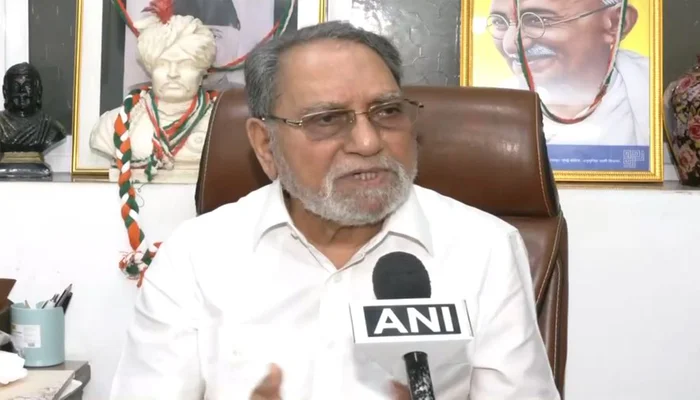
Case Summary
In the wake of the 10 November 2025 Delhi Red Fort terror attack, Congress leader Husain Dalwai attempted to redirect attention away from the perpetrators by raising questions about the role of the Rashtriya Swayamsevak Sangh. He demanded an investigation into the RSS and linked the blast to unrest in Kashmir, framing the incident as an outcome of political conditions in the Valley rather than acknowledging the role of the attackers. During a conversation with PTI on 10 November 2025, Dalwai endorsed former Jammu and Kashmir Chief Minister Mehbooba Mufti’s comments, which attributed the violence to long standing grievances in Kashmir. He stated that what Mufti said was correct and claimed that the attack must have occurred because of what he described as injustice faced by people in the region. Dalwai argued that the government had created a hostile environment and suggested that a specific community was being unfairly targeted. Dalwai also questioned the RSS’s adherence to principles of non violence and urged authorities to investigate groups that he believed might support violence. His statements shifted the focus away from the nature of the incident and toward political organisations that had no established link to the attack. The official investigation later confirmed that the Delhi Red Fort blast was carried out by Islamist terrorists. Thirteen people were killed in the powerful explosion on 10th November near the Red Fort. The National Investigation Agency (NIA) took over the probe into the car explosion caused by Dr Umar Un Nabi after a large cache of explosives was seized that day from his associates. The probe uncovered what agencies describe as a “white-collar terror” network, leading to several arrests in Kashmir and Faridabad.
Why it is Hate Crime ?
This case has been added to the tracker under the primary category: Hate Speech against Hindus. The subcategory selected is: Mocking/denigrating Hindu leaders. Hate speech is defined as any speech, gesture, conduct, writing, or display that is prejudicial against a specific individual and/or group of people, which is leading to or may lead to violence, prejudicial action or hate against that individual and/or group. Religious leaders are often seen as representatives of the community, especially, the community’s religious faith and beliefs. Mocking or denigrating a religious leader specifically owing to his religious identity and/or the religious rituals he observes can be considered hate speech because the motivating factor of the speech is animosity and/or dislike for what he represents – the religious beliefs and faith of the community. It is important to note that mere insulting words against an individual do not constitute hate speech. It is entirely possible that insulting words are used for an individual, however, the specific speech is not the result of religious hate and/or animosity towards the professed faith of the religious leader, but the individual himself. For the speech to be considered hate speech, the speech itself or the motivating factor behind the speech has to be religious in nature. Such speech which denigrates Hindu religious leaders specifically owing to animosity towards the faith they profess and the community faith they represent will be treated as hate speech under this category. The incident has further been categorised under Anti-Hindu subversion and prejudice, with the subcategory Anti Hindu Fake News or Downplaying. Hate speech is defined as any speech, gesture, conduct, writing, or display that is prejudicial against a specific individual and/or group of people, which is leading to or may lead to violence, prejudicial action or hate against that individual and/or group. Media plays a specific and overarching reach in perpetuating prejudicial attitudes towards a community owing to unfair, untrue coverage and/or misrepresentation/misinterpretation, selective coverage and/or omission of facts of/pertaining to issues affecting a specific religious group. This type of bias can dehumanise the victim group, making it easier for others to justify harmful actions against them, which aligns with the objectives of hate speech laws aimed at preventing such harm. It is often observed that the media takes a prejudicial stand against the Hindu community driven by their need to shield the aggressor community which happens to be a numeric minority, however, is the one perpetrating violence against Hindus. For example, the media is often quick to contextualise religiously motivated crimes against Hindus, omit or misrepresent facts that point towards religiously motivated hate crimes, justify and/or downplay religiously motivated hate crimes or simply present fake news to stereotype Hindus. Such media bias leads to the denial of persecution and is often used to dehumanise Hindus, leading to justification for violence against them. For example, the media covered several fake allegations of Hindus targeting Muslims and forcing them to chant Jai Shree Ram. Most of these cases were proved false and fabricated after police investigation. These fake news reports were subsequently never retracted or clarified. Such fake news led to the justification of violence and dehumanisation of Hindus based on the argument that since Hindus targeted Muslims and forced them to chant Jai Shree Ram, the dehumanisation of Hindus and violence against them was par for the course and merely a retaliation. Such media bias leads to prejudicial portrayal of Hindus and offers a justification for violence against them and therefore, is considered hate speech under this category. This incident has been documented as a case of anti-Hindu hate speech because the statements made by Congress leader Husain Dalwai targeted a Hindu organisation despite the Delhi Red Fort attack having been carried out by Islamist terrorists. Instead of acknowledging the established findings of the investigation, Dalwai attempted to redirect suspicion toward the Rashtriya Swayamsevak Sangh, a Hindu cultural organisation. His remarks shifted responsibility away from the perpetrators and placed unwarranted blame on a group associated with Hindu identity, creating a false narrative that portrayed a Hindu organisation as connected to a terrorist act in which it had no involvement. The RSS is rooted in a cultural and civilisational framework that focuses on community organisation, self-development, and the preservation of Hindu heritage. While the organisation is often the subject of political disagreement, there was no factual basis for linking it to the Red Fort attack. By suggesting that the RSS should be investigated, Dalwai contributed to a narrative that misrepresented a Hindu institution and cast suspicion on it without evidence. This served to delegitimise and malign a Hindu organisation at a time when the perpetrators had already been identified as Islamist extremists. This form of attribution amounts to the downplaying of Islamic terror and the simultaneous vilification of a Hindu institution, which fits a broader pattern in which Hindu organisations are portrayed negatively through unverified claims. Such narratives can generate prejudice against Hindu groups by framing them as responsible for violence they played no role in. Dalwai’s remarks therefore functioned as a form of anti-Hindu disinformation that targeted a Hindu organisation precisely because of its religious and cultural identity. By shifting the focus away from the perpetrators and placing blame on the RSS without evidence, the remarks attacked the integrity of a Hindu organisation and contributed to a misleading public perception. This constitutes anti-Hindu hate speech, as it involved false framing, unwarranted accusations, and the stigmatisation of Hindu identity through an attempt to associate a Hindu institution with terrorism. Accordingly, this case has been categorised as a confirmed instance of anti-Hindu hate speech and added to the Hinduphobia Tracker’s hate crime database.


Case Status
Unknown


Perpetrators Details
Perpetrators
Muslim Extremists
Perpetrators Range
One Person
Perpetrators Gender
male
 Sources




