Dalit Hindu youth stabbed by Muslim man over 'I Love Mahadev' sticker; victim also subjected to caste-based slurs
 Bareilly, Uttar Pradesh, India
  2 December, 2025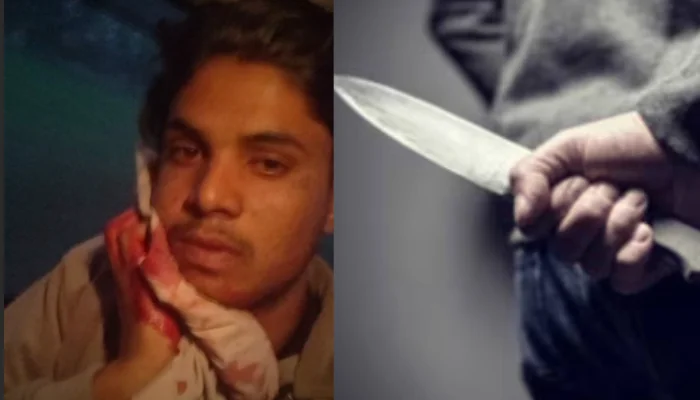
Case Summary
In Sirauli town, Bareilly, Uttar Pradesh, a Dalit Hindu boy named Vipin Valmiki was stabbed by a Muslim shopkeeper for wanting to affix a sticker reading "I Love Mahadev" on his bike. The victim was subjected to several casteist slurs by the accused Muslim man. The attack left him bleeding profusely and in critical condition. According to reports, the victim, a resident of Muravtola in Sirauli, had gone to a shop at Gurwa Mod on the evening of 3rd December 2025 to get an "I Love Mahadev" sticker affixed to his bike. He asked the shopkeeper, the Muslim accused, to put the sticker on, which sparked a dispute. As per the victim's family members, the shopkeeper began abusing him over the sticker. When Vipin objected, the shopkeeper became even more aggressive and also used casteist slurs against him. When Vipin resisted, the shopkeeper suddenly picked up a knife and stabbed him in the neck, leaving him bleeding on the spot. When people nearby raised the alarm, the accused tried to flee but was surrounded by a group of locals. Upon receiving the information, the Sirauli police arrived at the scene and sent the injured boy to the hospital. The doctors immediately referred him to the district hospital due to his critical condition. The police inspected the scene and detained the accused. After learning of the incident, Ashish Katheria, District President of the Hindu Raksha Dal, arrived at the police station with his workers. He demanded strict action against the accused. The organisation's workers stated that the religious sentiments of Hindus had been insulted and urged the police to take immediate action. On receiving information about the dispute, Circle Officer Mirganj, Ajay Kumar, also arrived at the police station. He spoke with the organisation's officials and the family members, calming the situation by assuring that action would be taken. The police registered a case based on the family’s complaint. Following this, the police detained the Muslim shopkeeper and began questioning him. At the time of writing this report, the officials have stated that a detailed report will be filed regarding this incident, and strict action will be taken against the Muslim shopkeeper.
Why it is Hate Crime ?
The first primary category selected in this case is- Attack not resulting in death. The subcategory selected is- Attacked for Hindu identity. In several cases, Hindus are attacked merely for their Hindu identity without any perceived provocation. A classic example of this category of religiously motivated hate crime is a murder in 2016. 7 ISIS terrorists were convicted for shooting a school principal in Kanpur because they got ‘triggered’ seeing the Kalava on his wrist and tilak that he had put. In this, the Hindu victim had offered no provocation except for his Hindu religious identity. The motivation for the murder was purely religious, driven by religious supremacy. Such cases where Hindus are targeted merely for their religious identity would be documented as a hate crime under this category. The second primary category selected is- Hate Speech against Hindus. The subcategory selected is- Anti-Hindu slurs, mocking faith. Anti-Hindu slurs and the deliberate mocking of the Hindu faith owing to religious animosity involve the usage of derogatory terms, stereotypes, or offensive references to religious practices, symbols, or figures. One of the common anti-Hindu slurs used against Hindus is “cow-worshipper” and “cow piss drinker”. The intention of using this term is to demean and mock Hindus as a group and their religious beliefs since Hindus consider the cow holy. Additionally, some symbols and the slurs attached to them have a historical context that exacerbates the insult, hate, stereotyping, dehumanisation and oppression against Hindus. Cow worship has been used for centuries to denigrate Hindus, insult their faith and oppress Hindus specifically as a religious group. There has been overwhelming documentation about how cow slaughter has been used to persecute Hindus with cow meat being thrown in temples and places of worship. There has also been overwhelming documentation where cow meat (beef) has been force-fed to Hindus to either forcefully convert them to Islam or denigrate their faith. Apart from cow worship, the Swastika – which holds deep religious significance for the Hindus – has also been misinterpreted and distorted to use as a slur against Hindus. Similarly, the worship of the Shivling has been used by supremacist ideologies and religions to denigrate Hindus owing to religious animosity. Such slurs and denigration stem out of inherent animosity and hate towards Hindus and their faith, therefore, it is categorised as hate speech targeted at Hindus specifically owing to their religious identity. In this case, the brutal attack on the Hindu victim in Bareilly stands as a stark example of hate-driven violence targeting Hindu identity and devotion. The Dalit Hindu boy simply asked the Muslim shopkeeper to affix an 'I Love Mahadev' sticker on his bike. This act was perceived by the Muslim accused as his joining the 'I Love Mahadev' trend, a peaceful expression of Hindu faith that arose in response to the 'I Love Muhammad' campaign, an aggressive Islamic initiative fuelled by anti-Hindu hatred. Instead of tolerance, the Hindu victim faced communal and casteist abuse, followed by a knife attack to his neck. The 'I Love Mahadev' trend was never aggressive or confrontational. It arose as a dignified way for Hindus to affirm their devotion when confronted with the 'I Love Muhammad' campaign, which had spread nationwide in a highly coordinated manner. That campaign was not just a display of religious pride but quickly turned into a show of Islamic supremacy, often accompanied by intimidation and violence against Hindus. Across the country, Hindus were being threatened, temples were being attacked, and mobs were raising chilling “Sar tan se juda” slogans threatening beheadings. In Bareilly, the FIR itself describes how a Muslim crowd, mobilised under the ‘I Love Muhammad’ banner, armed themselves with petrol bombs, stones, country-made firearms, and sharp weapons to attack security forces and intimidate Hindus. In this context, the 'I Love Mahadev' trend stood as a peaceful Hindu counter-expression, yet it was treated as a provocation that had to be crushed with violence. In this case, the Muslim shopkeeper’s resort to violence—stabbing the Hindu boy over his simple expression of devotion to Lord Shiva, or Mahadev—reveals a profound animosity towards the Hindu community. The victim’s open display of faith became a trigger for brutality, marking this as a textbook anti-Hindu hate crime rooted in hostility to his religious identity. Furthermore, the victim was also subjected to casteist slurs, underscoring the religiously motivated nature of the crime. Here, some may argue that a caste-specific slur is aimed at the victim's micro identity of belonging to the Dalit section of the Hindu community and not his Hindu identity itself. However, as far as Abrahamic religions are concerned, the micro identities of caste, region, and language are secondary. It is the religious identity that drives the animosity of the perpetrator against the Hindu victim. Therefore, in this case, even though caste-based abuses were hurled, the underlying hatred was directed at Hinduism and Hindus. Hence, the use of casteist slurs alongside physical violence confirms this as a religiously motivated hate crime against the Hindu victim. Notably, this is not an isolated incident of Hindus being attacked by Muslims over the 'I Love Mahadev' campaign. The Hinduphobia Tracker previously documented two such cases. In one instance, in October 2025, in Rishikesh, Uttarakhand, Hindu Raksha Dal official Vikas Kashyap suffered a brutal assault by an armed Muslim mob for creating and sharing a social media video backing the “I Love Mahadev” trend. In his complaint, Vikas detailed how a Muslim youth arrived at his shop after the video went live, unleashed verbal abuse, and threatened to kill him unless he deleted it. The attacker also vilified the Hindu Raksha Dal organisation while hurling derogatory remarks at Hindutva and cow protection. In another similar instance, Hindus were attacked during Garba celebrations in Bahiyal village of Dahegam, Gandhinagar district, Gujarat, on the night of September 24, 2025. The violence was sparked by a social media post made by a Hindu youth, who had written “I Love Mahadev” and urged others to trend it in response to “I Love Mohammad.” The post enraged members of the Muslim community, who then approached the man’s shop, forcing him to flee for safety. In his absence, the shop was vandalised and set ablaze, as CCTV footage later showed several Muslim men breaking into the premises and causing damage. In summary, this incident in Bareilly involves a vicious assault on a Hindu youth for his Hindu identity. Therefore, this case is being added to the hate crime database of the Hinduphobia Tracker.
Victim Details
Total Victim
1
Deceased
0
Gender
- Male 1
- Female 0
- Third Gender 0
- Unknown 0
Caste
- SC/ST 1
- OBC 0
- General 0
- Unknown 0
Age Group
- Minor 0
- Adult 1
- Senior Citizen 0
- Unknown 0


Case Status
Arrested


Perpetrators Details
Perpetrators
Muslim Extremists
Perpetrators Range
One Person
Perpetrators Gender
male
 Sources




