Hindu posters torn by Muslim youths; ‘I love Mohammad’ signboard placed at Ram Navami gate
 Kanpur, Uttar Pradesh, India
  4 September, 2025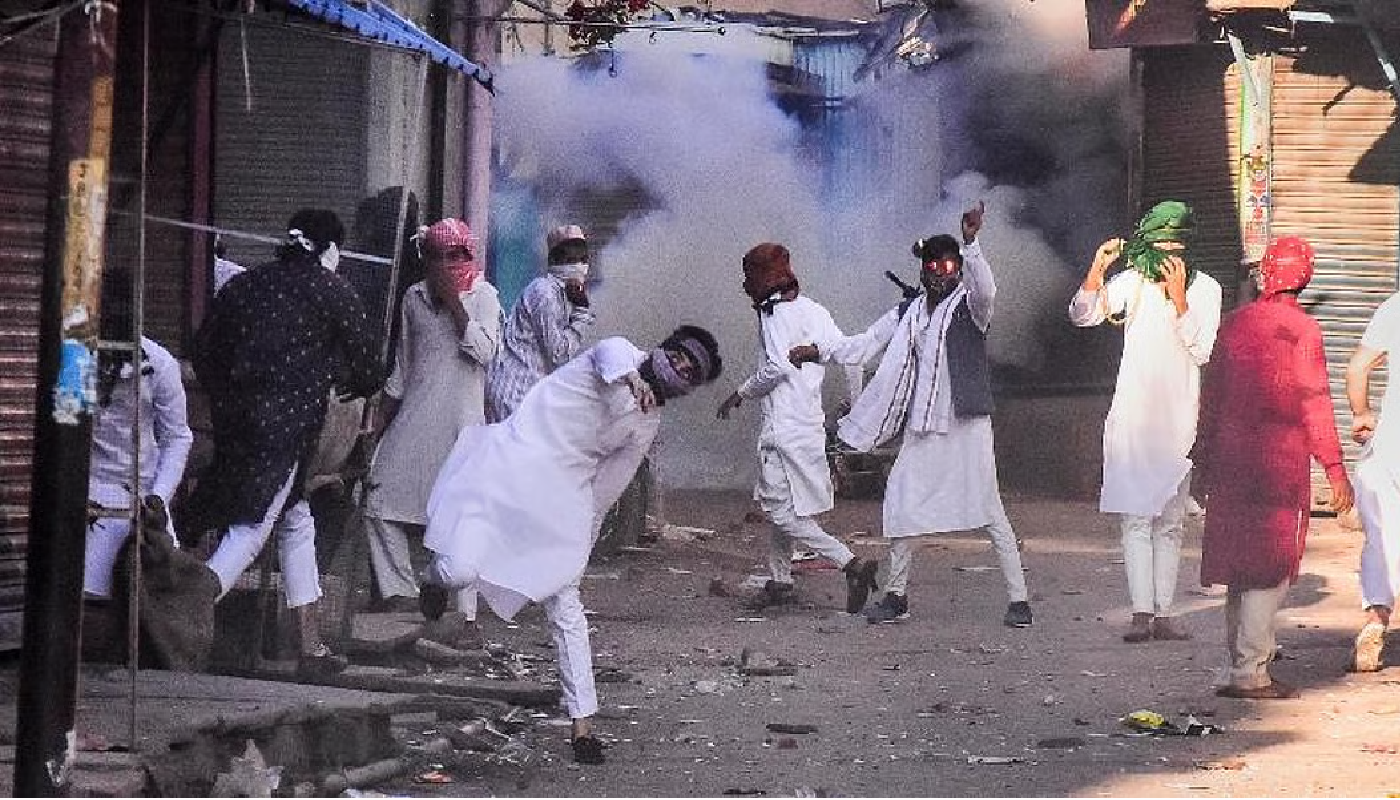
Case Summary
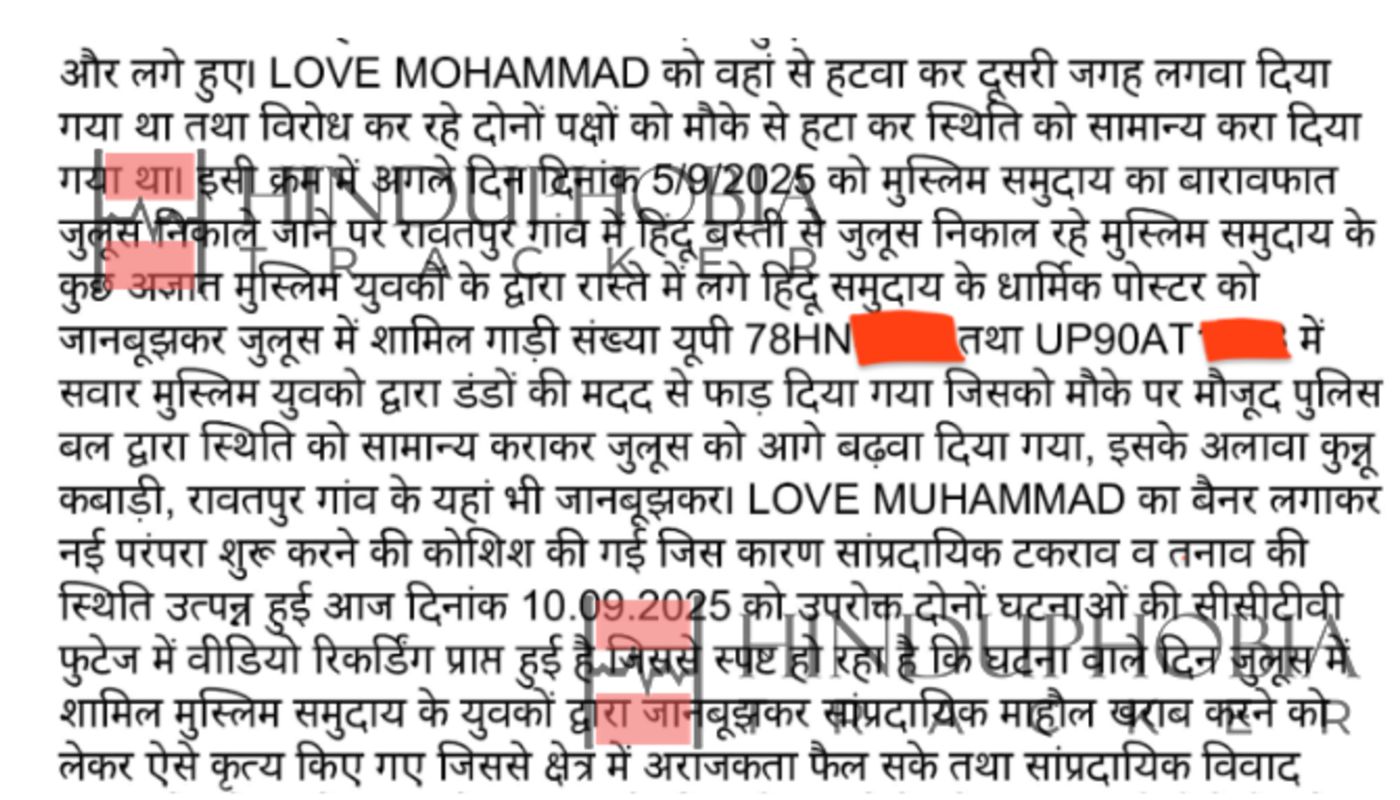
Hindu posters were targeted and damaged during a Barawafat procession in Rawatpur, Kanpur, Uttar Pradesh, on 5 September 2025. Muslim youths participating in the event used sticks to deliberately destroy posters that had been placed along the road in a Hindu locality. The attack, captured on CCTV, was aimed at creating communal disturbance and disrupting local harmony. According to the FIR, the conflict began a day earlier, on 4 September, when the Muslim community installed an “I Love Muhammad” light board in front of the Ram Navami procession gate by members of the Muslim community for the Barawafat program. Residents objected, and police intervened by relocating the board. The matter was resolved, and the board was left in place. However, on the following day, as the procession passed through Rawatpur, Hindu posters were intentionally vandalised. The police confirmed that the FIR was not filed against the display of the “I Love Muhammad” board, but rather against the deliberate destruction of Hindu posters by Muslim participants. Police registered cases against about a dozen Muslim youths for their role in the unrest. Station House Officer Krishna Mishra of Rawatpur police station clarified that the case pertains specifically to attempts to undermine communal harmony by targeting Hindu posters, not the banner dispute. The controversy has escalated into nationwide protest actions in many cities, where Muslims have been seen raising Palestinian flags, creating raucous scenes, and in several instances attacking police officers. For example, in Unnao (Uttar Pradesh), hundreds of protesters chanted “Sar Tan Se Juda”, initiated a procession without required permissions, and physically assaulted officers, even ripping the uniform of an inspector. In Godhra (Gujarat), demonstrators vandalised a police station, damaged windows, vehicles, and attacked police personnel amid the unrest. In Kashipur (Uttarakhand), mobs threw stones, violated public peace during “I Love Muhammad” processions, and clashed with law enforcement. These incidents reflect a pattern: the protests are not limited to slogans, but involve public threats, violence against state officials, and symbolic signalling via flags and mass mobilisations. The Hinduphobia Tracker has been documenting and recording these incidents of anti-Hindu hate speech, intimidation, and desecration, but consistent with its methodology, the attacks on police officials are excluded as individual entries. While these assaults arose because law enforcement acted against Muslim perpetrators who desecrated Hindu posters, they are classified as confrontations with state authority rather than direct hate crimes against Hindus themselves.
Case Images
Why it is Hate Crime ?
The primary category in this case is: Attack on Hindu religious representations. The subcategory under this is: Desecration of Hindu religious symbol. Icons and symbols or a religious representation of a spiritual ideal, are widely revered in Hinduism. Iconography is of vital significance in the Hindu milieu. It helps connect people’s spiritual beliefs with the real world. Iconography within the Hindu faith takes several shapes and forms. Murtis are of most significance to Hindus, to which daily rituals, prayers and offerings are done. Besides the murtis, there are several other symbols which have deep significance in the Hindu faith – the Om and Swastika for example. Since these Hindu religious symbols hold paramount importance in Hinduism, any desecration of symbols, icons, murtis, religious representations and manifestations, is driven by animosity towards the faith itself, which manifests itself through these murtis, icons and symbols. Therefore, any desecration of these Hindu religious symbols and representations is considered a religiously motivated hate crime under this category. This case has been added to the Hinduphobia Tracker because it demonstrates a clear and deliberate targeting of Hindu religious symbols in the context of communal hostility. The sequence of events reveals a premeditated attempt not only to assert dominance in a Hindu locality but also to hurt the religious sentiments of Hindus by purposefully desecrating their religious representations. The conflict began when members of the Muslim community attempted to place an “I Love Muhammad” light board at an unusual location in Rawatpur, Kanpur, on 4 September 2025, during preparations for Barawafat, the Islamic observance that marks the birth and death of Prophet Muhammad. When residents objected, the police relocated the board to avoid confrontation, and the matter was resolved. However, the following day, during the Barawafat procession, Muslim participants deliberately used sticks to destroy Hindu posters that had been displayed in the area. CCTV evidence confirmed that the act was intentional and designed to create communal disturbance. The police themselves clarified that the FIR was linked to the desecration of Hindu posters. This deliberate targeting of Hindu posters is an attack on Hindu religious representations and falls under the subcategory of desecration of Hindu religious symbols. Hindu symbols, whether posters, murtis, or sacred signs, are integral to the faith and serve as visible affirmations of devotion and community identity. The act of damaging them in the course of a religious procession was not incidental vandalism but an intentional attempt to belittle and undermine Hindu faith in its own locality. The timing of the attack, immediately following the dispute over the poster placement, and its execution in a religious procession, further demonstrate that this was not random but an expression of animosity directed at Hindus. By desecrating Hindu symbols in a Hindu-dominated neighbourhood, the perpetrators attempted to provoke fear, intimidate the community, and assert religious antagonism. Here, it is also important to highlight that when the “I Love Muhammad” light board was installed and objections arose, Hindus resorted to lawful means by approaching the police rather than taking matters into their own hands. The issue was handled through official intervention, and the matter was settled peacefully, showing that the Hindu community chose legal and nonviolent avenues to resolve the dispute. In contrast, during the next day’s Barawafat procession, Muslim youths deliberately vandalised Hindu posters placed in a Hindu locality. Armed with sticks, they destroyed these posters not as an act of random mischief but as a calculated insult to the Hindu faith and presence. This response through aggression and targeted destruction stemmed from animosity toward Hindus and their religion. By specifically attacking Hindu posters, the perpetrators symbolically assaulted Hindu identity, sending a message of intimidation and contempt. Far from being a spontaneous clash, this was a deliberate attempt to humiliate Hindus, provoke unrest, and undermine communal harmony. Therefore, this incident is recorded as a hate crime against Hindus, highlighting how religious symbols were targeted and desecrated with deliberate intent during a communal-religious event. It is important to highlight here that despite the flawed narrative peddled in the aftermath, the incident in Kanpur was clearly anti-Hindu in nature. The core trigger was not the removal of an “I Love Muhammad” banner, as was widely circulated, but the desecration of Hindu religious posters. The FIR itself records this fact, serving as official evidence that the sequence of events began with an attack on Hindu symbols. Accordingly, the desecration of Hindu posters, the subsequent protests where Muslims are taking to the streets and raising violent sar tan se juda slogans, waving Palestinian flags, have been included in the tracker. Each of these acts is a direct expression of hostility toward Hindus and their religion, leaving little doubt about their targeted nature. At the same time, while several attacks on police officials have also occurred, these are not being documented as individual cases in the Hinduphobia Tracker. The violence against law enforcement arose because the FIR named members of the Muslim community for desecrating Hindu posters, which made the police appear as indirectly siding with Hindus. In this sense, the attacks on authorities can also be seen as an extension of the same hostility that was originally directed against Hindus. However, since the assaults were aimed at state authority rather than Hindus themselves, and because the tracker follows extremely strict parameters, we are not adding these incidents as individual entries in the tracker.


Case Status
Complaint registered


Perpetrators Details
Perpetrators
Muslim Extremists
Perpetrators Range
From 10 to 100
Perpetrators Gender
unknown
 Sources




