Hindu family barred from lighting traditional deepam by Muslim landlord and asked to vacate rented home in Malappuram, Kerala
 Malappuram, Kerala, India
 21 November, 2026
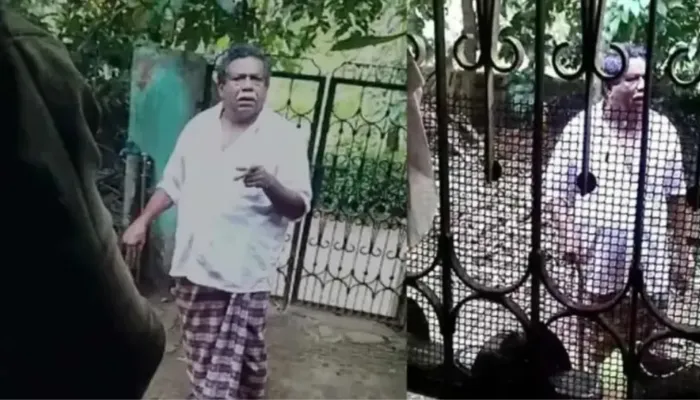
Case Summary
In Tirurangadi, Malappuram district, Kerala, a Muslim landlord objected to his Hindu tenants lighting a traditional Hindu lamp (Deepam/diya) inside their rented house. He told them that he would not permit the practice because the property belonged to a Muslim. The incident came to attention after a video of the confrontation circulated on social media. The disagreement began when the Hindu family lit the traditional lamp at dusk, following their customary religious practice. The landlord was heard telling the tenant, “This house belongs to a Muslim. I won’t allow you to light the lamp here.” During the confrontation, the Hindu tenant questioned the landlord's restriction, asking whether his family did not have the right to follow its religious traditions inside their own rented home. He reminded the landlord that he had been aware of their Hindu identity when he agreed to rent out the property. Despite this, the landlord asked the Hindu family to vacate the premises. R.V. Babu, state president of the Hindu organisation Hindu Aikyavedi, expressed outrage over the denial of a Hindu tenant's right to practise his faith. He questioned the implications of such treatment and what it could mean for Hindus if Muslims became a majority. The present incident in Tirurangadi is not an isolated instance of hostility towards Hindu religious identity and practices in Kerala. The Hinduphobia Tracker has previously documented several incidents involving the desecration of Hindu religious symbols, derogatory depictions of Hindu deities, interference with Hindu festivals and assaults on Hindus for displaying their religious identity. In April 2026, footwear company First Steps in Kochi published a Vishu greeting poster depicting slippers placed over the sacred Vishukkani arrangement. During the same Vishu period, Arabian Majlis Restaurant, a Muslim-owned establishment in Kottakkal, Malappuram, circulated a derogatory poster depicting Lord Krishna appearing to eat meat. The Tracker documented similar incidents involving derogatory depictions of Lord Krishna in Vishu posters issued by Meher Mandi & Grills in Cherthala, My Raydan Restaurant, and Yamama Shawaya Hotel in Malappuram. In August 2026, a woman deliberately kicked and scattered an Athapookkalam, the traditional floral arrangement prepared during Onam, outside shops in Palarivattom, Kochi. In October 2026, the sacred Brahmarakshas murti at the ancient Mohanapuram Mahadeva Venugopala Swami Temple in Pothencode, Thiruvananthapuram, was desecrated on two consecutive occasions, with the word "ISIS" written on its pedestal. Following the incident, Hindu leader Yuvraj Gokul was booked after he highlighted the temple desecration and questioned police inaction in a social media post. In November 2026, a Hindu tourist-van driver in Kochi was assaulted during a Muslim Youth League procession after participants noticed the kalava (rakshasutra) on his wrist and shouted, "He has a rakhi in his hand; attack him." Hindu women travelling in the van were also beaten and harassed. These incidents involved different perpetrators and circumstances, but they point to a recurring pattern of hostility towards Hindu religious symbols, deities, festivals, customs, and individuals openly expressing their Hindu identity in Kerala.
Why it is Hate Crime ?
The primary category selected for this case is: Restriction/ban on Hindu practices. The subcategory selected is: Restriction on expression of Hindu identity. Restricting religious practices by non-Hindu groups harbouring animosity towards Hindus or the State implementing targeted and/or prejudicial policies specifically against Hindus as a hate crime involves actions and/or policies that stop the religious expression in the form of processions, rituals, display of religious symbols, celebration of festivals targeted towards a specific religious group – in this case – the Hindus. Restrictive actions could include banning the expression/display of religious symbols, prohibiting certain religious practices, targeting religious gatherings, restriction on building places of worship, restrictions imposed on conducting religious rituals/puja etc and targeted and/or prejudicial policies by the state specifically against the Hindu community. International conventions too and the United Nations too classify restrictions on religious practices as violation of fundamental human rights. In India, the restrictions come from multiple sources. The restriction on religious practices could come from non-Hindu religious denominations owing to their intolerance and animosity towards Hindus, Hinduism and their religious practices and/or the state itself, when it clamps down on religious processions, religious practices and rituals of Hindus for reasons like ensuring that those who harbour animosity towards Hinduism don’t get ‘provoked’ into violence. The restriction of Hindu religious practices in order to assuage the intolerance of non-Hindu communities can be viewed as the denial of the fundamental rights of the Hindu community on an individual and community level. In this category, therefore, we would document restriction/ban on Hindu religious practices not just by non-Hindu groups but also the state. The next category selected here is: Attack not resulting in death. Within this, the subcategory selected is: Attacked for Hindu identity. In several cases, Hindus are attacked merely for their Hindu identity without any perceived provocation. A classic example of this category of religiously motivated hate crime is a murder in 2016. 7 ISIS terrorists were convicted for shooting a school principal in Kanpur because they got ‘triggered’ seeing the Kalava on his wrist and the tilak that he had put. In this, the Hindu victim had offered no provocation except for his Hindu religious identity. The motivation for the murder was purely religious, driven by religious supremacy. Such cases where Hindus are targeted merely for their religious identity would be documented as a hate crime under this category. The landlord's objection targeted the Hindu family's right to practise their religion inside the house they had rented. By restricting their observance of Deepam, he was effectively telling them that their Hindu religious traditions were not welcome in the very home they were paying to occupy. Hindu customs and traditions are integral to religious life and are preserved across generations through regular observances within families and communities. Such practices are not confined to temples or public places of worship; the Hindu home is also an important space for prayer, rituals and the preservation of religious traditions. Maintaining these customs in one's household is an essential part of practising Hinduism. Interfering with these observances disregards devotees' religious convictions and the importance of maintaining inherited traditions. What makes the incident particularly significant is that the landlord already knew the family was Hindu when he agreed to rent out the property. Yet, when the family questioned the restriction and asserted their right to follow their religious customs, he asked them to vacate the premises. This put the family in an unfair position, forcing them to choose between practising their faith and keeping their home. A Hindu tenant does not surrender the right to practise religious customs upon entering into a tenancy, nor does the landlord's religious identity supersede the tenant's right to follow their faith. Making continued residence conditional upon suppressing religious expression creates an exclusionary environment for Hindu families and places pressure on them to abandon ordinary religious observances to retain their accommodation. The landlord's stated reasoning reflected a mindset in which his Muslim identity and ownership of the property were treated as grounds to prohibit the religious practice of his Hindu tenants. His conduct demonstrated intolerance towards the family's Hindu religious expression and disregard for their right to maintain their faith within their home. The subsequent demand that they vacate the property further reflected an attempt to make their continued residence incompatible with observing their religious tradition. The motive expressed through his own words was to prevent a Hindu religious practice because the property belonged to a Muslim, revealing hostility towards the religious customs and identity of the Hindu family. Disclaimer: The Hinduphobia Tracker records the date the victim’s ordeal began or the incident occurred. In this case, we used 22 November 2026 as the date, based on when the news portal published the report, since the exact date of the incident was not specified.
Victim Details
Total Victim
1
Deceased
0
Gender
- Male 1
- Female 0
- Third Gender 0
- Unknown 0
Caste
- SC/ST 0
- OBC 0
- General 0
- Unknown 1
Age Group
- Minor 0
- Adult 1
- Senior Citizen 0
- Unknown 0


Case Status
Unknown


Perpetrators Details
Perpetrators
Muslim Extremists
Perpetrators Range
One Person
Perpetrators Gender
male
 Sources





