Sacred Hindu murti desecrated in Kerala's ancient temple; “ISIS” scrawled on its pedestal
 Thiruvananthapuram, Kerala, India
 22 October, 2026
Case Summary
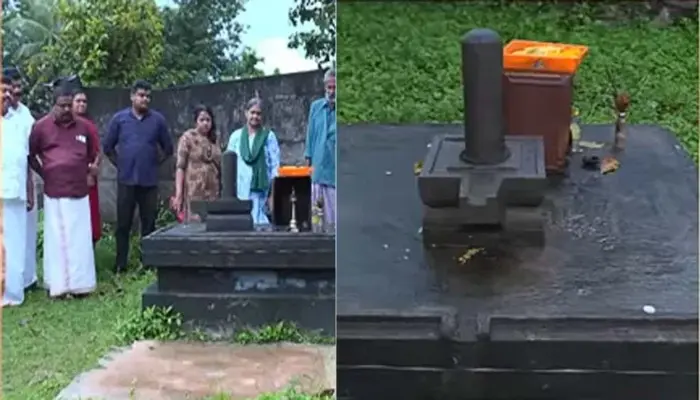
In Thiruvananthapuram district, Kerala, a sacred Hindu murti at an ancient temple was desecrated on two consecutive nights, with the word “ISIS”, referring to the Islamic terrorist organisation, inscribed on its pedestal. The incident occurred on two consecutive occasions, on 23 and 24 October 2026, at the Mohanapuram Mahadeva Venugopala Swami Temple in Pothencode. It was found that the word “ISIS” was found written on the pedestal of a Brahmarakshas murti. The temple archaka discovered the writing on the morning of 23 October while arriving to perform the daily pooja and informed the temple committee. Subsequently, the temple lodged a complaint with the Pothencode police. Although the police visited the temple and examined the site, they did not register a case following the first complaint. The same act was repeated during the night of 24 October and discovered on the morning of 25 October, prompting the temple committee and devotees to approach the police again. Police personnel subsequently returned to the site with forensic experts to collect evidence, but heavy rainfall reportedly hampered the investigation. The temple, managed by the Tiruvitamcoor Devaswom Board, had also experienced a theft of jewellery and other items about two years earlier, and the perpetrators were not identified. The repeated writing of “ISIS” on a sacred Hindu murti prompted devotees to demand a thorough investigation into the incident and the identification and arrest of those responsible. Hindu Aikyavedi chief patron K.P. Sasikala Teacher and Vishwa Hindu Parishad state general secretary Adv. Anil Vilayil condemned the incident, describing it as an attempt to hurt Hindu religious sentiments and create communal tensions. Local residents and devotees also planned protests, including Japa Yathras, to demand action from the authorities. As of 26 October 2026, no arrests had been reported.
Why it is Hate Crime ?
This case has been added to the tracker under the primary category of - Attack on Hindu religious representations. Within it, the sub-category selected here is - Desecration of Hindu religious symbol. Icons and symbols or a religious representation of a spiritual ideal are widely revered in Hinduism. Iconography is of vital significance in the Hindu milieu. It helps connect people’s spiritual beliefs with the real world. Iconography within the Hindu faith takes several shapes and forms. Murtis are of most significance to Hindus, to which daily rituals, prayers and offerings are done. Besides the murtis, there are several other symbols which have deep significance in the Hindu faith – the Om and Swastika for example. Since these Hindu religious symbols hold paramount importance in Hinduism, any desecration of symbols, icons, murtis, religious representations and manifestations, is driven by animosity towards the faith itself which manifests itself through these murtis, icons and symbols. Therefore, any desecration of these Hindu religious symbols and representations is considered religiously motivated hate crimes under this category. This case was added to the tracker because the writing of “ISIS” on a sacred Hindu murti went beyond ordinary vandalism of property and directly involved a religious object central to Hindu worship. A murti is not merely a physical structure within the temple premises; it holds religious significance for devotees as an object of reverence and worship. Defacing its pedestal with the name of an Islamic terrorist organisation introduced an explicitly religious and threatening association into a Hindu place of worship. This context distinguished the incident from indiscriminate damage to property and provided grounds to examine it as a potential act of religiously motivated hostility towards Hindus. In Hinduism, murtis hold profound religious significance as consecrated forms through which devotees worship and connect with the divine. They are not regarded merely as physical representations but serve as sacred focal points of prayer, devotion and ritual worship within temples. The desecration of a murti or its pedestal therefore constitutes an affront to Hindu religious beliefs and the sanctity of worship. When a sacred object is defaced with imagery or inscriptions associated with hostility or intimidation, the act strikes at the religious sentiments of devotees and undermines the sanctity of a space dedicated to their faith. The nature of the inscription was particularly significant in assessing the motive. ISIS is an Islamic extremist terrorist organisation, and its name carried associations with religious extremism, terrorism and violence. Its appearance in a Hindu temple was therefore intimidating and threatening to Hindu devotees, particularly when placed directly on the pedestal of a sacred murti. The act brought an organisation associated with extremist violence into a space dedicated to Hindu religious practice, conveying contempt for Hindu sacred traditions or an attempt to instil fear among worshippers. The inscription also carried the significance of placing an assertion of Islamic identity within a sacred Hindu space, directly over an object of Hindu worship. By writing “ISIS” on the pedestal of the Brahmarakshas murti, the perpetrator introduced the name of an organisation invoking an extremist Islamic identity into a setting devoted to Hindu religious traditions and reverence for Hindu deities. This juxtaposition was an attempt to assert Islamic identity in a manner that challenged the sanctity of Hindu worship and expressed contempt for Hindu religious symbols. The repetition of the act strengthened the concern that the incident was not simply an impulsive act of vandalism. The writing appeared on two consecutive occasions, demonstrating that the temple's sacred space was subjected to repeated interference. Such repetition proved that the perpetrator deliberately targeted the sacred space for desecration. Such actions are rooted in religious hatred towards Hindus and their places of worship. The religious context was central to understanding the harm. Hindu temples serve as places of worship, community gathering and the observance of religious traditions. An act that introduces threatening or extremist symbolism into such a space can affect more than the immediate object that was defaced. It can disturb the religious experience of devotees, undermine their sense of safety while practising their faith and create apprehension about the security of other Hindu religious sites. The placement of the inscription on a sacred murti's pedestal was therefore relevant not only as an act of damage to temple property but also as an expression of hostility directed at Hindu religious life. The desecration of a sacred Hindu murti, the inscription of “ISIS” on its pedestal and the repetition of the act constituted religiously targeted hostility towards Hindu sacred symbols. The act went beyond ordinary vandalism by introducing the identity of an Islamic extremist organisation into a Hindu place of worship, undermining its sanctity and hurting Hindu religious sentiments. Therefore, this case has been added to the tracker.


Case Status
Complaint filed


Perpetrators Details
Perpetrators
Unknown
Perpetrators Range
Unknown
Perpetrators Gender
unknown
 Sources



