Hindu organisation members and leaders deliberately denigrated, labelled Hindutvavadis by member of Congress party, Karnataka
 Mysore, Karnataka, India
  16 June, 2026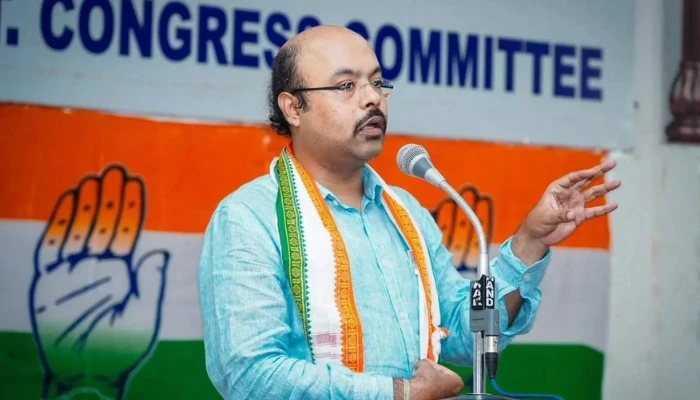
Case Summary
In Mysuru, Karnataka, an inflammatory statement denigrating the members of the Hindu organisation Rashtriya Swayamsevak Sangh (RSS) was made. The statement was made by Karnataka minister and former Chief Minister Siddaramaiah's son, Yatindra Siddaramaiah, during a discussion regarding proposals to require the registration of the Rashtriya Swayamsevak Sangh (RSS). Earlier, Karnataka Home Minister Priyank Kharge had sparked a heated debate over the registration of the Rashtriya Swayamsevak Sangh. Amidst this debate, Yatindra Siddaramaiah stated that “the Sangh members are not Hindus, but only Hindutvaists”, asserting that members of the organisation were not Hindus but adherents of Hindutva. He further stated that the RSS was not merely a cultural organisation and claimed that it functioned in support of the Bharatiya Janata Party (BJP). He also claimed that the organisation supported the BJP during election periods. The minister stressed that the RSS should not be treated solely as a cultural body. Following his comments, the report's editorial criticised his position and questioned the basis of his statements. They further criticised his association with the Congress party and raised questions regarding his approach towards issues concerning Hindus and Hindu organisations. This was not the first time that a member of the Congress party had targeted the Hindu organisation. Several such attempts had been made by various leaders and ministers in the past. Hinduphobia Tracker had recorded numerous instances in which various allegations were levelled against the RSS. One such instance occurred in April 2026, when a genocidal call against Hindus and the Hindu organisation was made by Congress President Mallikarjun Kharge during a speech delivered at a public rally in Nilambazar, Assam, ahead of the 2026 Assam Assembly elections. The case came to light when a video of the speech went viral on social media on 7 April 2026. In the video, Kharge, while referring to Hindus, the Rashtriya Swayamsevak Sangh, and the Bharatiya Janata Party, cited the Quran and stated, “Agar yeh zehreela saanp, aapke saamne se guzar raha hai aur aap namaz padh raha hai, namaz chhodke uss zehreeli saanp ko maarna, yeh quran mai kaha hai. Aur mai yahi kahunga, aap namaz todne ko parvah nahi, yeh zehreela saanp hai RSS aur BJP. Isko agar aap nahi maarenge, aap kabhi bachenge nahi,” roughly translating into English as, “If a poisonous snake crosses someone’s path during Namaz, the prayer should be stopped and the snake killed. The RSS and the BJP are that poisonous snake. If you do not kill them, you will not survive.” Another such instance was recorded in March 2026, when a Congress leader expressed support for banning the Hindu organisation RSS (Rashtriya Swayamsevak Sangh) as well as India’s external intelligence agency, the Research and Analysis Wing (R&AW). The remarks followed the release of a report by USCIRF, which criticised India and recommended a ban on the RSS. The report also criticised Hindu nationalism and stated that it had worsened the lives of religious minorities in India. The Indian National Congress subsequently used the report to criticise the RSS and promoted its findings as justification for banning the organisation. Earlier, in January 2026, the Rashtriya Swayamsevak Sangh (RSS), a Hindu organisation, was targeted by actor Prakash Raj through a series of inflammatory remarks delivered at an event organised by the Association for Protection of Civil Rights in Hyderabad. The programme, titled “Longing for Justice”, was held on 17 December 2025. During his address, the actor launched a vitriolic attack on the Sangh, claiming that it harboured an agenda of mass violence and sought the genocide of Muslims.
Why it is Hate Crime ?
The primary category selected in this case is Hate speech against Hindus. The sub-category selected is: Anti-Hindu subversion and prejudice. Hate speech is defined as any speech, gesture, conduct, writing, or display that is prejudicial against a specific individual and/or group of people, which leads to or may lead to violence, prejudicial action or hate against that individual and/or group. Media plays a specific and overarching role in perpetuating prejudicial attitudes towards a community owing to unfair, untrue coverage and/or misrepresentation/misinterpretation, selective coverage and/or omission of facts of/about issues affecting a specific religious group. This type of bias can dehumanise the victim group, making it easier for others to justify harmful actions against them, which aligns with the objectives of hate speech laws aimed at preventing such harm. It is often observed that the media takes a prejudicial stand against the Hindu community, driven by their need to shield the aggressor community, which happens to be a numeric minority; however, that is the one perpetrating violence against Hindus. For example, the media is often quick to contextualise religiously motivated crimes against Hindus, omit or misrepresent facts that point towards religiously motivated hate crimes, justify and/or downplay religiously motivated hate crimes, or simply present fake news to stereotype Hindus. Such media bias leads to the denial of persecution and is often used to dehumanise Hindus, leading to justification for violence against them. For example, the media covered several fake allegations of Hindus targeting Muslims and forcing them to chant Jai Shree Ram. Most of these cases were proved false and fabricated after police investigation. These fake news reports were subsequently never retracted or clarified. Such fake news led to the justification of violence and dehumanisation of Hindus based on the argument that since Hindus targeted Muslims and forced them to chant Jai Shree Ram, the dehumanisation of Hindus and violence against them was par for the course and merely a retaliation. Such media bias leads to prejudicial portrayals of Hindus and offers a justification for violence against them and, therefore, is considered hate speech under this category. The other sub-category selected is: Mocking/denigrating Hindu leaders. Hate speech is defined as any speech, gesture, conduct, writing, or display that is prejudicial against a specific individual and/or group of people, which leads to or may lead to violence, prejudicial action or hate against that individual and/or group. Religious leaders are often seen as representatives of the community, especially the community’s religious faith and beliefs. Mocking or denigrating a religious leader specifically owing to his religious identity and/or the religious rituals he observes can be considered hate speech because the motivating factor of the speech is animosity and/or dislike for what he represents – the religious beliefs and faith of the community. It is important to note that mere insulting words against an individual do not constitute hate speech. Insulting words may be used for an individual; however, the specific speech is not the result of religious hate and/or animosity towards the professed faith of the religious leader, but the individual himself. For the speech to be considered hate speech, the speech itself or the motivating factor behind the speech has to be religious in nature. Such speech, which denigrates Hindu religious leaders specifically owing to animosity towards the faith they profess and the community faith they represent, will be treated as hate speech under this category. This case was included in the Hinduphobia Tracker because a prominent Hindu organisation and its members were singled out through remarks that sought to distinguish them from the broader Hindu community and portray their beliefs and identity in a negative light. Hindutva stood at the centre of this incident. The term was often deployed as a euphemism to render the targeting of Hindus more palatable. In essence, Hindutva functions as a unifying ideology for Hindus, one that became imperative for the community to reclaim and preserve its cultural identity as it faced erosion and attack through Islamic invasions, British colonisation, Christian theological impositions, and forced conversions. Hindutva is not a destructive ideology; rather, it operates as a unifying edifice for Hindus. Yet it is frequently misused to target Hindus as a whole, attacking their religious identity and faith outright. This amounts to semantic jugglery designed to confuse Hindus into believing that their own persecution by supremacists is somehow justified because the specific victims espouse an ideology, Hindutva, that supposedly deserves the onslaught. The fact that the use of "Hindutva" merely masks animosity towards Hindus was made evident at the "Dismantling Global Hindutva" conference held in the United States, where speakers explicitly stated that Hindutva and Hinduism were indistinguishable, and therefore, to dismantle Hindutva, one would have had to dismantle Hinduism itself. The practice of targeting Hindus and their religious and cultural identity, then justifying that victimisation through euphemisms like Hindutva, stemmed from inherent animosity and hostility towards Hindus. Congress party leaders repeatedly use the term Hindutva against Hindus. While Hindutva inherently means union and cultural consolidation, Congress leaders deliberately invert its meaning to signify destruction, thereby complicating and confusing Hindus by portraying Hindutva as destructive of Hindus themselves. This manipulation is deliberate, as it allows Congress to frame Hindus as aggressors while masking its underlying hostility towards Hindu identity. The rationale for this conduct lies in Congress's longstanding opposition to the Rashtriya Swayamsevak Sangh (RSS). The RSS is a Hindu organisation that works for the upliftment of Hindus. Over the years, Congress has adopted a stance hostile to Hindu practices, the Hindu religion, and Hindu organisations. By framing RSS members as "Hindutvavadis" and denying them Hindu identity, Congress reinforced its position of hostility towards Hindu civilisational thought. Taken together, these statements contributed to an atmosphere in which Hindu organisations and those associated with them were portrayed as suspect or undeserving of recognition as part of the broader Hindu community. The deliberate separation of Hindus into "acceptable" and "unacceptable" categories based on ideological affiliation reinforced prejudice against a section of the Hindu community, forming the basis for this case's inclusion in the Hinduphobia Tracker.


Case Status
Unknown


Perpetrators Details
Perpetrators
State and Establishment
Perpetrators Range
One Person
Perpetrators Gender
male
 Sources




