Hindu organisation targeted with false accusation of genocide of minorities by actor in Hyderabad, Telangana
 Hyderabad, Telangana, India
  6 January, 2026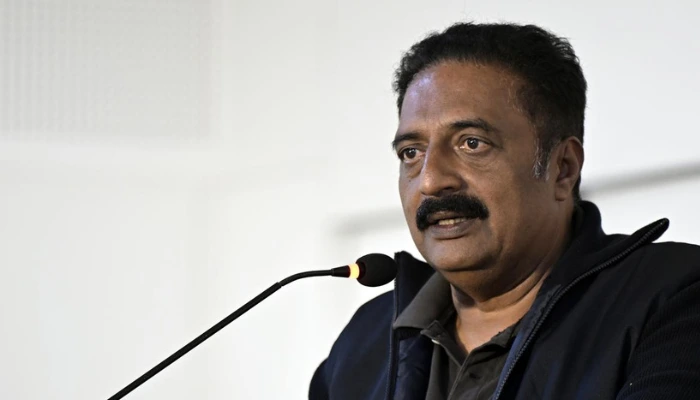
Case Summary
Rashtriya Swayamsevak Sangh (RSS), a Hindu organisation, was targeted by actor Prakash Raj through a string of inflammatory remarks delivered at an event organised by the Association for Protection of Civil Rights in Hyderabad. The programme, titled “Longing for Justice”, was held on 17 December 2025. During his address, the actor launched a vitriolic attack on the Sangh, claiming that it harbours an agenda of mass violence and that it seeks a genocide of Muslims. Speaking to the audience, Raj levelled sweeping accusations against the broader Hindu nationalist ecosystem, claiming the country was witnessing an organised project of extermination. He alleged that Muslims, tribal groups and other minorities were being systematically targeted, and portrayed this as a deliberate agenda to wipe out entire communities. He then claimed that constitutional safeguards and legal processes no longer matter, asserting that those in power have abandoned rule of law and governance norms. In an emotionally charged segment, he attacked India’s judiciary and accused courts of failing citizens. He argued that people once trusted courts to remain independent of political or religious influence, but claimed that this trust has been broken, accusing the justice system of enabling injustice rather than correcting it. Raj also attempted to shift the narrative from electoral politics to ideology, telling the audience not to focus only on the BJP but to confront the RSS. He compared the organisation to European fascist forces and used a Panchatantra analogy to argue that the visible political symbol is not the real source of power, insisting the real fight must be against what he described as the deeper force behind it. He further sought to delegitimise the RSS by alleging it had no contribution to India’s freedom struggle and by repeating the claim that it would never hoist the national flag. Turning his criticism toward Prime Minister Narendra Modi, Raj described a Constitution Day message he said he received as dishonest, and accused the Prime Minister of using figures like Dr B R Ambedkar and Mahatma Gandhi for political messaging. He also referred to a recent public event involving the Prime Minister and the RSS chief, alleging that the leadership shows greater reverence to the Bhagwa dhwaj and the Ram Mandir flag than to the national flag, and again repeated his charge of a “genocidal” agenda. Raj claimed the Constitution itself is under threat and alleged that the goal is to replace constitutional governance with Manusmriti-based rule, warning that this ideological project would ultimately reduce citizens into second class status. He also invoked past murders of public intellectuals and activists, claiming a pattern of impunity within the system, and concluded by claiming the objective is to weaken democratic institutions. He urged supporters to keep raising their voices and to continue speaking out without fear.
Why it is Hate Crime ?
This case is documented under the selected primary category: Hate speech against Hindus. Under this, the selected secondary category is: Anti-Hindu subversion and prejudice. Under this, the tertiary category is: labeling/misrepresentation of perpetrator's religion as Hindus, anti-Hindu fake news or downplaying. Hate speech is defined as any speech, gesture, conduct, writing, or display that is prejudicial against a specific individual and/or group of people, which is leading to or may lead to violence, prejudicial action or hate against that individual and/or group. Media plays a specific and overarching reach in perpetuating prejudicial attitudes towards a community owing to unfair, untrue coverage and/or misrepresentation/misinterpretation, selective coverage and/or omission of facts of/pertaining to issues affecting a specific religious group. This type of bias can dehumanise the victim group, making it easier for others to justify harmful actions against them, which aligns with the objectives of hate speech laws aimed at preventing such harm. It is often observed that the media takes a prejudicial stand against the Hindu community driven by their need to shield the aggressor community which happens to be a numeric minority, however, is the one perpetrating violence against Hindus. For example, the media is often quick to contextualise religiously motivated crimes against Hindus, omit or misrepresent facts that point towards religiously motivated hate crimes, justify and/or downplay religiously motivated hate crimes or simply present fake news to stereotype Hindus. Such media bias leads to the denial of persecution and is often used to dehumanise Hindus, leading to justification for violence against them. For example, the media covered several fake allegations of Hindus targeting Muslims and forcing them to chant Jai Shree Ram. Most of these cases were proved false and fabricated after police investigation. These fake news reports were subsequently never retracted or clarified. Such fake news led to the justification of violence and dehumanisation of Hindus based on the argument that since Hindus targeted Muslims and forced them to chant Jai Shree Ram, the dehumanisation of Hindus and violence against them was par for the course and merely a retaliation. Such media bias leads to prejudicial portrayal of Hindus and offers a justification for violence against them and therefore, is considered hate speech under this category. The speech by Prakash Raj qualifies as a religiously motivated hate crime (hate speech) because it directly targeted a Hindu organisation, the Rashtriya Swayamsevak Sangh (RSS), and, by extension, the Hindu faith itself. During a public event in Hyderabad, he repeatedly said that the RSS was planning genocide, stating, “Whatever is happening in this country is a preparation of a genocide. They want to wipe out Muslims. They want to wipe out tribal people, minorities. That is their agenda.” By linking a Hindu organisation to such extreme claims, he created a narrative in which the organisation and the people associated with it, were presented as a direct threat to society. This kind of targeting based on religious identity is the very definition of a religiously motivated hate crime, because it attacks a group not for what they do, but for the religion they belong to. The RSS is deeply connected to Sanatan Dharma, which is the traditional name for the faith professed by Hindus. Sanatan Dharma, meaning “Eternal Dharma,” represents the ongoing, ancient, and continuous spiritual and cultural identity of Hindus. It is grounded in sacred texts such as the Manusmriti and the Mahabharata, and forms the basis of the beliefs, rituals, and social practices of the Hindu community. By denying the legitimacy of the RSS, questioning its role in India’s freedom struggle, and stating that it would “never hoist our Indian flag,” Prakash Raj effectively attacked the existence and authority of Hinduism itself. When a person publicly denies or delegitimises the faith of an entire community, it dehumanises them, making them vulnerable to discrimination, prejudice, or violence. This is a key element of religious hate speech: it does not merely criticise actions, it attacks the identity and existence of a faith and its followers. The speech also created fear and suspicion in a broad public context. By framing the RSS as a secretive and dangerous organisation, using metaphors like “You are fighting with the lotus. Fight with the strength which gives to that lotus which is deep down,” and warning the audience, “Today they are coming for the Muslims. Tomorrow they will come for you,” Prakash Raj positioned Hindus associated with the RSS as a hidden, threatening force. This fosters social hostility and can encourage others to view members of the religious group with mistrust or animosity, which is exactly the type of environment that religiously motivated hate crimes aim to create. Furthermore, Prakash Raj connected the ideology of the RSS to broader threats against constitutional rights and democratic institutions, claiming that the Constitution itself was under attack and that minorities and dissenting citizens were being made secondary. He cited incidents involving the murders of activists such as Gauri Lankesh, Narendra Dabholkar, Govind Pansare, and Malleshappa Madivalappa Kalburgi, suggesting that the perpetrators’ actions were tolerated. By combining these claims with religious targeting, the speech implied that Hindus associated with the RSS were part of a moral and political threat to society, which magnifies the hate speech dimension. In simple terms, this speech is a hate crime because it presents a Hindu organisation and its members as dangerous and illegitimate; attacks the existence of Hinduism itself by questioning the authority of Sanatan Dharma; spreads fear and hostility toward a religious community; and frames members of that community as a hidden threat to minorities and the nation. These elements do not merely express an opinion; they publicly delegitimise a religion, make its followers appear dangerous, and encourage social prejudice, which is exactly the purpose and effect of religiously motivated hate speech. The targeting also functions through a proxy pattern in which the RSS is treated as a symbolic stand-in for Hindu identity and Hindu organisational strength. Because the RSS is widely viewed as a Hindu cultural and social organisation with deep grassroots presence, sweeping vilification of it often spills into broader hostility toward the Hindu faith and Hindu assertion. In practice, attacking the RSS with maximalist moral charges becomes a way to delegitimise Hindu participation in civic discourse, portraying Hindu organisations and Hindu self-expression as threats rather than as legitimate democratic activity. This incident is further strengthened by the speaker’s prior record of derogatory remarks about Hindu traditions. In a widely circulated 2018 clip from a public event, Prakash Raj reportedly compared Ramleela, a revered Hindu cultural and religious tradition, to “child porn” while criticising the state’s promotion of Ramleela-related programmes. Even when presented as political commentary, equating a sacred Hindu tradition with an explicitly exploitative and criminal category is a contempt-based attack that aims to shock, degrade, and stigmatise Hindu cultural life. Taken together, the pattern is consistent: Hindu institutions are not merely criticised, they are demonised as genocidal; Hindu cultural practices are not merely debated, they are humiliated through degrading comparisons. This reflects targeted hostility toward Hindu collective identity and Hindu religious expression, and contributes to a climate where Hindus and Hindu organisations can be vilified, socially excluded, and treated as fair targets for hate. Disclaimer: The Hinduphobia Tracker records incident dates based on when the crime occurred, rather than when the media reports it. However, in this case, media reports have not specified the exact date when the victim's ordeal began. Henceforth, for documentation purposes, 7th January, 2026, the date of media reporting, has been selected as the indicative incident date.


Case Status
Unknown


Perpetrators Details
Perpetrators
Muslim Extremists
Perpetrators Range
One Person
Perpetrators Gender
male
 Sources




