Hindu women's suffering trivialised; Muslim journalist dismisses 'Love Jihad', calls it 'communal propaganda'
 Delhi, India
  20 April, 2026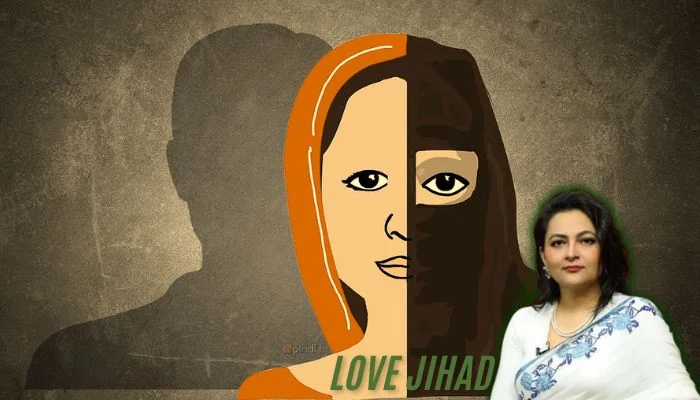
Case Summary
An anti-Hindu rhetoric dismissing religiously driven crimes targeting Hindu women was propagated by Muslim journalist Arfa Khanum Sherwani, associated with The Wire, an anti-Hindu left-wing news portal. Arfa Khanum Sherwani claimed that 'Love Jihad' as a crime was not real and completely dismissed the sufferings of the Hindu victims of this crime. 'Love Jihad' or 'Grooming Jihad' is a commonly used term in public discourse which refers to crimes in which Hindu women and minor Hindu girls are profiled on the basis of their religious identity and then lured into relationships or marriage for the purpose of forced conversion or sexual exploitation by Muslim men. In several documented cases, Muslim men concealed their religious identity and presented themselves as Hindus by adopting Hindu names, wearing Hindu symbols, and using forged documents reflecting a fabricated Hindu identity. These crimes were driven by hostility towards the Hindu community, with Hindu women, among the most vulnerable members of the community, being specifically targeted for sexual and religious exploitation. In a post published on X on 21 April 2026, Arfa Khanum Sherwani described the term 'Love Jihad' as “a profound insult to the dignity and intelligence of Hindu women”. She framed the issue as “communal propaganda” intended to “control women” and deprive them of their autonomy. “The idea of ‘Love Jihad’ is a profound insult to Hindu women, their dignity and intelligence. It assumes they are incapable of making their own choices and need saviours. It is a direct attack on women’s autonomy. More than communal propaganda, it is about controlling women, not protecting them,” Sherwani wrote. Arfa Khanum Sherwani made this post while the Tata Consultancy Services (TCS) Nashik forced conversion and sexual exploitation scandal came to light and the controversy was ongoing. The case involved Hindu women and a Hindu man who were profiled by Muslim men and women senior to them at the workplace. The Hindu victims were sexually exploited, molested, harassed, subjected to the denigration of their deities and faith, and pressured to convert and consume beef by their Muslim seniors. During the same controversy, Sherwani posted in defence of the accused Muslims, stating: “A new wave of targeting Muslims, not the paan vendor or street hawker this time, but the educated, skilled, employed. The aim is clear: make even the few who have secured jobs in this majoritarian system unemployable.”
Why it is Hate Crime ?
The primary category selected in this case is: Hate Speech against Hindus. The subcategory selected is: Anti-Hindu subversion and prejudice. The tertiary category selected is: Anti-Hindu fake news or downplaying. Hate speech is defined as any speech, gesture, conduct, writing, or display that is prejudicial against a specific individual and/or group of people, which is leading to or may lead to violence, prejudicial action or hate against that individual and/or group. Media plays a specific and overarching reach in perpetuating prejudicial attitudes towards a community owing to unfair, untrue coverage and/or misrepresentation/misinterpretation, selective coverage and/or omission of facts of/pertaining to issues affecting a specific religious group. This type of bias can dehumanise the victim group, making it easier for others to justify harmful actions against them, which aligns with the objectives of hate speech laws aimed at preventing such harm. It is often observed that the media takes a prejudicial stand against the Hindu community driven by their need to shield the aggressor community which happens to be a numeric minority, however, is the one perpetrating violence against Hindus. For example, the media is often quick to contextualise religiously motivated crimes against Hindus, omit or misrepresent facts that point towards religiously motivated hate crimes, justify and/or downplay religiously motivated hate crimes or simply present fake news to stereotype Hindus. Such media bias leads to the denial of persecution and is often used to dehumanise Hindus, leading to justification for violence against them. For example, the media covered several fake allegations of Hindus targeting Muslims and forcing them to chant Jai Shree Ram. Most of these cases were proved false and fabricated after police investigation. These fake news reports were subsequently never retracted or clarified. Such fake news led to the justification of violence and dehumanisation of Hindus based on the argument that since Hindus targeted Muslims and forced them to chant Jai Shree Ram, the dehumanisation of Hindus and violence against them was par for the course and merely a retaliation. Such media bias leads to prejudicial portrayal of Hindus and offers a justification for violence against them and therefore, is considered hate speech under this category. This is a clear example of anti-Hindu rhetoric dismissing the experiences and sufferings of Hindu women who have been victims of deception, coercion, forced conversion, and exploitation within relationships by Muslim men. By stating that 'Love Jihad' as a crime does not exist and by describing concerns surrounding it as “communal propaganda”, Arfa Khanum Sherwani dismissed the ordeal of Hindu women who have spoken about being deceived, exploited, pressured to convert, or targeted on the basis of their religious identity. As a journalist with a significant public platform, her remarks contributed to a narrative that such crimes either did not occur or did not warrant serious public attention. This amounted to deliberate and malicious erasure of an anti-Hindu hate crime and the dismissal of a documented pattern of victimisation affecting Hindu women and girls. 'Love Jihad', also known as "Grooming Jihad", is a commonly used term in public discourse which refers to crimes in which Hindu women and minor Hindu girls are profiled on the basis of their religious identity and subsequently lured into relationships or marriages by Muslim men. In several documented cases, Muslim men concealed their religious identity and presented themselves as Hindus by adopting Hindu names, using forged or misleading documents, wearing Hindu religious symbols, and participating in Hindu festivals and traditions in order to gain the trust of the victims. These crimes are not isolated incidents but reflect a recurring pattern in which Hindu women are specifically targeted because of their religious identity. The religious profiling of victims and the targeting of a particular community transformed such offences from ordinary crimes into acts motivated by hostility towards the Hindu community. Arfa Khanum Sherwani's assertion that "Love Jihad" as a crime did not exist ignored the core issue raised in such cases: deception, coercion, and pressure to convert. The act of entering into a relationship by concealing one's identity, fabricating personal details, or misleading a person about one's intentions cannot be equated with an informed and autonomous decision made by the victim. Personal autonomy and dignity require transparency, honesty, and informed consent. In numerous documented cases, Hindu women entered relationships believing they were involved with Hindu men, only to later discover that the Muslim men involved had concealed key aspects of their identity, including their faith identity. In other cases, even where the Muslim man's religious identity was known, the relationship was initially presented as a genuine interfaith partnership, only for the Hindu woman to subsequently face pressure to convert to Islam, abandon Hindu practices, consume beef, cease worshipping Hindu deities, and adopt Islamic religious customs. These circumstances undermined genuine consent and transformed what appeared to be voluntary relationships into situations involving deception, coercion, exploitation, and religious pressure. Such cases demonstrate a pattern in which Hindu women were targeted through deception and subsequently subjected to sexual exploitation, religious conversion, or both. This is fundamentally different from the portrayal advanced by Arfa Khanum Sherwani. The central issue is not the autonomy of Hindu women, but the deception, concealment, coercion, and manipulation employed by Muslim men to draw Hindu women into relationships under false pretences. A decision can only be considered genuinely autonomous when it is made with full knowledge of the facts and without deception or pressure. Where Muslim men conceal their identities, misrepresent their intentions, and later pressure Hindu women to convert, the principle of informed consent is fundamentally compromised. By disregarding this distinction and framing the issue solely as a matter of women's autonomy, Arfa Khanum Sherwani dismissed the trauma and ordeal of Hindu women who have repeatedly stated that they were being deceived, exploited, and pressured on the basis of their religious identity. Such deliberate dismissals of such crimes minimise the experiences of these Hindu women and divert attention away from the conduct of the Muslim perpetrators and the suffering of the victims. By characterising concerns surrounding such cases as “communal propaganda”, Arfa Khanum Sherwani diverted attention away from the conduct of the perpetrators and instead focused on discrediting the concerns raised by Hindu victims and the Hindu community. Rather than addressing instances involving deception, coercion, sexual exploitation, and pressure to convert, she dismissed the broader issue as a communal narrative. This framing disregarded the experiences of Hindu women who described being deceived, exploited, and subjected to conversion pressure. In doing so, Sherwani's remarks trivialised their ordeal, undermined their testimony, and dismissed the concerns of the Hindu community regarding crimes in which religious identity was a significant factor. Contrary to Arfa Khanum Sherwani's portrayal that concerns surrounding "Love Jihad" constitute communal propaganda originating from the Hindu community, the term and the issue entered public debate through multiple sources, including Christian groups in Kerala. Church organisations in the state raised concerns regarding cases involving the forced conversion of Christian women through predatory relationships with Muslim men and brought these concerns before public authorities and the courts. The issue subsequently received judicial attention, and in 2009, the Kerala High Court addressed such matters. The court held these crimes to be legitimate and directed the state government to frame laws against 'Love Jihad'. This history undermines the portrayal of the issue as a purely "Hindutva conspiracy" or a narrative manufactured solely by Hindu groups and communities, as concerns regarding such cases were also raised by Christian organisations and were examined within judicial proceedings long before the issue became a major subject of national political debate. Contrary to Sherwani's claim that 'Love Jihad' is fake and a communal propaganda, Hinduphobia Tracker documented 1,193 such cases between January 2023 and 2 June 2026 in which Hindu women were lured into relationships through deception, fabricated identities, or false promises and subsequently faced pressure to convert to Islam, and were subjected to sexual exploitation by Muslim men. According to this documentation, victims were in many cases pressured to consume beef, cease worshipping Hindu deities, perform namaz, wear a burqa, or otherwise abandon their Hindu religious practices. The documented cases also included a substantial number of minors. Of the 1,193 recorded cases, 334 involved minor Hindu girls. These figures demonstrate a recurring and significant pattern of victimisation affecting Hindu women and girls, directly contradicting claims that concerns surrounding such cases are merely a form of communal propaganda. Some examples of such cases documented by the Hinduphobia Tracker include the following. A Hindu woman from Chakrata in Dehradun, Uttarakhand, was deceived into a relationship by a Muslim man who concealed his religious identity behind fake Hindu names and social media profiles. The perpetrator operated under the names "Aman Tomar" and "Aman Sharma" while living in the area as a mechanic. Over time, he gained the Hindu woman's trust, drew her into a relationship, and pressured her to convert to Islam. In Ulhasnagar in Maharashtra's Thane district, a Hindu woman was deceived into a relationship and marriage by a Muslim man posing as a Hindu. The accused, Imran Sheikh, introduced himself to the victim as a Hindu man named "Vijay Verma". Following the marriage, the woman was forced to convert, perform Islamic religious practices, and consume beef against her wishes. In another case from Basti, Uttar Pradesh, a Hindu woman was lured into a relationship and sexually exploited by a Muslim politician named Ajfarul Haq, who was associated with the All India Majlis-e-Ittehadul Muslimeen (AIMIM). The accused deceived the victim by wearing a kalava and presenting himself as a Hindu man named Prince. He also subjected the woman to physical abuse, and reports also revealed that he had similarly targeted hundreds of Hindu women for sexual exploitation and prostitution. In another case from Mumbai, Maharashtra, a Hindu woman was lured into marriage through deception and subsequently pressured to undergo religious conversion by a Muslim man named Mohammad Yusuf, who had posed as a Hindu. He also circumcised her minor son without her consent and forced her to cook meat against her wishes. In a similar incident from Ujjain, Madhya Pradesh, a Hindu woman filed a complaint against a Muslim man named Shahrukh, who introduced himself as Yogendra Wadia and posed as a Hindu in order to gain her trust. After his true identity was revealed, he pressured her to convert to Islam and physically assaulted her when she refused to convert. Taken together, the documented cases, statistical data, and examples outlined above demonstrate that "Love Jihad" or "Grooming Jihad" as a crime is real and it extends far beyond what Arfa Khanum Sherwani characterised as "communal propaganda". The volume of documented incidents and the recurring patterns of deception, concealment of identity, coercion, and pressure to convert directly contradict her dismissal of the issue. Her remarks disregarded the ordeal of Hindu women, while overlooking the substantial number of cases demonstrating a recurring pattern. On this basis, this case is being documented in the Hate Crime Database of the Hinduphobia Tracker.


Case Status
Unknown


Perpetrators Details
Perpetrators
Muslim Extremists
Perpetrators Range
One Person
Perpetrators Gender
female
 Sources




