Hindu woman deceived through fake Hindu identity and pressured for Islamic conversion, accused had targeted over 130 women
 Dehradun, Uttarakhand, India
  24 May, 2026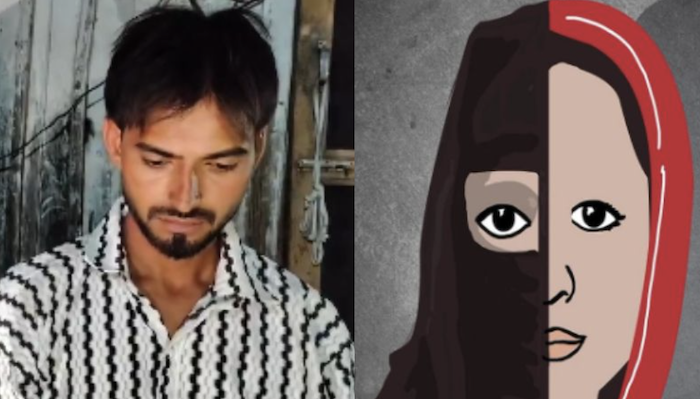
Case Summary
A Hindu woman from Chakrata in Dehradun, Uttarakhand, was deceived into a relationship by a Muslim man who concealed his religious identity behind fake Hindu names and social media profiles. The perpetrator operated under the names “Aman Tomar” and “Aman Sharma” while living in the area as a mechanic. Over time, he gained the Hindu woman’s trust, drew her into a relationship, and pressured her to convert to Islam. The incident exposed a wider pattern of targeting Hindu women through false Hindu identities and online manipulation. The Hindu woman remained unaware of the perpetrator’s real identity as Mohammad Farman, a resident of Deoband in Uttar Pradesh, until the matter came to light after suspicions arose within her family. The case later expanded beyond a single victim after objectionable material involving multiple Hindu women was recovered from the perpetrator’s mobile phone. Mohammad Farman had been residing in the Chakrata area of Dehradun while working as a mechanic. During this period, he created and operated fake Instagram profiles under Hindu names, including “Aman Tomar” and “Aman Sharma”. Through these fabricated Hindu identities, he contacted Hindu women online and built familiarity by presenting himself as a Hindu man. Using the profile “Aman_tmr”, he established contact with a married Hindu woman from Chakrata and gradually drew her into a relationship. After gaining the Hindu woman’s trust, the perpetrator revealed his real identity as Farman. By that stage, he had already established emotional influence and control over her through prolonged deception and online interaction. He then pressured the Hindu woman to convert to Islam and planned to take her from Dehradun to Deoband. The relationship and conversion pressure were built entirely upon the false Hindu identity that he had deliberately maintained from the beginning. The matter first surfaced on 21st May 2026 when the Hindu woman’s husband visited her parents’ home and found Farman present there with her. On seeing the husband, the perpetrator attempted to hide inside a cowshed. Villagers and the woman’s husband eventually caught him. During the confrontation, he used abusive language, issued threats, and hurled casteist slurs at those present. The investigation then uncovered further material from the perpetrator’s mobile phone and social media accounts. Obscene photographs and videos involving Hindu women were recovered from his device. The phone also revealed that he had remained in contact with several Hindu girls and women from Uttarakhand and Himachal Pradesh through multiple social media accounts operated under fake Hindu identities. Information recovered during the inquiry indicated that the perpetrator had used these accounts to target Hindu women while concealing his Muslim identity. Additional details emerging during the investigation pointed towards a broader organised pattern. Hindu organisation members stated that over 130 Hindu girls and women from Uttarakhand and Himachal Pradesh had been targeted through fake Hindu identities and online grooming tactics. Material recovered from the perpetrator’s phone showed exchanges of objectionable videos and photographs with other Muslim youths. Investigators also found videos connected to attempts to lure Hindu women into relationships and conversion through emotional manipulation and religious pressure. Following the incident, a police complaint was filed against Mohammad Farman. Chakrata police registered a case against him under multiple serious sections of the Bharatiya Nyaya Sanhita. He was arrested and taken into custody. The investigation proceeded under the supervision of Circle Officer Anuj Kumar of Sahaspur. Police began examining the perpetrator’s mobile phone data, social media accounts, and online communications to identify additional victims and determine whether other individuals were connected to the network.
Why it is Hate Crime ?
This case has been added to the tracker under the primary category - Crimes against women in relationships and other sexual crimes. Within this, the subcategory selected is - Man pretends to be Hindu. Under this, the tertiary categories selected are - Name changed, and Pattern of targeting Hindu women. When a non-Hindu man pretends to be a Hindu to deceive a Hindu woman into a relationship, the act is seen as triggered by malafide intentions. In some cases, the woman eventually accepts the man’s original religious identity and converts after the man’s identity is revealed. These cases could be argued as cases of religious brainwashing and a result of the pressure a woman feels after getting into a relationship with a man. The woman, it can be argued, also changed her religious identity because of the stigma she believes she might face if she chooses to walk out of a deceptive relationship. However, for the purpose of documenting hate crimes, the cases in this subcategory are limited to those where there is explicit violence aimed at religious conversion against the wishes of the victim (force-feeding beef, blackmailing with intimate videos, rape on refusal to convert, etc), or if the woman herself complains of the man’s religious deception. In such cases, it is established that the deception of the non-Hindu man had a specific aim of religious conversion or targeting of the victim due to her Hindu religious identity, therefore, making it a religiously motivated hate crime. Another subcategory selected for this case is - Brainwashed and/or groomed In our database, we have not added incidents where women have converted to another religion of their free will and no allegations of forced/involuntary conversion have been made. However, there are certain cases of conversion where the consent itself is a result of the brainwashing or grooming of a minor by the non-Hindu perpetrator trying to victimise a woman for her Hindu religious identity. The phenomenon of grooming points to non-Hindu perpetrators identifying their Hindu victims’ vulnerabilities and exploiting them over months and sometimes years, to extract the supposed ‘consent’ in order to convert their religion. In most cases of grooming, the victims are minors or the grooming started when the victim was a minor. In other cases of grooming, the non-Hindu perpetrator brainwashes and grooms a minor victim to extract their trust and then proceeds to rape them repeatedly with the intent of converting them to their faith. It is pertinent to understand here that when the victim is a minor, the ‘consent’ to convert or enter into a romantic relationship with an adult itself is redundant – addressed by POCSO. While every case of conversion of a minor and incidents of establishing a physical relationship with a minor by an adult is a crime, for the purpose of this database, a case would be considered a hate crime only if there is a distinct religious angle to the grooming. For example, in the UK, if a Hindu minor is targeted by Pakistani grooming gangs, it would be considered a hate crime because the victims are specifically targeted owing to their non-Muslim religious identity with the perpetrators being Muslim. In other cases, if a Hindu minor is brainwashed into entering a physical relationship with the non-Hindu adult perpetrator and the family alleges grooming/brainwashing of the minor to convert her religion, it would form a part of this database. If the victim is a Hindu adult, the case would form a part of this database only if the victim herself says that she was brainwashed/groomed to convert her religion. However, if the victim is deceased (murdered or otherwise), the case would form a part of this database if her family/friends provided testimony that the victim was brainwashed/groomed to convert her religion. Since these crimes have a distinct religious angle where the victim is being targeted owing to her Hindu religious identity, these cases are considered a hate crime. The other primary category is- Hate speech against Hindus, and within this, the subcategory selected is- Anti-Hindu slurs, mocking faith. Anti-Hindu slurs and the deliberate mocking of the Hindu faith owing to religious animosity involve the usage of derogatory terms, stereotypes, or offensive references to religious practices, symbols, or figures. One of the common anti-Hindu slurs used against Hindus is “cow-worshipper” and “cow piss drinker”. The intention of using this term is to demean and mock Hindus as a group and their religious beliefs since Hindus consider the cow holy. Additionally, some symbols and the slurs attached to them have a historical context that exacerbates the insult, hate, stereotyping, dehumanisation and oppression against Hindus. Cow worship has been used for centuries to denigrate Hindus, insult their faith and oppress Hindus specifically as a religious group. There has been overwhelming documentation about how cow slaughter has been used to persecute Hindus with cow meat being thrown in temples and places of worship. There has also been overwhelming documentation where cow meat (beef) has been force-fed to Hindus to either forcefully convert them to Islam or denigrate their faith. Apart from cow worship, the Swastika – which holds deep religious significance for the Hindus – has also been misinterpreted and distorted to use as a slur against Hindus. Similarly, the worship of the Shivling has been used by supremacist ideologies and religions to denigrate Hindus owing to religious animosity. Such slurs and denigration stem out of inherent animosity and hate towards Hindus and their faith, therefore, it is categorised as hate speech targeted at Hindus specifically owing to their religious identity. This case carried clear religious markers because the Muslim perpetrator deliberately concealed his real identity and presented himself as a Hindu man in order to gain access to Hindu women and establish relationships under false pretences. Mohammad Farman abandoned his real Muslim identity and adopted Hindu names such as “Aman Tomar” and “Aman Sharma” while operating in Dehradun and Chakrata. He also created fake social media accounts using these Hindu identities to approach and communicate with Hindu women online. The deception was not incidental but carefully constructed around Hindu identity itself, demonstrating calculated intent to exploit the trust and familiarity associated with shared religion and culture. By specifically choosing Hindu names and maintaining a fabricated Hindu persona, the perpetrator ensured that Hindu women interacting with him believed they were speaking to a Hindu man from their own community. This deliberate concealment of religion and misuse of Hindu identity established that the targeting was religiously motivated from the outset. The case further revealed a broader and deeply concerning pattern of targeting Hindu women on a significant scale. Information recovered during the investigation showed that the perpetrator had remained in contact with a large number of Hindu girls and women from Uttarakhand and Himachal Pradesh through multiple fake accounts. Hindu organisation members stated that more than 130 Hindu women had been targeted through these fabricated Hindu identities. The recovery of obscene photographs and videos of Hindu women from the perpetrator’s mobile phone demonstrated that the activity extended far beyond a single relationship and reflected systematic targeting. The scale of the victims, the repeated use of fake Hindu identities, and the organised online approach established a consistent pattern directed specifically at Hindu women. The sustained collection of private material involving Hindu women further reflected predatory intent and demonstrated that Hindu women were being deliberately identified, approached, manipulated, and exploited through religious deception. The case also qualified as predatory proselytisation because the relationship built through false Hindu identities ultimately progressed into pressure and coercion for conversion to Islam. After emotionally influencing the Hindu woman through prolonged deception, the perpetrator revealed his real identity and pressured her to convert to Islam. The conversion pressure emerged only after the Hindu woman had been drawn into the relationship through a fabricated Hindu persona, demonstrating that the concealment of identity functioned as a tool for religious targeting and conversion-oriented manipulation. The perpetrator was also preparing to take the woman from Dehradun to Deoband, indicating a deliberate escalation of control and isolation after the conversion pressure had begun. The coercive and hostile nature of the targeting became even clearer when the matter was exposed by the Hindu woman’s husband and local residents. After being caught, the perpetrator responded with abusive behaviour, threats, and casteist slurs directed at those confronting him. The use of caste-based abuse during the confrontation demonstrated open hostility towards the Hindu victims and reinforced the religiously charged nature of the targeting. The threats and intimidation emerged specifically after the Hindu woman’s family intervened and disrupted the conversion-oriented relationship, showing that coercion and aggression formed part of the larger pattern of religious manipulation and control. This incident is not an isolated case but part of a broader pattern where Hindu women are deliberately targeted through deception and emotional blackmail for religious conversion and sexual exploitation. This stems from inherent hostility towards the victim's professed faith since Abrahamic faiths believe that any non-adherent to the faith is subject to being dehumanised till they convert. Such predatory actions stem from doctrinal animosity towards the Hindu faith and its adherents. Disclaimer: The exact date of when the Hindu woman and the Muslim perpetrator first came into contact was not specified in the available sources. However, the incident became publicly known through reports published by 25th May 2026. Accordingly, the Hinduphobia Tracker has recorded the respective date as the incident date for documentation purposes only. The Hinduphobia Tracker acknowledges that the investigation uncovered evidence indicating that numerous Hindu women were targeted through fake Hindu identities and online grooming tactics linked to the Muslim perpetrator. However, as the currently documented case specifically centres on the Hindu woman from Chakrata whose targeting and conversion pressure directly led to the exposure of the network, the victim count has been recorded as 1. Reports further noted that obscene photographs and videos involving many additional Hindu women were recovered from the perpetrator’s mobile phone, with claims that over 130 women may have been similarly targeted.
Victim Details
Total Victim
1
Deceased
0
Gender
- Male 0
- Female 1
- Third Gender 0
- Unknown 0
Caste
- SC/ST 0
- OBC 0
- General 0
- Unknown 1
Age Group
- Minor 0
- Adult 1
- Senior Citizen 0
- Unknown 0


Case Status
Arrested


Perpetrators Details
Perpetrators
Muslim Extremists
Perpetrators Range
One Person
Perpetrators Gender
male
 Sources




