Hindu sentiments outraged as Ambedkarite woman makes derogatory remarks against Holi festival and Hindu community
 India
India  27 February, 2026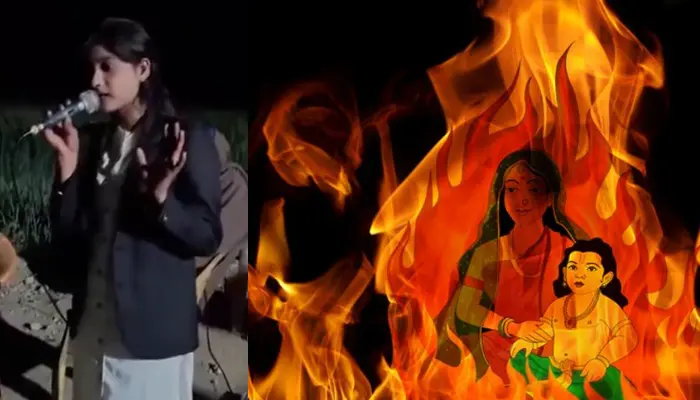
Case Summary
Several derogatory remarks against the Holi festival, a revered Hindu festival, and the Hindu community were made by an Ambedkarite woman named Aanchal Gautam. The accused subscribes to Ambedkarism, an anti‑Hindu political movement that has often denigrated Hinduism, tried to create inter‑caste conflict and abused Hindu deities, all under the false guise of 'fighting casteism'. According to media reports, this incident came to light when the accused’s derogatory video denigrating Holi and Hindus went viral on social media on 28 February 2026. The first video featured Aanchal Gautam, who asks a group of villagers to learn about the history of Holika Dahan, a revered Hindu custom celebrated a day prior to Holi. Calling herself an Ambedkarite, Aanchal claimed that King Hiranyakashipu belonged to the Dalit community and that his sister Holika was raped by people of “Manuvadi ideology”, referring to Hindus. Addressing the Dalit Hindu villagers, Aanchal said that Dalits should not celebrate Holi. She narrated a fabricated story about Holika, saying, “There was a king named Hiranyakashipu in our community. His sister was Holika. Hiranyakashipu’s son was Prahlad. People with Manuvadi ideology used to force Prahlad to drink alcohol. Holika respected Prahlad very much.” She continued, “Prahlad went for a walk and was given alcohol. Holika followed him and fed her nephew. She searched for Prahlad, and there, people with Manuvadi ideology (meaning Hindus) raped Holika all night and then burned her. And what everyone does is wish her Happy Holi.” Following this, she continued her story, claiming, “They (Hindus) all celebrate by smearing colours on each other, celebrating the killing of Holika. And they celebrate Holi to avoid committing any sins. So imagine, if our sisters and daughters are raped, will we celebrate Holi? That is why we should not celebrate Holi.” Contrary to the accused’s fabricated claims, the story of Holi, as per Hindu scriptures, is rooted in the tale of the demon king Hiranyakashipu and his son Prahlada, who remained an unwavering devotee of Lord Vishnu despite his father’s hatred for the deity and his repeated attempts to kill the boy to force him away from his faith. When Hiranyakashipu tried to burn Prahlada alive by sending him into the fire with his sister Holika, who had a boon that she would not be burned, Holika’s arrogance led her to believe she could destroy the young devotee; instead, when the pyre was lit, Holika burned to ashes while Prahlada, protected by his intense devotion to Lord Vishnu, emerged unharmed, symbolising the victory of faith and righteousness over arrogance and evil. The day before Holi, known as Holika Dahan, is celebrated to commemorate this event, and the following day Holi is observed as a festival of joy, colours and divine protection, a tradition that stands in direct contrast to the claims made by Aanchal Gautam in this case, whose statements misrepresent Holi and malign both the festival and the Hindu faith by portraying them in a deliberately negative and distorted manner.
Why it is Hate Crime ?
This case is being added to the tracker under the primary category- Hate speech against Hindus. The subcategory selected is- Anti-Hindu slurs, mocking faith. Anti-Hindu slurs and the deliberate mocking of the Hindu faith owing to religious animosity involve the usage of derogatory terms, stereotypes, or offensive references to religious practices, symbols, or figures. One of the common anti-Hindu slurs used against Hindus is “cow-worshipper” and “cow piss drinker”. The intention of using this term is to demean and mock Hindus as a group and their religious beliefs since Hindus consider the cow holy. Additionally, some symbols and the slurs attached to them have a historical context that exacerbates the insult, hate, stereotyping, dehumanisation and oppression against Hindus. Cow worship has been used for centuries to denigrate Hindus, insult their faith and oppress Hindus specifically as a religious group. There has been overwhelming documentation about how cow slaughter has been used to persecute Hindus with cow meat being thrown in temples and places of worship. There has also been overwhelming documentation where cow meat (beef) has been force-fed to Hindus to either forcefully convert them to Islam or denigrate their faith. Apart from cow worship, the Swastika – which holds deep religious significance for the Hindus – has also been misinterpreted and distorted to use as a slur against Hindus. Similarly, the worship of the Shivling has been used by supremacist ideologies and religions to denigrate Hindus owing to religious animosity. Such slurs and denigration stem out of inherent animosity and hate towards Hindus and their faith, therefore, it is categorised as hate speech targeted at Hindus specifically owing to their religious identity. The other subcategory selected is- Subversion of scriptures. Subverting the religious scriptures of Hindus has particularly devastating consequences. Subversion of the scriptures of Hindus is often done to justify or promote hatred, discrimination, or violence against specific individuals or groups of Hindus. Religious scriptures are often nuanced and those who harbour religious animosity towards Hindus often misquote or misrepresent the scripture to legitimise their animosity and hate towards the faith and its adherents. Any such misquoting of scriptures or subversion to justify hate, violence and discrimination against Hindus owing to religious animosity is hate speech and is categorised as such. In this case, the Ambedkarite woman Aanchal Gautam deliberately twisted the essence of Holika Dahan, a central ritual of Holi, the Festival of Colours, by labelling it as a celebration of rape and violence against women and Dalits, which stood as a blatant misrepresentation and mockery of core Hindu beliefs and traditions. Holika Dahan features a ceremonial bonfire that directly symbolises the fiery demise of the demoness Holika, who plotted to incinerate Prahlad, the exemplary devotee of Lord Vishnu, whose unyielding faith exemplified divine protection over evil. Gautam's portrayal recast this triumph of righteousness as a supposed endorsement of violence against women and Dalits, exposing her clear motive to ridicule Hindu festivals, poison public perception of Holi and incite division. This calculated distortion of a revered Hindu festival qualified unequivocally as religiously motivated hate speech, targeting and vilifying an ancient celebration central to Hindu identity. Such acts also amount to subversion of Hindu scriptures, texts that Hindus revered as sacred repositories of eternal truths and moral guidance. Nowhere do these scriptures, such as the Bhagavata Purana, equate Holika Dahan with harming a woman or a Dalit; they depicted it solely as the justified destruction of Holika, the malevolent demoness intent on murdering Vishnu's innocent devotee, Prahlad. Gautam and similar voices morphed this narrative into an anti-woman and anti-Dalit tirade, marking it as unambiguous anti-Hindu hate speech fuelled by profound religious hostility. This perversion embodied deep animosity, designed to bewilder Hindu adherents, belittle their traditions and instil shame in Hindus regarding their own spiritual heritage. The fact that Aanchal Gautam labelled Hindus as "Manuvadis" and brazenly claimed that they forced Prahlad to drink alcohol, raped Holika, and then burnt her alive, only to celebrate Holi as a way to evade the sin of their crimes, reveals a grotesque distortion of Hindu traditions. She asserted this was done simply because Holika was a woman and a Dalit, mocking the festival by saying "Happy Holi" to those honouring Holika's death. In reality, these claims stand in complete contradiction to Hindu scriptures, which portray Holika's demise as a triumph of devotion over evil, not an act of gendered or caste-based violence. By peddling such vile falsehoods about Hinduism, Gautam denigrated the entire Hindu community, branding them as rapists and murderers. This rhetoric exposes her deep-seated religious animosity towards Hindus, while painting the whole community with negative stereotypes that foster discrimination, subjugation, and even violence against them solely for their religious identity. Therefore, this constitutes a clear case of religiously motivated hate speech aimed at denigrating Hinduism and the Hindu community. Moreover, Hiranyakashipu and Holika were not Dalits, as confirmed by Hindu scriptures such as the Bhagavata Purana, which identify them as asuras born to the sage Kashyapa and Diti, placing them firmly outside human caste structures in the demonic realm. Portraying them as Dalits and casting Hindus as villains in this narrative represents a deliberate subversion of sacred texts to vilify Hinduism. This calculated perversion denigrates the faith at its core, transforming a story of divine justice into a tool for communal division, which marks it as religiously motivated hate speech. Gautam addressed these incendiary claims to a crowd of vulnerable villagers, many unfamiliar with the nuances of Hindu scriptures, effectively sowing seeds of doubt to alienate them from their ancestral faith. Though she stopped short of overt proselytisation, such public denigration humiliates Hindus and pressures them to abandon their beliefs, culminating in a textbook case of religiously motivated hate crime. The accused's choice to target Holika Dahan and Holi just a few days ahead of the festival, delivered in a public speech on the very eve of these sacred celebrations, underscores a malicious and premeditated intent to wound the religious sentiments of millions of Hindus, desecrate the profound sanctity of their time-honoured rituals, and amplify communal division at the precise moment when communities gather in unity and joy. By unleashing this vitriol mere days before families across India and beyond light bonfires to symbolise the victory of good over evil and immerse themselves in the vibrant colours of Holi, she aimed to cast a dark shadow over the festivities, poisoning the atmosphere with hatred and sowing discord right when devotion peaks. This deliberate timing reveals not mere opportunism but a calculated assault on the Hindu faith, designed to maximise emotional harm, erode festive spirit, and provoke lasting resentment, rendering this a blatant and egregious case of religiously motivated hate crime. The accused's identity as an Ambedkarite sharpens the religious dimension of this crime beyond doubt. Ambedkarism, cloaked as a movement for Dalit rights, has a long history of assaulting Hinduism through relentless attacks on its gods, goddesses, scriptures, Brahmins, upper-caste Hindus, and even pro-Hindu Dalits who refuse to join the fray. Ambedkarites have desecrated temples, incited violence against Hindus for their faith alone, and sought to dismantle Hindu unity under the guise of social justice. The Hinduphobia Tracker has previously documented several instances of Ambedkarites denigrating and maligning Hindus and the Hindu community, driven by their ideological hostility. For example, in March 2026, Hindus were targeted with derogatory remarks by an Indian politician named Sunil Astay, an Ambedkarite and member of the anti-Hindu organisation Bhim Army. He raised violent slogans targeting "Manuvadis" (Hindus) at a public gathering, employing rhetoric that invoked violence and humiliation. In October 2025, violent rape and murder threats were issued to Hindu Brahmin women on social media by an Ambedkarite. The accused specifically targeted Hindu Brahmin women with these threats and celebrated the brutal gang rape and murder of Girija Tickoo, a Kashmiri Pandit woman. Similarly, in October 2025, an Ambedkarite woman made an anti-Hindu social media post targeting the Brahmin community, denying the genocide of Kashmiri Pandits, and mocking the film The Kerala Story, a movie portraying religiously motivated hate crimes committed against Hindu women in interfaith relationships by Muslim men. In October 2025, the Hindu community received violent threats from an Ambedkarite named Prakash Chandra Gautam. The Ambedkarite leader stated that if his government came to power, he would kill Kanwariyas, Hindu devotees who participate in the Kanwar Yatra, a sacred Hindu pilgrimage. Likewise, in this case, Gautam's allegiance to this ideology lays bare the religious hostility fuelling her speech, as it thrives on caricaturing and demonising Hinduism and the Hindu community, making it a clear instance of religiously motivated hate speech. Therefore, this case is being added to the hate crime database of the Hinduphobia Tracker. Disclaimer: The Hinduphobia Tracker records the dates of incidents based on when the crime occurs rather than when it is reported by the media. In this case, media reports have not stated the exact date when the crime occurred; henceforth, the date when the video of the accused went viral on social media, that is, 28 February 2026, is being selected as the indicative incident date. This is recorded for documentation purposes only.


Case Status
Unknown


Perpetrators Details
Perpetrators
Others
Perpetrators Range
One Person
Perpetrators Gender
female
 Sources




