Hindu temple lands worth crores illegally occupied by encroachers in Kallakurichi, Tamil Nadu
 Kallakkurichchi, Tamil Nadu, India
  13 February, 2026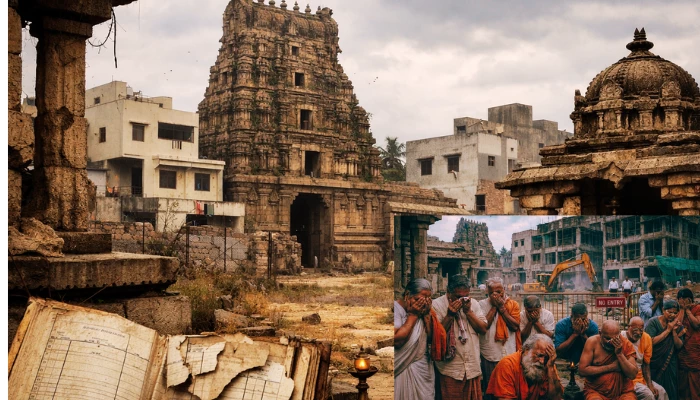
Case Summary
On 14 February 2026, Hindu devotees in Thirukovilur town, Kallakurichi district, raised an alarm regarding large-scale encroachment of temple land and irregular transfer of temple-owned properties. They demanded that the District collector to intervene and conduct a detailed review of temple land records. Thirukovilur housed several ancient temples, including the approximately 1,500-year-old Ulagalantha Perumal Temple, Veeratteswarar Temple, Vellai Vinayagar Temple, Pidari Amman Temple, Ayyanar Temple, Tirupati Amman Temple, and associated monastic establishments such as the Gnaniyar math. Lands measuring dozens of acres traditionally attached to these temples were illegally occupied, transferred through long-term lease arrangements, or altered through documentation changes. The Ulagalantha Perumal Temple traditionally held more than 50 acres of land, the Veeratteswarar Temple held more than 36 acres, and the Gnaniyar Math held more than 30 acres. Only a small portion of these lands appeared in official records maintained by the Hindu Religious and Charitable Endowments (HR&CE) Department, while substantial extents had been transferred or encroached upon over time. As per the report, encroachment included 65 cents of temple land near the Mariyamman Temple area, where houses had been constructed, and 89 cents of land near the math premises, which was under private occupation with residential structures built. These parcels were temple-owned properties taken over by encroachers without proper authorisation. Certain properties were transferred under 99-year lease agreements and through changes in title documentation, with forged or altered records used in some cases. The value of the affected temple properties was estimated at several hundred crores of rupees. The local villagers stated that revenue authorities and the HR&CE Department did not identify or reclaim temple lands. They had not found the register, which contained the original documents for temple lands. Social activists and devotees who directly searched the village administration office, taluka office, and collector’s office were told in one word that the documents had been lost. Social activists stated that the reason for this was the fear that the Revenue Department’s illegal transfer of temple properties would be exposed. Furthermore, the Hindu Religious Endowments Department had not taken even the slightest step to recover the properties identified by the Temple Lands Identification Committee, which had been formed with the promise that all temple lands would be recovered without discrimination. Due to the loss of land and revenue, certain temples and associated structures were affected. Ritual activities in some shrines ceased, and monastic buildings deteriorated. Legal cases regarding temple land recovery had been filed in courts over time, but district administrations in Vellore, Villupuram, and Kallakurichi, as well as higher officials in the HR&CE Department, did not take sufficient action to restore the properties. Members of the public and devotees demanded that the District Collector directly intervene, conduct a detailed review of temple land records, identify encroachments, cancel irregular leases where applicable, and restore all temple properties to their original ownership. They pressed for immediate recovery and restoration of temple properties, stating that the encroachments had affected temple administration and religious activities.
Why it is Hate Crime ?
This case has been added to the tracker under the primary category of: - Attack on Hindu religious representation. Within it, the sub-category selected is: - Encroachment or illicit takeover of temple land/land near temple. In Hinduism, a temple is the abode of the Deity. The Deity in the Temple is consecrated, thereby making it a real, breathing entity. Hindus believe that not just the Deity but the temple premises itself are sacred to Hindus since Hindus hold the faith that the entire Temple space is an amalgamation of the divine energy of the deity. Not only the Temple but the Temple premises in its entirety are considered sacred by Hindus. In several cases, the premises of the Temple and/or religious centre are illicitly taken over by institutions belonging to other faiths, like the Waqf board or the Church. Other times, the temple property, land or the property of religious centres are illicitly encroached upon by non-Hindu groups. Any illicit takeover or encroachment is a crime an initio; however, when non-Hindu groups illicitly take over or encroach on the sacred land of Hindus, it is an affront to the Hindu community and is therefore classified as a religiously motivated hate crime under this category. This incident entered the Hinduphobia Tracker because the perpetrators specifically targeted Hindus and their temples for illegal encroachment over the years. Hindu temples hold immense value in Hinduism, especially ancient ones. They are not merely significant as worship sites but as vibrant centres of community life, education, and cultural preservation. These consecrated spaces hosted daily rituals, deity worship with deep reverence, and transmission of values through festivals and teachings; they embodied faith's continuity, meticulously maintained as divine abodes and custodians of Hindu civilisation. Temple land shares equal sacred status with the temple structure itself. It is an inseparable extension of the divine realm that sustained rituals, festivals, and priests through crops or endowments. Encroaching on these lands or irregularly transferring temple properties through forged documents desecrated this holiness, revealing stark religious animosity by sabotaging Hindu institutions; it drained resources, halted worship, and eroded heritage, flouting Hinduism's truth that such lands pulse with godly presence. This relentless encroachment, erecting houses on temple plots, issuing sham 99-year leases, or erasing records, betrayed total disdain for Hindu sanctity, as perpetrators crippled temple operations, silenced rituals, and left monastic sites crumbling without halt. Such dogged intent escalated hostility towards Hinduism itself, striking not just soil but living devotion: revenue strangulation weakened faith's core, recasting bureaucratic neglect as a prolonged assault on religious freedom and identity. Temples endured chronic neglect and mismanagement, their devotees humiliated and religious rights denied, while missing revenue records exposed administrative rot. The Tamil Nadu government and HR&CE permitted this decay, ignoring court orders and shielding official abuses against worshippers, fuelling systemic bias against Hindu sites. Moreover, this case was not the first time that the administrative policies of the Hindu Religious and Charitable Endowments (HR&CE) Department were called into question. The Hinduphobia Tracker documented multiple cases where HR&CE officials and ministers acted with hostility towards Hindu devotees. For example, during the Suchindram Temple festival in Kanyakumari on 2nd January 2026, HR&CE Minister P. K. Sekar Babu verbally abused devotees, using degrading language inside a consecrated temple space, humiliating worshippers during rituals. In another case, during the Thaipoosam festival on 11 February 2026, Hindu devotees were manhandled and assaulted by police officers and HR&CE officials, including women, children, and transgender devotees, highlighting discriminatory treatment and administrative hostility towards Hindu worshippers. In Cuddalore on 30th August 2026, land belonging to the Devanathaswamy Temple was illegally encroached upon by a Christian missionary school, which refused to vacate despite court orders, while HR&CE failed to act, allowing the encroachment to continue. These examples demonstrated a pattern of discriminatory behaviour by the HR&CE Department towards Hindu devotees and their temples. In this case, the encroachment on temple lands and the deliberate inaction alongside discriminatory policies of the Hindu Religious and Charitable Endowments (HR&CE) Department revealed a consistent posture of hostility towards Hindu temples and worshippers, forming part of a broader pattern of Hinduphobia in Tamil Nadu. Therefore, it is added to the hate crime database of the tracker.


Case Status
Unknown


Perpetrators Details
Perpetrators
State and Establishment
Perpetrators Range
Unknown
Perpetrators Gender
unknown
 Sources




