Hindu sentiments outraged as Indian politician makes offensive remarks against Hinduism in Tamil Nadu
 Tamil Nadu, India
  29 January, 2026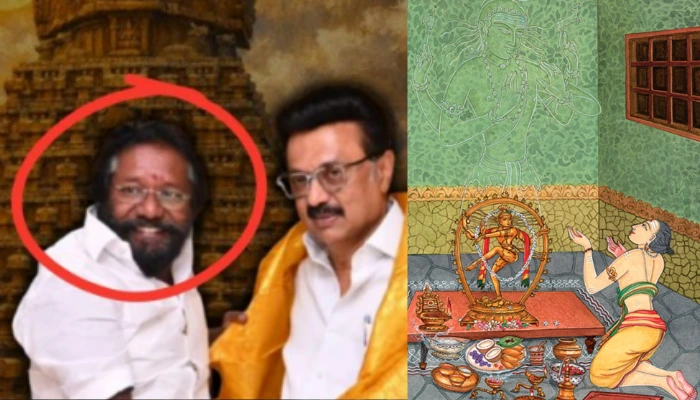
Case Summary
Derogatory remarks against Hinduism were made by a politician named Karunas, associated with the DMK ( Dravida Munnetra Kazhagam) party, an anti-Hindu party. The accused stated that there is no religion like Hinduism. He also tried to create a rift between different sects of the Hindu faith. According to media reports, in January 2026, the accused triggered controversy after making remarks questioning the existence of Hinduism as a religion during a public meeting. Addressing the gathering, Karunas said he was prepared to stand by his views irrespective of criticism. "I am saying this, I am ready to face anything, there is no religion called Hindu,” he said. He questioned the identity associated with Hinduism and went on to describe his own religious affiliation. He stated, “Then what is Hindu? Who am I? I belong to the Saiva religion. I have worshipped Shiva and Murugan from ancient times, for countless generations.” He further listed various religious traditions followed in India and argued that Hinduism did not exist as a distinct religion in the way it is presently understood. He stated, “Like this, in India, there are so many religions. There is Buddhism. There is Saivism. There is Jainism. There is Vaishnavism. I can keep listing them. There is Parsi. There is Islam. There is Christianity. There are so many religions like this.” He then questioned the historical origins of the term “Hindu”. “When that is the case, where did this ‘Hindu’ come from?” Karunas asked. Referring to the colonial period, he attributed the usage of the term to British administrative practices. He stated: “When the British ruled our India, for administrative purposes, for government administration, since this is a country where many languages are spoken and many religions are worshipped by the people, therefore, for the convenience of administration…”, trailing off without completing the sentence.
Why it is Hate Crime ?
This case is being added to the tracker under the primary category- Hate Speech against Hindus. The subcategory selected is- Anti-Hindu slurs, mocking faith. Anti-Hindu slurs and the deliberate mocking of the Hindu faith owing to religious animosity involve the usage of derogatory terms, stereotypes, or offensive references to religious practices, symbols, or figures. One of the common anti-Hindu slurs used against Hindus is “cow-worshipper” and “cow piss drinker”. The intention of using this term is to demean and mock Hindus as a group and their religious beliefs since Hindus consider the cow holy. Additionally, some symbols and the slurs attached to them have a historical context that exacerbates the insult, hate, stereotyping, dehumanisation and oppression against Hindus. Cow worship has been used for centuries to denigrate Hindus, insult their faith and oppress Hindus specifically as a religious group. There has been overwhelming documentation about how cow slaughter has been used to persecute Hindus with cow meat being thrown in temples and places of worship. There has also been overwhelming documentation where cow meat (beef) has been force-fed to Hindus to either forcefully convert them to Islam or denigrate their faith. Apart from cow worship, the Swastika – which holds deep religious significance for the Hindus – has also been misinterpreted and distorted to use as a slur against Hindus. Similarly, the worship of the Shivling has been used by supremacist ideologies and religions to denigrate Hindus owing to religious animosity. Such slurs and denigration stem out of inherent animosity and hate towards Hindus and their faith, therefore, it is categorised as hate speech targeted at Hindus specifically owing to their religious identity. In this case, the accused, Karunas's remarks denying the existence of Hinduism as a religion constitute a blatant act of anti-Hindu hate speech, as they directly denigrate the Hindu community and its millennia-old faith and traditions. By declaring "there is no religion called Hindu" and reducing Hinduism to a colonial administrative invention, the perpetrator dismissed the unified identity of diverse sects like Ganapatyas, Purva Mimamsis, Uttara Mimamsis, Shaivas, Vaishnavas, Shaktas and others, effectively erasing their shared reverence for the Shrutis: the Vedas, Agamas, and Tantras, as irreplaceable divine revelations. The accused's assertion ignores the historical reality that, despite the term "Hinduism" emerging more recently, these traditions have long cohered under one faith system, bound by common scriptural authority and philosophical threads, fostering a profound civilisational continuity that the speaker maliciously sought to fracture. The deep religious animosity shines through in Karunas's attempt to detach Shaivism from Hinduism, proclaiming personal allegiance only to "Saiva religion" while worshipping Shiva and Murugan, deities central to the Hindu pantheon. This divisive rhetoric creates rifts within Hindu society, pitting sects and sub-sects against a broader Hindu identity and portraying Hinduism as a fabricated, ahistorical construct unworthy of recognition alongside Buddhism, Jainism, or Islam. Such targeted vilification not only insults the Hindu community's self-understanding but also aims to delegitimise its ancient heritage, amounting to hate speech by inciting disdain and division against the Hindu faith. Anti-Hindu parties like the Dravida Munnetra Kazhagam (DMK), with which Karunas is associated, weaponise this narrative to perpetuate long-standing ideological assaults on Hinduism, framing it as an oppressive, foreign-imposed monolith to advance Dravidian separatism. By amplifying such statements, DMK exploits historical terminological debates to undermine Hindu unity, stoke inter-sectarian discord, and normalise anti-Hindu bigotry under the guise of intellectual discourse, revealing a calculated pattern of religiously motivated hate. Such acts are a result of deep-rooted hostility and contempt for the Hindu community and their faith, making it an anti-Hindu hate speech. Notably, this incident was not the first time that Dravida Munnetra Kazhagam (DMK) party members engaged in anti-Hindu hate speech. The Hinduphobia Tracker has meticulously documented many such previous instances. For example, in August 2025, in Kumbakonam, Tamil Nadu, vicious and inflammatory comments against the Hindu community were made by a Christian Dravida Munnetra Kazhagam (DMK) functionary named Ramesh. He called Hindus "sons of prostitutes". Similarly, on 16 January 2024, derogatory remarks targeting Lord Ram and the Ram Janmabhoomi Temple at Ayodhya were made by Dravida Munnetra Kazhagam (DMK) leader Uma Ilakkiya. A video of her abusing Lord Ram went viral on social media. Similarly, in 2023, DMK politician and Tamil Nadu Deputy Chief Minister Udhayanidhi Stalin, son of Chief Minister MK Stalin, equated Hinduism to dengue and malaria, calling for its annihilation. He stated, "Sanatana is like malaria and dengue, and so it must be eradicated, not opposed." This current case, meeting the criteria for hate speech alongside prior instances by DMK members, has been incorporated into the Hinduphobia Tracker's hate crime database. Disclaimer: The Hinduphobia Tracker records the date of an incident based on when the crime occurs, rather than when it is reported by the media. However, in this case, media reports did not state the exact date on which the crime occurred. Therefore, 30 January 2026, the date on which this was reported by the media, is being recorded as the indicative incident date, for the purpose of documentation only.


Case Status
Unknown


Perpetrators Details
Perpetrators
Others
Perpetrators Range
One Person
Perpetrators Gender
male
 Sources




