Attack on Hindu beliefs: Indian politician makes derogatory remarks against revered Hindu deity and Ram Janmabhoomi temple
 Tamil Nadu, India
  12 January, 2024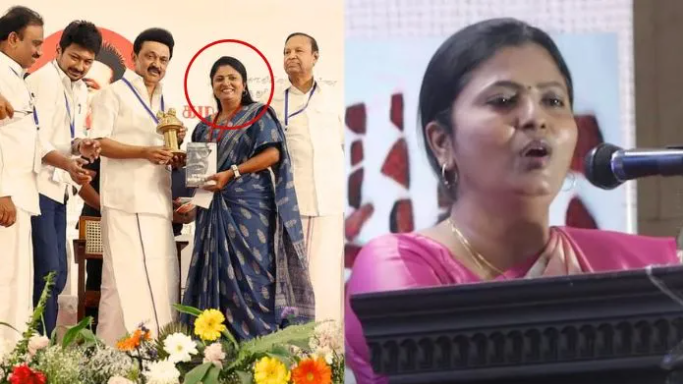
Case Summary
Derogatory remarks targeting Lord Ram and the Ram Janmabhoomi Temple at Ayodhya were made by Dravida Munnetra Kazhagam (DMK) leader Uma Ilakkiya. A video of the accused abusing Lord Ram went viral on social media. According to media reports, this incident took place during an event on 13th January 2024, where Uma Ilakkiya delivered a Hinduphobic speech criticising Lord Ram. She stated that Lord Ram lived with many women, committed suicide by drowning in the Sarayu River, killed Vaali and Shambhukan unfairly, and doubted his wife, Sita. She also mocked women who wished to give birth on the day of the Ram Mandir Pran Pratishtha (consecration ceremony), questioning why they wanted their children to be associated with Lord Ram. The accused said, “As per Valmiki Ramayanam, Rama was said to have lived with several thousand women in the palace, making merry with drinks. Are you going to give him as an example for your children? He had no courage to live, so he committed suicide by drowning in the Sarayu River with his people. Are you going to bring up your children with him as an example? What kind of foolishness is this? He doubted his own wife and sent her to the forest; what will you show as an example of this Ram? He was a murderer – he killed Vaali by hiding himself, and he beheaded Shambhukan when he was meditating without even enquiring the reason. Is this kind of person an idol for your children? This Bharatiya Janata Party (BJP)–Rashtriya Swayamsevak Sangh (RSS) is taking the country to such a bad state. They are not going to stop with this; they have started in Mathura already – wherever there is a mosque, they are establishing that there was a temple before that.” Ahead of the Ram Mandir Pran Pratishtha, Hindu devotees distributed Akshadai (rice mixed with turmeric powder) door to door. DMK leader Uma Ilakkiya compared this sacred offering to ‘Vaikiarisi,’ rice grains offered during funerals, suggesting that it symbolised death. She questioned the purpose of distributing yellow rice for a temple inauguration in Ayodhya and implied that it represented something ominous about Prime Minister Narendra Modi and Home Minister Amit Shah’s intentions. She also criticised the concept of Ram Rajya, referring to it as Brahmin Rajya. She said, “We have to break all these; we have to protect our children from this. Whether they are planning to bring in a Ram Rajya or a Hindu Rashtra, it is going to be a Brahmin Rajya.” She further mocked the existence of the Ram Janmabhoomi Temple, stating, “The temple is for a child Rama. They have built this temple on a baseless lie that he was born there, and even got a court order for it. What will be the address of this temple? Ram Temple or Ram Janmabhoomi, care of Babri Masjid, Ayodhya, Uttar Pradesh. You are building the temple where the masjid once existed. When we say we want to name our children after a leader, we do it because we want the child to be like that leader. Some women want to give birth on that particular day – it is so startling. Why do they want to be associated with Rama? What kind of an example is he?”
Why it is Hate Crime ?
This case has been added to the tracker under the primary category- Hate Speech against Hindus. The subcategory selected is- Anti-Hindu slurs, mocking faith. Anti-Hindu slurs and the deliberate mocking of the Hindu faith owing to religious animosity involve the usage of derogatory terms, stereotypes, or offensive references to religious practices, symbols, or figures. One of the common anti-Hindu slurs used against Hindus is “cow-worshipper” and “cow piss drinker”. The intention of using this term is to demean and mock Hindus as a group and their religious beliefs since Hindus consider the cow holy. Additionally, some symbols and the slurs attached to them have a historical context that exacerbates the insult, hate, stereotyping, dehumanisation and oppression against Hindus. Cow worship has been used for centuries to denigrate Hindus, insult their faith and oppress Hindus specifically as a religious group. There has been overwhelming documentation about how cow slaughter has been used to persecute Hindus with cow meat being thrown in temples and places of worship. There has also been overwhelming documentation where cow meat (beef) has been force-fed to Hindus to either forcefully convert them to Islam or denigrate their faith. Apart from cow worship, the Swastika – which holds deep religious significance for the Hindus – has also been misinterpreted and distorted to use as a slur against Hindus. Similarly, the worship of the Shivling has been used by supremacist ideologies and religions to denigrate Hindus owing to religious animosity. Such slurs and denigration stem out of inherent animosity and hate towards Hindus and their faith, therefore, it is categorised as hate speech targeted at Hindus specifically owing to their religious identity. In this case, it is first important to state that Lord Ram holds immense religious and cultural significance in Hinduism as an embodiment of virtue, righteousness, and moral integrity. He represents dharma (righteous duty) and is worshipped as an incarnation of Lord Vishnu, revered for his unwavering commitment to truth, justice, and compassion. The epic Ramayana celebrates his life as the ideal of moral conduct, devotion, and leadership. Any form of disrespect or denigration directed towards Lord Ram constitutes a direct attack on deeply held Hindu religious beliefs and sentiments. In this case, DMK leader Uma Ilakkiya’s remarks—that Lord Ram lived with thousands of women, indulged in alcohol, and killed Vaali and Shambhukan—were deliberately crafted to demean one of the most sacred deities in Hinduism. By portraying Lord Ram in such degrading terms, the accused showed clear religious animosity, making this incident a definitive case of anti-Hindu hate speech intended to insult the faith and values upheld by millions of devotees. The accused further targeted Hindu traditions during the sacred Ram Mandir Pran Pratishtha by mocking Hindu devotees distributing Akshadai (rice mixed with turmeric powder) door to door. She compared this devotional act to ‘Vaikiarisi,’ a ritual associated with funerals, thereby equating a sacred offering with a symbol of death. Such a statement was not only insulting but also aimed at ridiculing the sanctity of the consecration of the Ram Janmabhoomi Temple in Ayodhya, a moment of deep religious pride for Hindus across the world. This deliberate comparison represented a blatant attempt to demean a holy occasion and hurt the religious sentiments of the Hindu community, making it yet another instance of religiously motivated hate speech. Moreover, Uma Ilakkiya’s remarks on Ram Rajya showcased her intent to fracture the Hindu community along caste lines. By asserting that “Ram Rajya is Brahmin Rajya,” she sought to delegitimise a revered religious and cultural concept that symbolises justice, equality, and moral governance. Equating the ideal of Ram Rajya or Hindu Rashtra with caste-based hierarchy reflected a divisive narrative rooted in leftist ideological bias against Hinduism. Such rhetoric aimed to discredit Hindu ideals while creating intra-community resentment, serving as a deliberate attempt to erode Hindu unity. This act of sowing division through religious distortion constituted yet another form of hate speech directed against Hindus. The accused also attempted to undermine the Ram Janmabhoomi Temple itself by falsely asserting that the temple was built on a “baseless lie.” By denying the existence of a Ram temple at the site and framing it as an act of mosque destruction, she disregarded centuries of Hindu struggle and sacrifice. The Ram Janmabhoomi movement represented a profound and peaceful renaissance of the Hindu community after generations of historical injustice. To label it deceitful was an affront to both faith and historical truth. Her further remarks mocking women for naming their children after Lord Ram, or for wishing to give birth on the day of temple consecration, revealed deep-rooted hostility and disrespect towards Hindu identity, faith, and traditions. Such statements directly targeted the community’s collective dignity and pride, amounting to a clear instance of religiously motivated hate speech. Given that this case strongly met multiple criteria of religiously motivated hate speech—including deliberate insult to deities, ridicule of holy traditions, caste-based divisive rhetoric, and denial of historical faith—the incident was being recorded in the Hate Crime Database of the Hinduphobia Tracker.


Case Status
Unknown


Perpetrators Details
Perpetrators
Christian Extremists
Perpetrators Range
One Person
Perpetrators Gender
female
 Sources




