Hindu politician receives death threats from Muslim man over false claims surrounding removal of “I Love Muhammad” poster
 India
India  26 September, 2025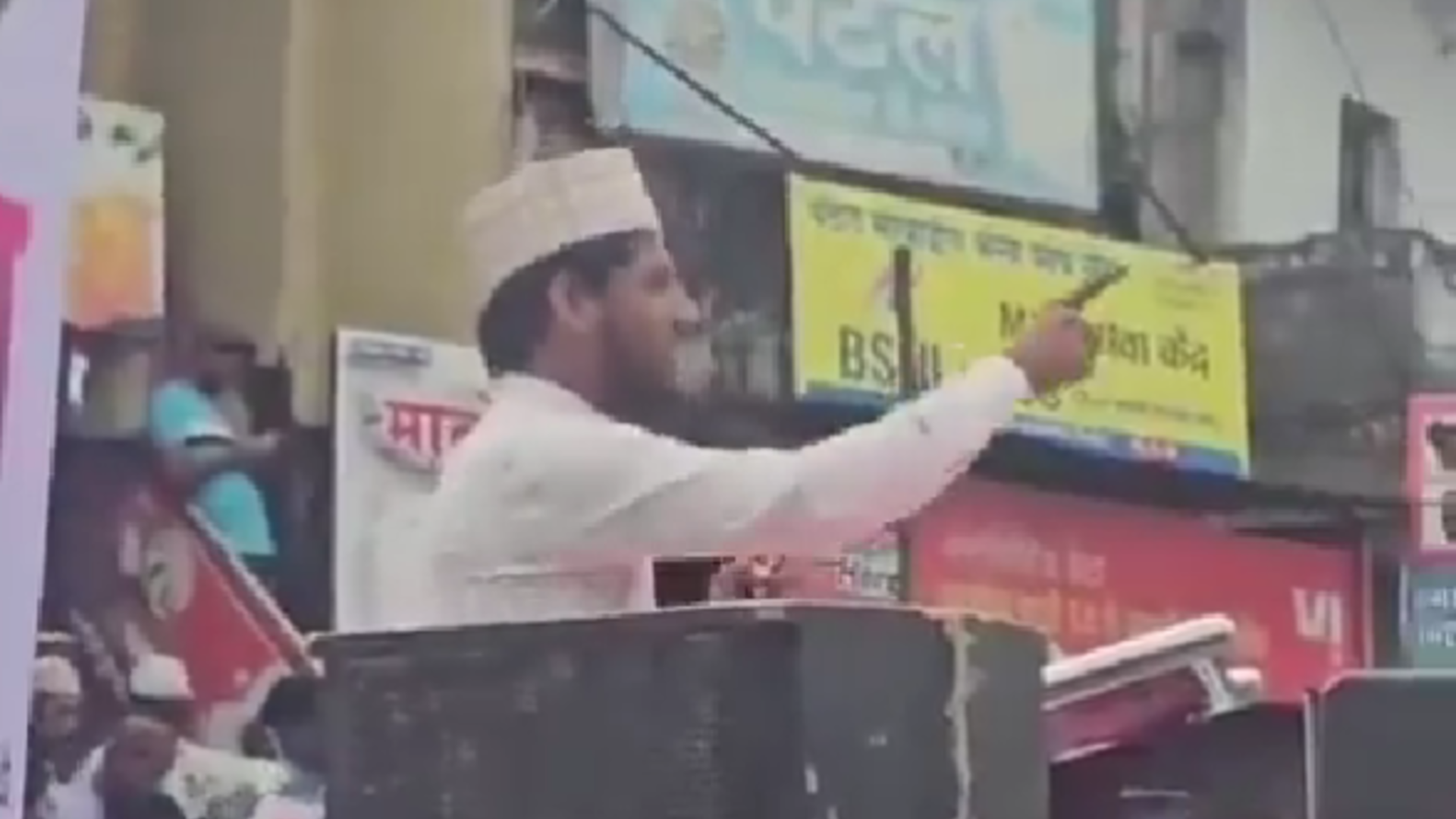
Case Summary
A Muslim man issued death threats to Uttar Pradesh Chief Minister (CM) Yogi Adityanath in a public gathering, where he used abusive language and challenged the authority of the state. The incident was captured on video, which has since circulated widely on social media, showing the man addressing a crowd of Muslims and provoking them with violent rhetoric. In the recording, the Muslim speaker referred to CM Yogi as “UP ka Takla” (the bald man from Uttar Pradesh) and declared that Yogi would never dare to insult or oppose the honour of the Islamic Prophet Muhammad. The man’s speech grew increasingly hostile, culminating in a direct death threat. He announced that if CM Yogi entered a mosque and attempted to arrest Muslims for displaying “I Love Muhammad” posters, then Muslims would ensure that Yogi would be buried there and not leave alive. Even the Muslim crowd listening to him applauded and cheered, openly encouraging his incendiary remarks. The man then shouted slogans of “I Love Muhammad” from the stage and brandished the same poster, with the audience echoing the chant. This threat did not emerge in isolation but forms part of a larger pattern of organised agitation by Muslims across the state and beyond, centred on the “I Love Muhammad” campaign. The campaign itself arose from a controversy deliberately misrepresented by Muslim groups. On 5th September 2025, violence broke out in Rawatpur, Kanpur, during a Barawafat procession, when Muslims attacked and defaced Hindu posters. This was following a complaint by Hindus, where police removed an “I Love Muhammad” poster that had been fixed on the Ram Navami gate on 4th September 2025. An FIR was then lodged against Muslims for vandalising Hindu posters, but they twisted the narrative, claiming that the police action was taken against Muslims for merely putting up “I Love Muhammad” posters. This distortion became the rallying cry for Muslims to organise protests and violence across several districts. Slogans of “Sar Tan Se Juda” were raised in rallies, and Hindus, as well as police personnel, were attacked. The death threat made against CM Yogi Adityanath is therefore not an isolated outburst but a continuation of this orchestrated campaign of intimidation and violence, openly challenging law and order while asserting Islamic supremacy.
Why it is Hate Crime ?
The primary category in this case is: Hate speech against Hindus. The first subcategory under this is: Mocking/denigrating Hindu leaders. Hate speech is defined as any speech, gesture, conduct, writing, or display that is prejudicial against a specific individual and/or group of people, which is leading to or may lead to violence, prejudicial action or hate against that individual and/or group. Religious leaders are often seen as representatives of the community, especially the community’s religious faith and beliefs. Mocking or denigrating a religious leader specifically owing to his religious identity and/or the religious rituals he observes can be considered hate speech because the motivating factor of the speech is animosity and/or dislike for what he represents – the religious beliefs and faith of the community. It is important to note that mere insulting words against an individual do not constitute hate speech. It is entirely possible that insulting words are used for an individual, however, the specific speech is not the result of religious hate and/or animosity towards the professed faith of the religious leader, but the individual himself. For the speech to be considered hate speech, the speech itself or the motivating factor behind the speech has to be religious in nature. Such speech which denigrates Hindu religious leaders specifically owing to animosity towards the faith they profess and the community faith they represent will be treated as hate speech under this category. The second subcategory under this is: Violent threats. Violent threats, explicit, implicit or implied, is the most dangerous form of hate speech since it goes beyond discriminatory and prejudicial language to express the intent of causing harm to an individual or a group of people based on their religious identity and faith. There could be several different kinds of threats that are issued to Hindus based on religious animosity. An explicit threat would mean the direct threat of violence towards an individual Hindu, a group of Hindus or Hindus at large. Physical violence, death threats, threats of destruction of property belonging to Hindus and threats of genocide would mean explicit threats against Hindus for their religious identity. Implicit threats may not be a direct threat but implied through the use of symbols of actions – for example – in the Nupur Sharma case, other than explicit threats, there were also implicit threats when Islamists took to the streets to burn and beat her effigies. It implies that they want to do the same to Nupur Sharma – thereby is considered an implicit threat. Violent threats can be delivered in person, through letters, phone calls, graffiti, or increasingly through social media and other online platforms. It would be important to understand that a threat – explicit or implicit, online or offline – to an individual who happens to be a Hindu does not qualify as a religiously motivated threat. Such a threat, while vile and dangerous, could be owing to non-religious reasons and/or personal animosity. To qualify as a religiously motivated threat, it would need to exhibit an indication that the individual is being targeted for religious reasons and/or owing to his/her religious identity as a Hindu. This case has been included in the Hinduphobia Tracker because it is a clear instance of hate speech directed against Hindus, their leaders, and their religious identity. The video of a Muslim man abusing and threatening to kill Uttar Pradesh Chief Minister Yogi Adityanath cannot be examined in isolation; it belongs to a wider sequence of events that began with anti-Hindu aggression. The backdrop of this controversy lies in the incident of 4–5 September 2025, when, during a Barawafat procession in Rawatpur, Kanpur, Muslims vandalised Hindu posters and banners. Following this, a complaint was filed by Hindus, and action was taken against rioting Muslims. A day earlier, police had removed an “I Love Muhammad” poster that had been illegally fixed on the Ram Navami gate. The FIR was lodged against Muslims for vandalising Hindu religious posters. However, this straightforward case of vandalism was deliberately distorted by Muslims, who portrayed themselves as victims and claimed that police action had been taken only because they displayed “I Love Muhammad” posters. This misrepresentation was not incidental but calculated, for it became the rallying point for widespread mobilisation across Uttar Pradesh and beyond. In the weeks that followed, Muslims organised rallies and agitations where lethal slogans such as “Sar Tan Se Juda” were openly raised. These slogans are not symbolic protests but direct calls for beheading, a form of religiously sanctioned violence. Hindus were attacked in several places, and even police attempting to maintain order were assaulted. In Gandhinagar, Gujarat, violence was unleashed on Hindus after a Hindu youth expressed devotion with the message “I Love Mahadev” in response to the “I Love Muhammad” campaign. His peaceful post, rooted in reverence for Lord Shiva, was met with a wave of aggression from Muslims, who vandalised his shop, targeted Garba celebrations, and desecrated temples. This demonstrates that the so-called “victimhood” claimed by Muslims was in fact a cover for orchestrating widespread violence against Hindus. The threat issued against Chief Minister Yogi Adityanath must be situated within this same trajectory. It was not a mere political barb or a casual insult. Yogi Adityanath is not only the elected leader of Uttar Pradesh but also widely recognised as a staunch Hindu leader who embodies Hindu religious identity in both his personal life and public role. Mocking him as “UP ka Takla” and declaring that he would be buried alive if he acted against Muslims is an expression of animosity that extends beyond the individual. It is directed against what he represents: Hindu religious conviction, Hindu leadership, and the assertion of Hindu rights in public life. For this reason, the incident falls squarely within two hate speech subcategories: denigrating Hindu leaders and issuing violent threats. The speech targeted Yogi Adityanath not on account of his administrative decisions alone but because of his religious identity and the community he represents. The threats were explicit in intent, openly suggesting death if he dared act against Muslims. The crowd’s applause at violent threats, coupled with their earlier actions against Hindu posters and places of worship, cannot be dismissed as coincidental. It reveals a deeper pattern in which attacks on Hindu identity and its public expression are framed as acts of defiance, while those who defend that identity are singled out as enemies. Thus, the hate speech against the Chief Minister must be understood as part of a continuum of Hinduphobic violence rather than as an isolated episode. This case is evidence of a systematic pattern: an anti-Hindu act of vandalism in Kanpur was inverted into false victimhood, which then fuelled violent mobilisation. Under this garb, Muslims attacked Hindus, their festivals, their temples, and their leaders. The violent slogans, the attacks in Gandhinagar, and now the threats against CM Yogi Adityanath illustrate how the campaign was never about protecting rights but about asserting religious supremacy through hatred of Hindus. By denigrating a Hindu leader and threatening him with death, the speaker and his supporters expressed hostility that is fundamentally anti-Hindu in nature. The case, therefore, stands as a textbook example of Hinduphobia and is rightly documented in the tracker. Disclaimer: The video that went viral on social media was undated. Therefore, for documentation purposes, we have recorded the date based on when the video went viral on social media, which is 26 September 2025. This date is being used as the indicative date of the incident.
Victim Details
Total Victim
1
Deceased
0
Gender
- Male 1
- Female 0
- Third Gender 0
- Unknown 0
Caste
- SC/ST 0
- OBC 0
- General 1
- Unknown 0
Age Group
- Minor 0
- Adult 1
- Senior Citizen 0
- Unknown 0


Case Status
Unknown


Perpetrators Details
Perpetrators
Muslim Extremists
Perpetrators Range
One Person
Perpetrators Gender
male
 Sources




