Minor Hindu school girl abducted by Muslim man, converted and forcibly married by notorious Islamic cleric in Pakistan
 Balochistan, Pakistan
 18 October, 2026
Case Summary
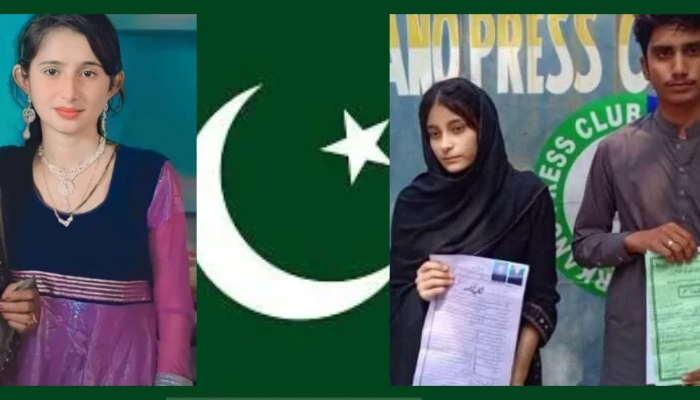
In Balochistan, Pakistan, a 14-year-old Hindu girl named Bindiya Kumari was abducted by a Muslim man named Yasir Domki, forcibly converted to Islam, and pressured to marry. Her conversion and marriage were facilitated through arrangements linked to Mian Abdul Haq, popularly known as Mian Mithu, an Islamic figure instrumental in converting thousands of minor Hindu girls. According to the Voice of Pakistan Minority (VOPM), Bindiya was a ninth-grade student when she was abducted from Sibi in Balochistan province and taken to Sindh. Minority representatives stated that her religious conversion and marriage were facilitated through arrangements linked to Mian Mithu. On 19 October 2026, Bindiya's case was raised in the Balochistan Assembly. Subsequently, on 29 October 2026, the Senate Minority Caucus took up the matter. Lawmakers called for her immediate recovery, questioned the police response and emphasised the need for coordination between the authorities in Sindh and Balochistan. Senator Dinesh Kumar said authorities had been provided with government-issued documents confirming that Bindiya was 14 years old. He also criticised the police for failing to act against influential religious figures involved in the matter. The case raised concerns over the failure of authorities to protect a minor Hindu girl despite the availability of official documents establishing her age. The Voice of Pakistan Minority expressed serious concern over the delays in police action and the vulnerability of minority children in Pakistan. It called upon the federal and provincial authorities to ensure Bindiya's safety, investigate the circumstances of her abduction, conversion and marriage, and hold those responsible accountable. The organisation also demanded an investigation into the police response and any failure to act. Pakistani rights activist Joseph Janssen called for the constitution of a special investigation team to recover missing minority girls. Other minority representatives also demanded stronger enforcement and accountability from the authorities. The case attracted additional attention because of the role attributed to Mian Mithu. Mian Abdul Haq, commonly known as Mian Mithu, is the Pir of Dargah Bharchundi and an influential political and religious figure in Ghotki. Mithu contested elections on the PPP ticket and served as a member of parliament from 2008 to 2013. He was later courted by the ruling party, PTI, and is reportedly close to both Prime Minister Imran Khan and Army Chief Qamar Javed Bajwa. Mithu, whose name routinely comes up in the cases of abduction and forced conversion of underage Hindu girls, shot to the limelight in 2012 when he abetted the abduction of a teenage Rinkie Kumari, her conversion to Islam, and marriage to an older Muslim man. In 2019, Mithu came to notice for leading a rioting mob in the Ghotki district in Sindh. The riot was engineered over allegations of blasphemy against a Hindu school principal. Hindu temples, the principal’s house,e and several houses of Hindus were set on fire by the mob, egged on by Mithu. According to reports, Mian Mithu has been responsible for over 1,000 abductions, rape and conversions of minor Hindu and other religious minority girls in the Islamic Republic of Pakistan. Notably, the United Kingdom sanctioned Mian Abdul Haq Mithu and froze his assets under the Global Human Rights Sanctions Regulations 2020 for his role in global human rights violations. In a 2023 report by Just Earth News (JEN), the publication revealed that he is so notorious for helping predatory men against innocent Hindu girls that he has been labelled a “conversion factory”. The Hinduphobia Tracker has recorded a plethora of such cases linking Mian Mithu to crimes involving the abduction of minor Hindu girls and their forced conversion to Islam without their consent. His name has repeatedly surfaced in cases concerning the targeting of underage Hindu girls for religious conversion and marriage, highlighting the continued vulnerability of Hindu minors in Pakistan. For instance, in Ghotki, Sindh, Pakistan, a Hindu girl was forced to recite the Kalma before the camera and was tortured until she capitulated and converted to Islam. This happened under the supervision of Mian Abdul Haq Mian Mithu, popularly known as Mian Mithu. In another case, in Pakistan’s Punjab province, a Hindu girl named Heer was abducted and forced to recite the Kalma (Islamic declaration of faith) and convert to Islam by a group of Muslims. This was done so that she could be forcibly married to an elderly Muslim man. The Hindu victim was a resident of Rahim Yar Khan, Punjab. She was kidnapped from her home by a group of Muslims. After she was taken to meet Mian Mithu, he forcibly converted the Hindu girl. This incident is yet another example of the broader pattern of persecution and insecurity faced by the Hindu minority in Pakistan, where Hindus continue to face systemic discrimination, communal hostility, religiously motivated violence, and social marginalisation because of their religious identity. Hindu temples and religious symbols are frequently vandalised, while Hindu individuals and families often face threats, intimidation, and mob violence. Hindu women and minor girls remain particularly vulnerable to abduction, forced conversion to Islam, and forced marriages to Muslim men. Blasphemy allegations are also disproportionately used against Hindus, often resulting in false accusations, communal mobilisation, arbitrary arrests, threats, and violent attacks. Many Hindu families are forced to flee their homes due to religious intolerance, living in constant fear of attacks. This sustained persecution highlights the dire conditions for Hindus in Pakistan, where their religious identity makes them targets of oppression. Such incidents create a constant atmosphere of fear and vulnerability within the Hindu community, highlighting the precarious condition of religious minorities in Pakistan.
Why it is Hate Crime ?
This case has been added to the tracker under the primary category: Predatory Proselytisation. Within this, the subcategory selected is: Harassment, threats, coercion for conversion. Harassment covers a wide range of offensive behaviours. It is commonly understood as behaviour that demeans, humiliates, and intimidates a person, including threats and coercion. Harassment and threats, in this case, find their root in discriminatory grounds, which have the effect of nullifying a person’s rights or infringing upon his freedom to exercise his rights specifically owing to the victim’s religious identity. Verbal and physical threats and psychological or physical harassment are often used against Hindu victims because they choose to practice their professed religion. Religious harassment also includes forced and involuntary conversions through harassment, threats, ts or coercion. Coercion includes intimidatory tactics like force-feeding a Hindu victim beef to convert to another religion, forceful circumcision, ion etc. In several documented cases, non-Hindu perpetrators or those who harbour specific animosity towards Hinduism harass victims simply based on their religious identity. Such cases often also include harassment to ensure the Hindu victim abandons his/her professed religion and adopts the religion of the perpetrator. Such cases where Hindu victims are harassed to convert to the perpetrator’s religion are rooted in animosity towards the victim’s religious identity and are therefore documented as religiously motivated hate crimes. This case has been added to the hate crime database since the abduction and forced conversion of a minor Hindu girl, followed by her marriage to a Muslim man in Pakistan, starkly illustrates the exploitation of vulnerable Hindu minorities through coercion and force. Such incidents were not isolated occurrences but formed part of a persistent and deeply troubling pattern in Pakistan, where Hindu minority girls, particularly minors, were systematically targeted for abduction, forced religious conversion and marriage to Muslim men. This ongoing trend revealed the entrenched religious discrimination, persecution and violence faced by Hindu communities, who had endured marginalisation, intimidation and abuse for decades. In this case, the victim, Bindiya Kumari, was abducted specifically because of her Hindu identity, which is evident from the fact that conversion to Islam was the primary motive. Further, the involvement of Mian Mithu was particularly significant given his notorious association with cases of forced conversions of minor Hindu girls. His repeated association with such cases reflected a deeply disturbing pattern in which influential religious figures facilitated the systematic targeting of vulnerable Hindu girls and the erasure of their religious identities. The victim was only 14 years old and was a ninth-grade student when she was abducted. At an age when she should have been pursuing her education and enjoying the protection of her family, she was instead subjected to abduction, forced religious conversion, and child marriage. The targeting of a minor Hindu girl for these acts demonstrated the extreme vulnerability of Hindu children in Pakistan, particularly girls whose religious identity made them susceptible to exploitation by influential religious figures and their associates. The victim’s status as a minor further underscores the coercive nature of the crime. Her age significantly undermined any possibility of genuine and informed consent to such a profound change in religious identity. A child is particularly vulnerable to manipulation and coercion due to her ongoing emotional and cognitive development. Targeting a Hindu minor through abduction and religious coercion therefore constituted an attack on both her individual rights and her Hindu identity. In this case, it is also important to explain the dynamics of religious conversions in Pakistan. It is true that many religious conversions worldwide are completely voluntary and undertaken of one's own free will, driven by a change in faith. However, the broader environment facing Hindus in Pakistan further strengthens concerns in cases involving conversion and religious coercion. Religious conversions in Pakistan have an especially predatory nature. Pakistan, being an Islamic nation, harbours specific animosity towards non-Muslims, especially Hindus. Human rights organisations, minority rights groups, and numerous documented cases have shown that abductions, forced conversions, forced marriages, blasphemy accusations, and intimidation are not isolated incidents but form part of a recurring pattern affecting the Hindu minority. Over the years, Hindu families have repeatedly reported that girls were abducted, converted to Islam, married to their abductors, and then prevented from returning to their families through social, religious, and institutional pressure. The situation is made even more severe by Pakistan's blasphemy laws and the atmosphere surrounding them. Blasphemy accusations often carry devastating consequences, including mob violence, social persecution, and extrajudicial killings. For minority Hindus, the mere threat of such an accusation can become a powerful tool of intimidation. Minority rights advocates have repeatedly warned that this climate of fear makes it difficult for Hindu victims and their families to openly resist coercion, challenge conversions, or seek justice without risking further harm. Viewed cumulatively, these incidents point towards a sustained pattern in which Islamists target vulnerable members of the Hindu minority through coercion, intimidation, conversion pressure, and the misuse of religious and legal mechanisms. The repeated nature of these incidents across different regions of Pakistan establishes a well-established strategy of marginalising Hindu communities and weakening their ability to preserve their religious identity. Against this backdrop, claims that conversions occur entirely of the victim's own free will cannot be assessed in a vacuum. They must be examined in light of the documented reality of anti-Hindu persecution, conversion-related coercion, blasphemy-linked intimidation, and the wider pressures faced by Hindus living as a vulnerable minority in Pakistan. In most cases, even if Hindus say they converted of their own free will, they are most likely to escape persecution if they don't convert to Islam in Pakistan. The response of the authorities further exposed the precarious position of Hindu minorities seeking protection in Pakistan. Despite the availability of government-issued documents establishing that the victim was only 14 years old, the police failed to take effective action. Minority representatives in the Balochistan Assembly and the Senate Minority Caucus had to repeatedly raise her case, with lawmakers demanding her immediate recovery and questioning the police's failure to act. The fact that the family had to seek repeated intervention from elected representatives to secure protection for a minor Hindu girl exposed the institutional failures faced by religious minorities when confronting influential individuals. Given that this incident involved the abduction of a minor Hindu girl on account of her religious identity, her forced conversion to Islam, and her marriage, it clearly met the parameters of a religiously motivated hate crime. The involvement of Mian Mithu, whose name had repeatedly surfaced in cases involving the forced conversion of minor Hindu girls, further highlighted the recurring nature of such crimes against Hindu minorities in Pakistan. Accordingly, this case was categorised as a religiously motivated hate crime and added to the Hinduphobia Tracker's hate crime database. Disclaimer: The Hinduphobia Tracker records incident dates based on when the victim’s ordeal began, not when the media reported it. It is important to clarify that none of the media sources covering this case has specified the exact date when the victim’s ordeal began. Therefore, 19 October 2026, the date when this incident was raised before the Pakistan assembly, is considered the date of the incident. This is recorded for documentation purposes only. In this case, the perpetrator count is recorded as '2'. This refers to Mian Mithu and the Muslim man who abducted her.
Victim Details
Total Victim
1
Deceased
0
Gender
- Male 0
- Female 1
- Third Gender 0
- Unknown 0
Caste
- SC/ST 0
- OBC 0
- General 0
- Unknown 1
Age Group
- Minor 1
- Adult 0
- Senior Citizen 0
- Unknown 0


Case Status
Unknown


Perpetrators Details
Perpetrators
Muslim Extremists
Perpetrators Range
From 2 To 5
Perpetrators Gender
male
 Sources



