Hindu woman abducted for forced conversion, held captive in a dargah, raped for two years, and killed by being burnt alive in Sindh, Pakistan
 Sindh, Pakistan
  20 May, 2020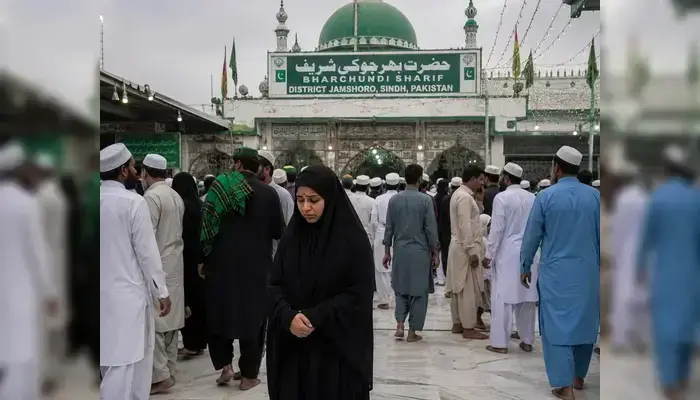
Case Summary
In Sindh, Pakistan, a Hindu woman, who was the mother of a minor girl named Sita Bheel, was abducted by Muslim men for forced conversion. The accused were associated with the notorious Islamic Sufi cleric Mian Abdul Haq, commonly known as Mian Mithu, who is known for forcibly abducting and converting several Hindu women and minor Hindu girls to Islam. Following the abduction, the victim was subjected to rape and forced conversion and was later killed by being burnt alive. This incident came to light after Nikhil Chandwani, a Hindu rights activist based in India who rescues and rehabilitates Hindus from Pakistan fleeing religious persecution, narrated the case on his official Instagram handle on 21 May 2026. According to Nikhil Chandwani, the Hindu woman was a renowned bhajan singer who was well known for singing Krishna bhajans in Sindh. In 2020, she had gone alone to perform at a Hindu gathering. While returning, she was forcibly abducted by a group of Muslim men for forced conversion. Following the abduction, she was taken to the Bharchundi Sharif Dargah, where she was held captive under the control of Mian Mithu. The victim's husband visited the police station to register a complaint regarding his missing wife. But the Pakistani police mocked him and told him, "Go and ask Modi to save your wife." He made repeated efforts to rescue her, but all his attempts proved unsuccessful. In 2022, the Hindu woman's half-burnt body was found floating in a river in Sindh. According to Nikhil Chandwani, she had been subjected to brutal rape and abuse during the two years following her abduction, after which she was killed by being burnt alive. Notably, the Bharchundi Sharif Dargah has been associated with several cases involving the forced conversion of Hindu minorities, particularly Hindu women and minor girls. The dargah operates under the authority of Mian Abdul Haq, commonly known as Mian Mithu, a radical Islamic Sufi peer of Dargah Bharchundi, and an influential political and religious figure in Ghotki, Sindh. He contested elections on a Pakistan Peoples Party ticket and served as a member of parliament from 2008 to 2013. He was later courted by Pakistan Tehreek-e-Insaf and was considered close to then Prime Minister Imran Khan and military chief General Qamar Javed Bajwa. He came into national prominence in 2012 following the abduction of teenage Hindu girl Rinkle Kumari, her conversion to Islam, and her marriage to an older Muslim man. In 2019, he again attracted attention for leading a mob in Ghotki district following allegations of blasphemy against a Hindu school principal. During the violence, Hindu temples, the principal's residence, and several Hindu homes were set on fire. According to multiple reports, Mian Mithu has been linked to more than 1,000 cases involving the abduction, rape, forced conversion, and marriage of minor Hindu and other religious minority girls. He has also been sanctioned by the United Kingdom over allegations relating to forced conversions. Just Earth News (JEN) reported that he is so notorious in helping predatory Muslim men against innocent Hindu girls that he has been labelled as a “conversion factory”.
Why it is Hate Crime ?
In this case, the first primary category selected is: Attack resulting in death. The subcategory selected is: Attacked for Hindu identity. In several cases, Hindus are attacked merely for their Hindu identity without any perceived provocation. A classic example of this category of religiously motivated hate crime is a murder in 2016. 7 ISIS terrorists were convicted for shooting a school principal in Kanpur because they got ‘triggered’ seeing the Kalava on his wrist and tilak that he had put. In this, the Hindu victim had offered no provocation except for his Hindu religious identity. The motivation for the murder was purely religious, driven by religious supremacy. Such cases where Hindus are targeted merely for their religious identity would be documented as a hate crime. Under this category, cases where the attack led to the death of the Hindu victim/s would be documented. The second primary category selected in this case is: Predatory Proselytisation. The subcategory selected is: Harassment, Threats, coercion for conversion. Harassment covers a wide range of behaviours of an offensive nature. It is commonly understood as behaviour that demeans, humiliates, and intimidates a person, including threats and coercion. Harassment and threats, in this case, find their root on discriminatory grounds which has the effect of nullifying a person’s rights or infringing upon his freedom to exercise his right specifically owing to the victim’s religious identity. Verbal and physical threats and psychological or physical harassment are often used against Hindu victims because they choose to practice their professed religion. Religious harassment also includes forced and involuntary conversions by harassment, threats or coercion. Coercion includes intimidatory tactics like force-feeding a Hindu victim beef to convert to another religion, forceful circumcision etc. In several cases documented, non-Hindu perpetrators or those who harbour specific animosity towards Hinduism, harass victims simply based on their religious identity. Such cases often also include harassment to ensure the Hindu victim abandons his/her professed religion and adopts the religion of the perpetrator. Such cases where Hindu victims are harassed to convert to the perpetrator’s religion are rooted in animosity towards the victim’s religious identity and are therefore documented as religiously motivated hate crimes. This case constitutes a religiously motivated hate crime because the Hindu victim was targeted as a Hindu woman and subjected to a sustained pattern of abuse that combined abduction, forced conversion, sexual violence, prolonged captivity, and ultimately murder. The incident was not limited to physical violence against the victim. It involved attempts to strip her of her dignity, identity, freedom, and connection to her Hindu faith. A significant aspect of the case is the role attributed to Mian Abdul Haq, commonly known as Mian Mithu, a figure whose name has repeatedly surfaced in cases involving the abduction and conversion of Hindu women and minor Hindu girls in Sindh. The victim was taken to the Bharchundi Sharif Dargah following her abduction and was held there under the control of Mian Mithu. The involvement of a religious institution and an individual long associated with conversion-related controversies gives the incident a clear religious dimension that extends beyond ordinary criminal conduct and instead enters the realm of a religiously driven hate crime. The act of abducting the Hindu woman for the purpose of forced conversion demonstrates that the victim was targeted because of her religious identity, with the apparent objective of stripping her of her Hindu faith and replacing it with another religion. Targeting a Hindu woman in this manner for conversion makes the religious motive in the case unmistakably clear. Forced conversions violate an individual's religious autonomy, freedom of conscience, and fundamental right to practise and profess their faith. They treat the victim's faith identity as something that must be erased and replaced. In this case, the Muslim perpetrators abducted the victim for the purpose of forcibly converting her to Islam, making the religious dimension of the crime evident. Forced conversion is one of the clearest manifestations of religiously motivated hostility, as it seeks to deny an individual the right to retain their religious identity. This makes the incident a clear example of a religiously driven hate crime. The act of holding the victim captive at the Bharchundi Sharif Dargah under the control of Mian Mithu further demonstrates the depth of the religious hostility involved in the case. Abducting a Hindu woman, subjecting her to forced conversion attempts, and then keeping her in captivity amounted to coercion, intimidation, and sustained harassment directed at stripping her of her Hindu identity. The prolonged nature of the abuse demonstrates that the victim's religious identity remained central to the abuse she endured. This gives the case a clear religious dimension, where a Hindu woman's faith became the basis upon which she was targeted for violence, coercion, and sexual abuse, making it a clear case of a religiously motivated hate crime. The rape of the Hindu woman further underscores the severity of the hostility involved in the case. In such circumstances, sexual violence serves not only as a physical gratification but also as a means of humiliation, domination, and degradation. The victim was subjected to rape after being abducted and held captive for conversion. Such sexual violence is an attempt to break the victim's spirit, undermine her sense of self, and render her more vulnerable to coercion and forced proselytisation. The use of sexual violence against a woman targeted because of her religious identity demonstrates a particularly severe form of religiously motivated sexual abuse. When Hindu women are subjected to rape in the context of religious persecution, the act carries an additional dimension of hostility aimed at degrading both the individual and the Hindu community. This case appears to reflect precisely such a pattern. The sexual abuse continued for approximately two years following the victim's abduction. Subjecting a victim to prolonged rape and abuse over such an extended period demonstrates the extreme level of cruelty and dehumanisation involved. The victim was held captive, repeatedly abused, and ultimately killed, after which her body was burnt and dumped in a river in Sindh. The progression from abduction and forced conversion to prolonged sexual violence and eventual murder indicates a sustained pattern of victimisation directed at a Hindu woman because of her religious identity. The killing of the victim following years of abuse reflects the ultimate denial of her dignity, autonomy, and humanity. Viewed in its entirety, the incident demonstrates a level of hostility that goes beyond ordinary criminality and points towards a crime rooted in animosity towards the victim's Hindu identity, making it a clear case of a religiously motivated hate crime. The act of burning the woman alive subjected her to one of the most horrific and agonising forms of death imaginable. This final act is particularly revealing, as it demonstrates an extraordinary degree of cruelty and dehumanisation on the part of the perpetrators. Burning a person alive goes far beyond an act of murder; it reflects a complete disregard for the victim's humanity, dignity, and right to life. The fact that the perpetrators chose to kill a Hindu woman in such a barbaric manner, after she had already endured abduction, rape, and forced conversion, underscores the depth of hostility directed towards her because of her Hindu identity. The prolonged abuse, culminating in her death by immolation, reflects an extreme form of religious hatred and demonstrates that the violence inflicted upon her was not merely physical but rooted in a profound contempt for her existence as a Hindu woman. Taken together, these acts make this a clear case of a religiously motivated hate crime. Another significant aspect of the case is the response received by the victim's husband from the Pakistani police. When he approached the police stations seeking assistance in locating his abducted wife, police personnel mocked him and told him to "go and ask Modi to save your wife." This response is significant because it suggests that the victim's family was not treated as equal citizens deserving of protection and justice, but rather as members of a marginalised religious minority whose suffering could be dismissed and ridiculed. Such conduct reflects broader concerns regarding the treatment of Hindu minorities in Pakistan and raises questions about institutional bias against religious minorities. Instead of providing assistance to a Hindu family reporting the abduction of a woman, the authorities responded with mockery and indifference. This failure to act, coupled with the derogatory remarks, reinforces an environment in which Muslim perpetrators targeting Hindu victims can operate with a sense of impunity while Hindu victims and their families are left vulnerable and without adequate protection. The conduct of the police therefore strengthens the religious dimension of the case and adds to the evidence suggesting that the victim and her family were subjected to hostility linked to their Hindu identity. Since this case meets multiple parameters of a religiously motivated hate crime, it is being included in the hate crime database maintained by the Hinduphobia Tracker. Disclaimer: Hinduphobia Tracker records incident dates based on when a victim's ordeal begins rather than when the case is reported by the media or other sources. In the present case, the information shared by Nikhil Chandwani does not specify the exact date on which the victim was abducted. It only states that the abduction occurred in 2020. Nikhil Chandwani publicly narrated the case on 21 May 2026. In the absence of a precise date for the abduction, an indicative incident date of 21 May 2020 has been selected for documentation purposes. This date should not be interpreted as the confirmed date of the incident but has been recorded solely to facilitate chronological documentation within the database. According to the information available, multiple Muslim perpetrators were involved in the abduction of the victim and the subsequent acts of forced conversion, prolonged captivity, sexual violence, and murder. However, the exact number and identities of all the accused have not been disclosed in the source material. Since Mian Abdul Haq, commonly known as Mian Mithu, is the only individual who has been significantly identified in connection with the case, and no reliable figure is available regarding the total number of perpetrators, a conservative estimate of one perpetrator has been recorded in the perpetrator count for documentation purposes.
Victim Details
Total Victim
1
Deceased
1
Gender
- Male 0
- Female 1
- Third Gender 0
- Unknown 0
Caste
- SC/ST 1
- OBC 0
- General 0
- Unknown 0
Age Group
- Minor 0
- Adult 1
- Senior Citizen 0
- Unknown 0


Case Status
Unknown


Perpetrators Details
Perpetrators
Muslim Extremists
Perpetrators Range
One Person
Perpetrators Gender
male
 Sources




