Hindu man persecuted for resisting wife's conversion by Mian Mithu; compelled to recite kalma and eat cow meat in custody by Pakistan authorities
 Sindh, Pakistan
  20 May, 2020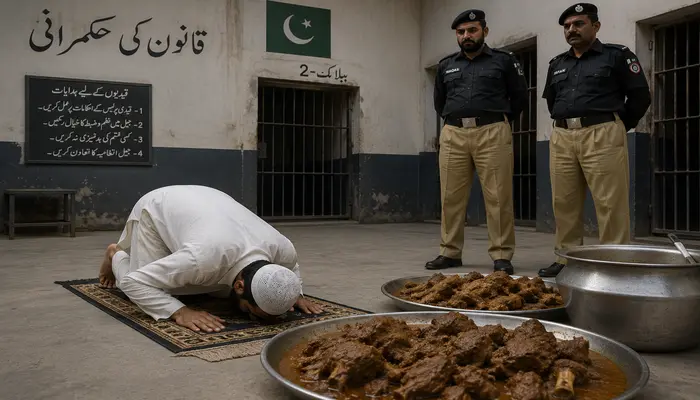
Case Summary
In Sindh, Pakistan, a Hindu man, Prem Lal, the father of a minor girl named Sita Bheel, was arrested by the police for attempting to save his wife from being forcibly converted to Islam and subjected to rape by the notorious Islamic Sufi cleric Mian Abdul Haq, commonly known as Mian Mithu, and his accomplices. Mithu is known for forcibly abducting and converting Hindu women and minor Hindu girls to Islam. The Hindu man was arrested for trying to save his wife, and while in police custody, he was subjected to pressure to convert to Islam. He was forcibly made to recite the Kalma (the Islamic declaration of faith) and was compelled to eat cow meat. This incident came to light after Nikhil Chandwani, a Hindu rights activist based in India who rescues and rehabilitates Hindus from Pakistan fleeing religious persecution, narrated the case on his official Instagram account on 21 May 2026. According to Nikhil Chandwani, Prem Lal's wife was a renowned bhajan singer who was well known for singing Krishna bhajans in Sindh. In 2020, she had gone alone to perform at a Hindu gathering. While returning, she was forcibly abducted by a group of Muslim men for forced conversion. Following the abduction, she was taken to the Bharchundi Sharif Dargah, where she was held captive under the control of Mian Mithu. In captivity, she was subjected to sexual violence and pressure to convert to Islam. When her husband learned of this, he visited the police station to register a complaint regarding his missing wife. However, the Pakistani police mocked him and told him, "Go and ask Modi to save your wife." He made repeated efforts to rescue her, but all his attempts proved unsuccessful. Later, disappointed by the police's inaction, Prem Lal went himself to the Bharchundi Sharif Dargah to rescue his wife. However, upon arriving there, he was brutally assaulted by members of the local Muslim community. Following this, the police arrived at the scene and, instead of saving the Hindu woman and Prem Lal, arrested Prem Lal and threw him in jail. In police custody, Prem Lal was subjected to extreme religious harassment. He was forced to convert to Islam and was made to forcibly recite the Kalma and eat cow meat. Following this, when Prem Lal was released from jail, he again began searching for his wife and visited several courts seeking help, but he was left disappointed. Later, in 2022, Prem Lal's wife's half-burnt body was found floating in a river in Sindh. She had been subjected to brutal rape and abuse during the two years following her abduction, after which she was killed by being burnt alive. Following this, Prem Lal, traumatised by the incident, went to the Bharchundi Sharif Dargah carrying sticks to punish those responsible for his wife's ordeal. However, he never returned and subsequently went missing. After this, Nikhil Chandwani's team intervened. They rescued Sita, Prem Lal's daughter, and brought her to India, where, under the Citizenship Amendment Act, she received Indian citizenship. At the time of writing this report, she is currently being raised by an NGO working for the rehabilitation of Pakistani Hindu minorities. Notably, the Bharchundi Sharif Dargah has been associated with several cases involving the forced conversion of Hindu minorities, particularly Hindu women and minor girls. The dargah operates under the authority of Mian Abdul Haq, commonly known as Mian Mithu, a radical Islamic Sufi peer of Dargah Bharchundi, and an influential political and religious figure in Ghotki, Sindh. He contested elections on a Pakistan Peoples Party ticket and served as a member of parliament from 2008 to 2013. He was later courted by Pakistan Tehreek-e-Insaf and was considered close to then Prime Minister Imran Khan and military chief General Qamar Javed Bajwa. He came into national prominence in 2012 following the abduction of teenage Hindu girl Rinkle Kumari, her conversion to Islam, and her marriage to an older Muslim man. In 2019, he again attracted attention for leading a mob in Ghotki district following allegations of blasphemy against a Hindu school principal. During the violence, Hindu temples, the principal's residence, and several Hindu homes were set on fire. According to multiple reports, Mian Mithu has been linked to more than 1,000 cases involving the abduction, rape, forced conversion, and marriage of minor Hindu and other religious minority girls. He has also been sanctioned by the United Kingdom over allegations relating to forced conversions. Just Earth News (JEN) reported that he is so notorious in helping predatory Muslim men against innocent Hindu girls that he has been labelled as a “conversion factory”.
Why it is Hate Crime ?
In this case, the first primary category selected is: Attack not resulting in death. The subcategory selected is: Attacked for opposing radicals or trying to save victim. In several cases, Hindus are attacked for opposing religiously motivated crimes being committed against a fellow Hindu or simply for voicing an opinion opposing radical elements, who either have in the past or continue to persecute Hindus. In such cases, the initial attack against the victim, against which the Hindu was trying to defend the victim, would also need to be classified as a religiously motivated hate crime. Since the initial crime itself was religiously motivated and the subsequent crime of attempting to save the victim or speaking against the radical elements ends up inviting a violent attack, it would also be classified as a religiously motivated hate crime under this category. The second primary category selected in this case is: Predatory Proselytisation. The subcategory selected is: Harassment, Threats, coercion for conversion. Harassment covers a wide range of behaviours of an offensive nature. It is commonly understood as behaviour that demeans, humiliates, and intimidates a person, including threats and coercion. Harassment and threats, in this case, find their root on discriminatory grounds which has the effect of nullifying a person’s rights or infringing upon his freedom to exercise his right specifically owing to the victim’s religious identity. Verbal and physical threats and psychological or physical harassment are often used against Hindu victims because they choose to practice their professed religion. Religious harassment also includes forced and involuntary conversions by harassment, threats or coercion. Coercion includes intimidatory tactics like force-feeding a Hindu victim beef to convert to another religion, forceful circumcision etc. In several cases documented, non-Hindu perpetrators or those who harbour specific animosity towards Hinduism, harass victims simply based on their religious identity. Such cases often also include harassment to ensure the Hindu victim abandons his/her professed religion and adopts the religion of the perpetrator. Such cases where Hindu victims are harassed to convert to the perpetrator’s religion are rooted in animosity towards the victim’s religious identity and are therefore documented as religiously motivated hate crimes. In this case, the sequence of events demonstrates a clear example of a religiously motivated hate crime, as a Hindu man, Prem Lal, was arrested, assaulted, and subjected to custodial religious coercion, including forced conversion to Islam and forced consumption of cow meat, while in police custody. This occurred after the victim attempted to rescue his wife from forced religious conversion and sexual violence at the hands of Mian Mithu and his accomplices. The overall pattern of treatment demonstrates hostility directed at the victim’s Hindu identity in connection with his attempt to protect his wife. This makes it a clear case of a religiously driven hate crime rooted in anti-Hindu hostility, where both non-state actors and institutional actors participated in and enabled the targeting of a Hindu individual because of his religious identity and actions linked to it. Another significant aspect of the case is the response received by Prem Lal when he first approached the police station to file a complaint regarding his abducted wife. The police personnel mocked him and told him to “go and ask Modi to save your wife.” This response is significant because it showcases that the Hindu victim's family was not treated as equal citizens deserving of protection and justice, but rather as members of a marginalised religious minority whose suffering could be dismissed and ridiculed. Such conduct reflects broader concerns regarding the treatment of Hindu minorities in Pakistan and demonstrates institutional bias against religious minorities. Instead of providing assistance to a Hindu family reporting the abduction of a woman, the authorities responded with mockery and indifference. This failure to act, coupled with the derogatory remarks, reinforces an environment in which Muslim perpetrators targeting Hindu victims operate with a sense of impunity while Hindu victims and their families are left vulnerable and without adequate protection. The conduct of the police therefore strengthens the religious dimension of the case and adds to the evidence suggesting that the victim and his family were subjected to hostility linked to their Hindu identity. When Prem Lal went to the Bharchundi Sharif Dargah to rescue his wife, he was assaulted by members of the Muslim community present there. This assault occurred in direct connection with his attempt to protect his wife from forced conversion and sexual violence. The attack was directed at him in the context of his identity as a Hindu attempting to intervene in a situation involving another Hindu family member. This demonstrates a pattern in which violence is used against individuals seeking to prevent coercive religious coercion, and where the act of protecting members of one’s own community becomes the trigger for physical assault. This makes it a clear case of a religiously driven hate crime, where Hindus are targeted for resisting or intervening in acts of religiously motivated violence against their own community members. Following this, instead of taking action against the Muslim perpetrators of the assault or ensuring protection for the Hindu man and his wife, the police arrested Prem Lal. Police institutions are expected to act in a religiously neutral manner, to protect victims, investigate complaints, and ensure accountability without discrimination. However, in this case, the response is described as one in which the Hindu complainant was treated as the accused while those responsible for violence were not prioritised. This reflects institutional failure in providing equal protection and demonstrates institutional hostility, where a Hindu man attempting to rescue his wife from forced conversion was subjected to legal action instead of support. This constitutes a clear case of systematic oppression, where state authority is used in a manner that disadvantages a Hindu individual for resisting religious coercion against his family. In police custody, the Hindu man was pressured to convert to Islam and was forcibly made to recite the Kalma and eat cow meat. The forced recitation of the Kalma, the Islamic declaration of faith, is significant because it represents a formal affirmation of Islamic belief. When such recitation is compelled through coercion rather than voluntary conviction, it amounts to an attempt to override an individual’s religious identity and impose another faith through force. This constitutes a violation of religious autonomy and the fundamental right to freely practice and profess one’s religion. The act represents religious coercion where the victim’s Hindu identity is treated as something to be erased rather than respected, making it a clear case of religiously motivated persecution. The act of forcibly feeding cow meat further reflects the depth of religious hostility in this case. In Hindu tradition, the cow is deeply revered and is widely regarded as sacred, referred to as Gau Mata. It holds a central place in religious and cultural life, and is associated with nonviolence and sanctity. In Vedic tradition, the cow is described as Aghanya, meaning that which should not be killed or harmed. Cow products such as milk, ghee, and curd are also used in religious rituals and yajnas, further reinforcing its sacred status within Hindu practice. Against this background, forcing a Hindu individual to consume cow meat constitutes a direct violation of deeply held religious beliefs and practices and amounts to both physical coercion and symbolic religious humiliation aimed at breaking the victim’s connection to his faith and identity. In Hindu belief, the cow is regarded as sacred, with harming or consuming it considered one of the gravest religious transgressions, and therefore compelling a Hindu to consume cow meat reflects a deliberate attempt to violate core religious values. Such coercion demonstrates a clear intent to undermine the victim’s faith identity and weaken his religious affiliation through forced participation in acts considered forbidden, reinforcing that this was not incidental conduct but part of a broader pattern of religious subjugation and humiliation, making it a clear case of a religiously driven hate crime. There is also a broader historical context in which cow slaughter and forced feeding of cow meat have been used as methods of religious intimidation against Hindus. In various historical instances involving Islamic invasions and Muslim extremist violence, the act of force-feeding cow meat to Hindus has been used as a tool to humiliate and coerce Hindus into abandoning their faith. Cow meat has also been thrown into Hindu temples by Muslims in several instances to desecrate religious spaces and offend religious sentiment. This pattern is cited as evidence of a recurring method of religious humiliation. In the present case, the use of similar coercive practices within custodial settings intensifies such forms of religious persecution. Instead of protecting the victim from harm, the authorities participated in acts that contribute to religious coercion, making the religiously driven nature of the abuse more explicit. Following the discovery of Prem Lal’s wife being killed by burning after prolonged suffering, Prem Lal attempted to confront the Muslim perpetrators who were responsible by going to Bharchundi Sharif Dargah, after which he went missing. His disappearance after a sequence of custodial abuse, family tragedy, and direct confrontation with the Muslim perpetrators raises serious concerns regarding his safety. Given the prior pattern of violence and coercion, his disappearance is viewed in the context of heightened risk faced by Hindu individuals in such circumstances. This reflects the vulnerability of minority communities in Pakistan when exposed to repeated cycles of violence, lack of protection, and unresolved accountability, making it a clear case of targeted harm linked to the victim's religious identity. Since this case meets several parameters of a religiously driven offence, it is being added to the hate crime database of the Hinduphobia tracker. Disclaimer: The Hinduphobia Tracker records incident dates based on when the victim’s ordeal begins rather than when it is reported by the media or brought to public attention. In the present case, the victim’s ordeal began when his wife went missing in 2020, following which he immediately went to the police station to file a complaint and later went to the Bharchundi Sharif Dargah in search of her. However, the exact dates of these subsequent events have not been specified in available accounts. It is recorded that the wife went missing in 2020, and the case came to light when Nikhil Chandwani shared details of the incident on 21 May 2026 through his public platform. Based on this information, an indicative incident date of 21 May 2020 has been selected for documentation purposes only.
Victim Details
Total Victim
1
Deceased
0
Gender
- Male 1
- Female 0
- Third Gender 0
- Unknown 0
Caste
- SC/ST 1
- OBC 0
- General 0
- Unknown 0
Age Group
- Minor 0
- Adult 1
- Senior Citizen 0
- Unknown 0


Case Status
Unknown


Perpetrators Details
Perpetrators
State and Establishment
Perpetrators Range
Unknown
Perpetrators Gender
unknown
 Sources




