Hindu sentiments outraged; Leftist singer makes derogatory remarks about Hindu deities on social media
 Chennai, Tamil Nadu, India
  25 January, 2010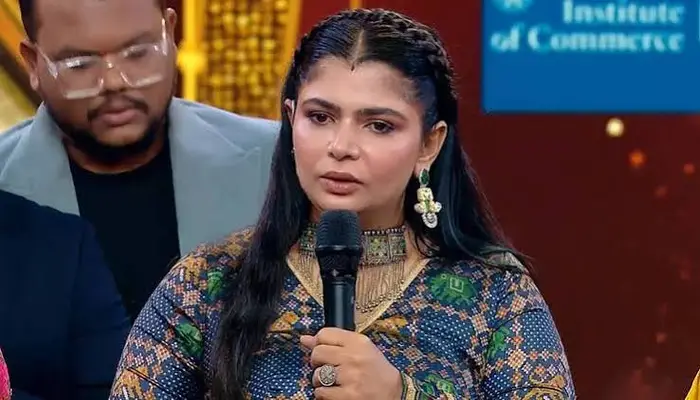
Case Summary
Chinmayi Sripada, a singer known for her left-leaning political activism, came under renewed scrutiny in September 2026 when her old remarks against Lord Ram, Lord Lakshman and Goddess Sita resurfaced on social media. The remarks resurfaced after Sripada announced that she had sung the Tamil version of “Jai Jai Ram” for Namit Malhotra’s Ramayana, with music by A. R. Rahman. On 25 September 2026, she shared the song’s video on X, writing: “Happy to share I have sung the Tamil Version of Jai Jai Ram in Ramayana for Rahman sir and Karthik Netha Sir’s lyrics.” Soon after, social media users shared her old posts and questioned how she could now be associated with a devotional song praising Lord Ram despite her earlier comments about the revered Hindu deity. One user, Open Letter, shared one of her old posts and wrote: “She is happy to make money off a movie made about Prabhu Shri Ram while holding such venom in her heart. The hypocrisy never stops!” Another user, Ankit Jain, shared an earlier remark targeting Lord Ram and wrote: “Even the demons have to seek refuge in Rama.” The posts brought renewed attention to remarks that Sripada had made more than a decade earlier. The resurfaced tweets date back to 2010 and 2011. On 26 January 2010, Sripada wrote: “There cannot be a worse example for a husband than Lord Rama, or even Lakshman for that matter.” On the same day, she wrote again: “Wonder what sort of a blessing it is when someone wishes that a girl should get a husband like Rama.” In 2011, she again targeted Lord Ram and Goddess Sita while commenting on the Tamil dubbing of Sriramarajyam. She wrote: “What an unfortunate life Sita had, and what a bad husband Sri Rama turned out to be in the name of Dharma.” These remarks, originally posted years earlier, resurfaced because of Sripada’s new association with a project centred on Lord Ram. Social media users highlighted the contrast between her earlier remarks and her participation in a devotional song dedicated to the same revered deity. This was not the only instance in 2026 in which Sripada made remarks concerning Hindu religious figures and practices. On 1 February 2026, she mocked Hindu sadhus and bhajans while referring to convicted sex offender Jeffrey Epstein. She wrote on X: “If Epstein had been dharmic singing Bhajans, looks like he'd have been the next Babaji and this country would have celebrated him,” comparing Hindu religious figures to Epstein. Another controversy followed the TCS Nashik conversion controversy in April 2026, when FIRs were registered following complaints by Hindu women employees alleging sexual harassment, religious targeting, coercive relationships and pressure to convert to Islam by Muslim colleagues and seniors. After the matter became public, Sripada commented on the controversy. Her remarks focused primarily on sexual harassment rather than the religious targeting described in the complaints, drawing criticism from those who felt that the religious dimension of the allegations had been overlooked.
Why it is Hate Crime ?
This case is being added to the tracker under the primary category: Hate Speech against Hindus. The subcategory selected is: Anti-Hindu slurs, mocking faith. Anti-Hindu slurs and the deliberate mocking of the Hindu faith owing to religious animosity involve the usage of derogatory terms, stereotypes, or offensive references to religious practices, symbols, or figures. One of the common anti-Hindu slurs used against Hindus is “cow-worshipper” and “cow piss drinker”. The intention of using this term is to demean and mock Hindus as a group and their religious beliefs since Hindus consider the cow holy. Additionally, some symbols and the slurs attached to them have a historical context that exacerbates the insult, hate, stereotyping, dehumanisation and oppression against Hindus. Cow worship has been used for centuries to denigrate Hindus, insult their faith and oppress Hindus specifically as a religious group. There has been overwhelming documentation about how cow slaughter has been used to persecute Hindus with cow meat being thrown in temples and places of worship. There has also been overwhelming documentation where cow meat (beef) has been force-fed to Hindus to either forcefully convert them to Islam or denigrate their faith. Apart from cow worship, the Swastika – which holds deep religious significance for the Hindus – has also been misinterpreted and distorted to use as a slur against Hindus. Similarly, the worship of the Shivling has been used by supremacist ideologies and religions to denigrate Hindus owing to religious animosity. Such slurs and denigration stem out of inherent animosity and hate towards Hindus and their faith, therefore, it is categorised as hate speech targeted at Hindus specifically owing to their religious identity. This case was a clear example of a religiously driven hate speech incident because the accused repeatedly made derogatory remarks about Lord Ram, Goddess Sita, and Lord Lakshman on her social media account. The repeated denigration of revered Hindu deities demonstrated hostility directed at figures held sacred by millions of Hindus, making the religious identity of the targets central to the speech. Lord Ram is one of the most revered deities in Hinduism and is worshipped as the seventh incarnation of Lord Vishnu, embodying righteousness, truth, compassion, and the ideal of dharma. His life, as narrated in the Ramayana, serves as a moral and spiritual guide for millions of devotees, and he is venerated as Maryada Purushottam, the supreme exemplar of virtue and righteous conduct. Goddess Sita is worshipped as an incarnation of Goddess Lakshmi and represents purity, strength, devotion, dignity, and unwavering adherence to dharma. She is one of Hinduism’s most sacred female deities, whose life is honoured as an embodiment of resilience and spiritual greatness. Lord Lakshman is revered as the incarnation of Shesha (the cosmic serpent) and is celebrated for his absolute devotion, loyalty, courage, and selfless service to Lord Ram and Goddess Sita. Together, these three divine figures occupy a central place in Hindu religious belief, worship, scripture, and cultural tradition. By calling Lord Ram and Lord Lakshman “bad husbands” and mocking the traditional blessing of wishing that a girl receives “a husband like Rama”, the accused did not merely criticise literary characters but denigrated deities who are objects of worship in Hinduism. Such remarks ridiculed beliefs that Hindus regard as sacred and directly insulted revered religious figures. The repeated nature of these comments demonstrated animosity towards Hindu deities and caused deep offence to Hindu religious sentiments, making the religious character of the speech evident. Her remarks about Goddess Sita having “an unfortunate life” and Lord Ram becoming “a bad husband in the name of Dharma” were widely understood as a reference to the Agni Pariksha episode in the Ramayana. While this episode is frequently presented by critics as evidence of Lord Ram abandoning or humiliating Sita, many authoritative Hindu traditions interpret it differently. In the Chhaya Sita tradition, preserved in several Ramayana retellings and Puranic narratives, the real Goddess Sita is placed under the protection of Agni before her abduction, while a divine illusory form known as 'Chhaya Sita' remains with Ravana. The Agni Pariksha is therefore understood not as a trial of Sita’s purity, but as the moment when the real Sita emerges from the sacred fire and the illusory form returns to Agni, reaffirming her eternal purity. By reducing this deeply theological episode to an accusation that Lord Ram was simply “a bad husband”, the accused mocked both a revered Hindu deity and a sacred religious narrative, reflecting hostility towards core Hindu beliefs. The fact that Chinmayi Sripada had previously mocked Hindu sadhus, sacred bhajans, and Hindu religious figures demonstrated that this was not a one-off incident. Taken together with her repeated derogatory remarks about Lord Ram, Goddess Sita, and Lord Lakshman, the pattern showed sustained denigration of Hindu beliefs, deities, and the Hindu community. The cumulative nature of these remarks indicated explicit hostility towards the Hindu faith, making this a clear instance of religiously driven hate speech. Since this case met the parameters of a religiously motivated hate speech incident, it was added to the Hinduphobia Tracker's hate crime database. Disclaimer: Hinduphobia Tracker records incident dates based on when the crime or hate incident occurred. As Chinmayi Sripada’s original derogatory tweet was published on 26 January 2010, this date has been selected as the indicative incident date for documentation purposes only. The perpetrator's exact location when she made the said comments in 2010 and 2011 is not publicly available. The place of incident has been documented as Chennai, Tamil Nadu, based on publicly available information indicating her location at the time of writing this report.


Case Status
Unknown


Perpetrators Details
Perpetrators
Others
Perpetrators Range
One Person
Perpetrators Gender
female
 Sources




