Ancient Shiva temple targeted in Chennai: Hundreds of acres of land encroached, alienated and sold as private properties by ex-trustees
 Chennai, Tamil Nadu, India
  15 September, 2026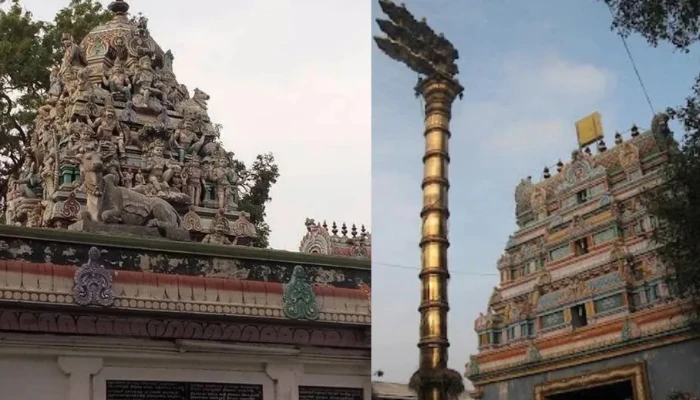
Case Summary
In Chennai, Tamil Nadu, hundreds of acres of land belonging to the ancient Shiva temple, Akilandeswari Sumetha Agatheeswarar Temple in Nungambakkam, were encroached upon and alienated by ex-trustees of the Hindu Religious and Charitable Endowments (HR&CE) Department. According to the National Hindu Temple Federation (NHTF), more than 450 grounds of temple land had been gradually alienated over several decades through the involvement of former trustees and officials of the HR&CE Department. The federation stated that around 415 grounds remained to be recovered. NHTF office-bearer R. Amalraj stated that the department members who sold the temple land were not hereditary trustees of the temple. Despite this having been established earlier, one particular family continued to sell parcels of the temple land while claiming to be trustees of the temple. The Revenue Department later issued pattas to buyers for temple property. The loss of temple property also affected families for whom the temple held particular religious significance. A representative of the Bharat Hindu Religious and Charitable Society said several families regarded the Agatheeswarar Temple as a family deity. Many of these families had since moved to other cities but continued to return to the temple during its annual festival. At the same time, the federation stated that occupants of temple properties had failed to pay rent, resulting in arrears running into several crores of rupees. In some cases, no lease documents established how the occupants had come into possession of the properties. The matter also reached the Madras High Court, where proceedings concerning the temple properties were underway. In July 2026, the court directed the HR&CE Department to submit details regarding the extent of land recorded as belonging to the temple, properties sold under Section 34 of the HR&CE Act and lands dealt with under Section 9 of the Madras City Tenants’ Protection Act. The court further sought details of the purchasers and dates of sale, the extent of land under encroachment, the steps taken to remove such encroachments, and the area currently in the temple's possession. During a subsequent hearing, the HR&CE Department sought additional time to file its report. Meanwhile, a separate dispute arose over the temple pond at Jothi Nagar, Bharaniputhur, in the Ayyappanthangal area. Residents objected to the presence of a Tamilaga Vettri Kazhagam (TVK) party office at the temple pond. They said renovation work on the Agatheeswarar temple pond began without first removing the encroachments around it.
Why it is Hate Crime ?
The primary category for this case is: Attack on Hindu religious representations. The subcategory for this case is: Encroachment or illicit takeover of temple land/land near temple. In Hinduism, a temple is the abode of the Deity. The Deity in the Temple is consecrated, thereby making it a real, breathing entity. Hindus believe that not just the Deity but the temple premises itself are sacred to Hindus since Hindus hold the faith that the entire Temple space is an amalgamation of the divine energy of the deity. Not only the Temple but the Temple premises in their entirety are considered sacred by Hindus. In several cases, the premises of the Temple and/or religious centre are illicitly taken over by institutions belonging to other faiths – like the Waqf board or the Church. Other times, the temple property, land or the property of religious centres are illicitly encroached upon by non-Hindu groups. Any illicit takeover or encroachment is a crime ab initio; however, when non-Hindu groups illicitly take over or encroach upon the sacred land of Hindus, it is an affront to the Hindu community and is therefore classified as a religiously motivated hate crime under this category. This case was recorded as a religious hate crime because land dedicated to an ancient Hindu temple was not protected as sacred temple property, but was allowed to be encroached upon and alienated by those entrusted with its administration. For Hindus, temple land is inseparable from the religious institution it sustains. A temple is the house of the Divine, while its surrounding property provides the physical and financial foundation for worship, rituals, festivals, maintenance and other religious activities. Land dedicated to a Deity therefore carries a religious purpose that goes beyond ordinary ownership or commercial value. Its loss reduces the space and resources available for the continued practice of Hindu worship. Further, the involvement of those responsible for protecting temple property added a distinct dimension to such dispossession. An authority entrusted with safeguarding property dedicated to a Deity carries a custodial responsibility towards that religious institution. When that responsibility was compromised, and temple property was permitted to be sold, the harm was not limited to financial loss. It represented the erosion of the institutional safeguards through which Hindu religious property was preserved. It also betrayed the trust and religious sentiments of Hindus, who rely on such institutions to safeguard property dedicated to their Deities and preserve it for future generations of devotees. Moreover, temple properties generate legitimate income through rents and charitable contributions, which form part of the funds managed for the temple and its religious activities. These resources are used for the maintenance of the temple, worship of the Deity, conducting rituals and for festivals, and other activities connected with its religious functioning. When temple properties are occupied without proper leases or the rents are not paid, the temple is deprived of funds that are meant to sustain its religious activities. Protecting temple property is therefore essential not only for preserving the physical assets of a temple but also for safeguarding the financial resources through which its religious functions are maintained. Furthermore, the significance of this case was reinforced by the repeated cases documented by the Hinduphobia Tracker in Tamil Nadu concerning the treatment of Hindu temple properties by the administration. These cases had involved encroachment, alienation, disputed control and the failure to protect or recover property belonging to Hindu temples. The recurring nature of such cases raised a broader concern about institutional protection of Hindu religious property in Tamil Nadu, where the properties at the centre of these disputes were consistently those belonging to Hindu temples. For instance, in South Poolangulam, Tirunelveli district, Tamil Nadu, idols of Lord Ganesha were desecrated by police personnel. The police threw away the idols and dumped them in a garbage heap behind the Devarkulam police station. The incident occurred just days ahead of the Ganesh Chaturthi festival. In another case, in Kurumbur, Thoothukudi district, Tamil Nadu, an ancient 200-year-old Railadi Vinayagar temple was demolished overnight near Kurumbur Railway Station, while a nearby church was left untouched. The railway authorities used an earthmover to demolish the temple. Therefore, the issue extended beyond a conventional land dispute. When property dedicated to Hindu Deities was progressively lost despite the existence of institutions specifically responsible for administering and protecting temple property, the consequence was the weakening of the physical and financial foundations of Hindu religious institutions. This directly affected the preservation and functioning of Hindu temples and the religious traditions sustained through them. Thus, the incident was added to the hate crime database of the Hinduphobia Tracker. Disclaimer: The Hinduphobia Tracker records incident dates based on when the crime occurred rather than when it was reported or published. Since the exact date on which the temple land was encroached upon and alienated was not specified in the available sources, 16 September 2026, the date when it was reported in the media, has been used as the indicative incident date and recorded for documentation purposes only.


Case Status
Case sub-judice


Perpetrators Details
Perpetrators
State and Establishment
Perpetrators Range
Unknown
Perpetrators Gender
unknown
 Sources




