Anti-Hindu hate speech: Bangladeshi Muslim man threatens to cut up and bury Hindu politician
 Bangladesh
  11 May, 2026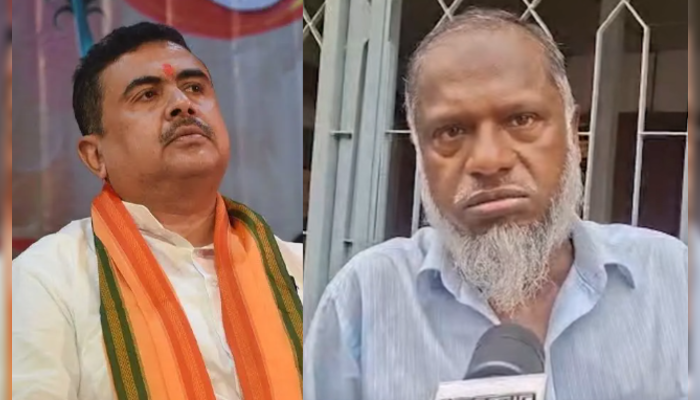
Case Summary
Following the Bharatiya Janata Party’s (BJP) electoral victory in West Bengal, anti-Hindu and anti-India protests erupted in Bangladesh. During this period, a video surfaced on social media in which a Muslim man issued violent threats against newly elected Chief Minister Suvendu Adhikari and threatened to bury him at the India–Bangladesh border. The video was circulated through a Facebook page named “The Inquilab” and quickly drew attention amid rising tensions surrounding the political change in Bengal and the new government’s emphasis on border security and fencing along the India–Bangladesh border. In the video, the accused referred to Suvendu Adhikari as “pagal” (mad), threatened to cut him up and bury him, and claimed that Adhikari had been “running around” for victory but would now have to calm down after winning the election, otherwise “we will beat him to make him calm down.” The accused delivered the threats in an aggressive and inflammatory tone, contributing to an atmosphere of hostility and intimidation. The incident took place in the broader context of protests and provocative rhetoric emerging from sections of Islamist groups and radical clerics in Bangladesh following the BJP’s electoral victory in West Bengal. Police later initiated an investigation to verify the authenticity of the video and identify the individual responsible for issuing the threats.
Why it is Hate Crime ?
This case has been added to the tracker under the primary category of - Hate speech against Hindus. Within it, the sub-category selected is - Violent threats. Violent threats, explicit, implicit or implied, is the most dangerous form of hate speech since it goes beyond discriminatory and prejudicial language to express the intent of causing harm to an individual or a group of people based on their religious identity and faith. There could be several different kinds of threats that are issued to Hindus based on religious animosity. An explicit threat would mean the direct threat of violence towards an individual Hindu, a group of Hindus or Hindus at large. Physical violence, death threats, threats of destruction of property belonging to Hindus and threats of genocide would mean explicit threats against Hindus for their religious identity. Implicit threats may not be a direct threat but implied through the use of symbols of actions – for example – in the Nupur Sharma case, other than explicit threats, there were also implicit threats when Islamists took to the streets to burn and beat her effigies. It implies that they want to do the same to Nupur Sharma – thereby is considered an implicit threat. Violent threats can be delivered in person, through letters, phone calls, graffiti, or increasingly through social media and other online platforms. It would be important to understand that a threat – explicit or implicit, online or offline – to an individual who happens to be a Hindu does not qualify as a religiously motivated threat. Such a threat, while vile and dangerous, could be owing to non-religious reasons and/or personal animosity. To qualify as a religiously motivated threat, it would need to exhibit an indication that the individual is being targeted for religious reasons and/or owing to his/her religious identity as a Hindu. This case has been added to the tracker because the threats issued against West Bengal Chief Minister Suvendu Adhikari were not ordinary political remarks but formed part of a broader pattern of anti-Hindu and anti-India mobilisation that emerged in Bangladesh following the Bharatiya Janata Party’s (BJP) electoral victory in West Bengal. The Muslim perpetrator publicly threatened to “cut up” and bury Suvendu Adhikari at the India–Bangladesh border, while also warning that if the Chief Minister did not “calm down” after coming to power, “we will beat him to make him calm down.” These statements constituted explicit threats of violence directed at a political leader perceived by Islamist elements as representing Hindu political interests and a government seen as favourable towards Hindus. The communal context surrounding the threats is critical in understanding the hate-driven nature of the incident. The threats emerged during a wave of anti-Hindu and anti-India protests in Bangladesh after the BJP formed the government in West Bengal. Several Islamist preachers, Muslim mobs, and radical groups publicly threatened Hindus, invoked “Ghazwa-e-Hind”, threatened war against India, and warned of violence against Hindus if policies associated with the BJP were implemented. In this charged atmosphere, Suvendu Adhikari became a symbolic target because he was viewed by the perpetrators as a “Hindutva” leader and representative of a political movement associated with Hindu interests and stronger border enforcement against illegal infiltration from Bangladesh. It is pertinent to note that Muslim extremists often view India not merely as a political state but as a Hindu civilisational collective. The very basis of the partition of India and the creation of Pakistan, including modern-day Bangladesh, rested on the ideological belief that Muslims constituted a separate nation that could not coexist within a Hindu-majority collective like India. Consequently, hostility towards India among Islamist elements frequently manifests as hostility towards Hindus and Hindu identity itself. In this case, the threats directed at Suvendu Adhikari reflected that same ideological hostility, where a democratically elected Chief Minister was threatened with violence because he represented a political formation perceived as pro-Hindu and supportive of stronger action against illegal cross-border activities. The perpetrator’s rhetoric also reflected the broader Islamist tendency to portray any assertion of Hindu interests or neutral administrative measures as “anti-Muslim” oppression. The BJP government in West Bengal had announced stricter border fencing measures, action against infiltration networks, and administrative reforms related to border security. None of these measures targeted Muslims as a religious community. However, Islamist elements in Bangladesh communalised these developments and used them to incite hostility against Hindus, India, and leaders associated with the BJP. The violent threats against Suvendu Adhikari, therefore, emerged not from legitimate political disagreement but from a communal mindset that interpreted governance measures and the democratic electoral success of a party perceived as pro-Hindu as justification for intimidation and violent rhetoric. The language used by the perpetrator further demonstrated clear hatred and contempt. Referring to Suvendu Adhikari as “pagal” (mad), threatening to “cut him up”, bury him at the border, and physically assault him if he did not “calm down” went far beyond criticism of a political figure. The statements dehumanised the Chief Minister and attempted to terrorise him through threats of bodily harm and death. Given the wider anti-Hindu mobilisation and repeated communal rhetoric emerging from Bangladesh at the time, the threats carried broader implications aimed not only at an individual politician but also at the Hindu political and civilisational identity he was perceived to represent. This incident was not an isolated case but formed part of a broader pattern of anti-Hindu and anti-India rhetoric that emerged from Islamist groups, Muslim clerics, and political figures in Bangladesh following the Bharatiya Janata Party’s (BJP) electoral victory in West Bengal in 2026. During this period, multiple Bangladeshi Islamic preachers and political actors openly issued threats against Hindus and India, invoked “Ghazwa-e-Hind”, and called for religious mobilisation against the Indian state. For example, Bangladesh-based Islamic cleric Maulana Hafiz threatened to wage “Ghazwa-e-Hind” against India and declared that Muslims would surround the Indian High Commission in Dhaka, slaughter cows in front of it, and prepare for war against India after the BJP’s victory in West Bengal. Another radical Islamic preacher associated with the outfit “Insaf Kayemkari Chhatra Sramik Janata” publicly threatened that India could be “captured within three hours” with the help of Pakistan and Indian Muslims and warned that Hindus in India would not survive if “40 crore Muslims” became angry. Similarly, Bangladeshi Jamaat leader Md Nurul Huda supported separatist rhetoric against India by urging Mamata Banerjee to reject Delhi’s authority, declare West Bengal an independent nation, and rely on the support of “170 million Muslims” from Bangladesh. The repeated invocation of Muslim unity, “Ghazwa-e-Hind”, war against India, threats against Hindu leaders, and inflammatory rhetoric directed at Hindus demonstrated that the threats against Suvendu Adhikari emerged from a larger climate of organised anti-Hindu hostility and communal mobilisation rather than being an isolated expression of anger by a single individual. Overall, the threats to bury and physically assault Suvendu Adhikari constituted a clear instance of religiously charged hate speech and communal intimidation. The threats occurred within a larger environment of anti-Hindu mobilisation in Bangladesh, where Islamist elements openly targeted Hindus, India, and political leaders associated with Hindu interests. The case, therefore, qualifies for inclusion in the Hinduphobia Tracker as an incident involving violent threats, communal intimidation, and anti-Hindu hostility directed against a leader perceived as representing Hindu political identity and interests.
Victim Details
Total Victim
1
Deceased
0
Gender
- Male 1
- Female 0
- Third Gender 0
- Unknown 0
Caste
- SC/ST 0
- OBC 0
- General 1
- Unknown 0
Age Group
- Minor 0
- Adult 1
- Senior Citizen 0
- Unknown 0


Case Status
Unknown


Perpetrators Details
Perpetrators
Muslim Extremists
Perpetrators Range
One Person
Perpetrators Gender
male
 Sources




