Hindus outburst on violating sacred river Ganga downplayed; throwing bones in river by Muslims defended by media outlet in Delhi, India
 Delhi, Delhi, India
  18 March, 2026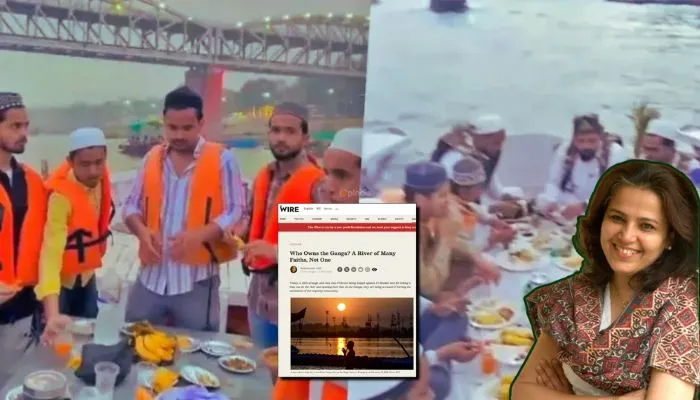
Case Summary
In Varanasi, Uttar Pradesh, the outburst of Hindus over the violation of the sacred river Ganga by a group of Muslim men was called into question by the news media outlet The Wire. It published a report on 19 March, 2026, defending the actions of the Muslim men and downplaying the incident by presenting it as a normal and secular activity in a shared public space. In an opinion piece titled “Who Owns the Ganga? A River of Many Faiths, Not One”, a Delhi-based writer, translator and researcher, Rakhshanda Jalil, advanced the argument that the Ganga was a ‘secular’ river not owned solely by Hindus. She stated that the river belonged to many faiths and framed the issue within that broader narrative. In its report, The Wire questioned the outrage over the incident. It described the gathering as a routine iftar and framed the Ganga as a shared, secular public space. The report drew parallels with other forms of pollution in the river and suggested that similar concern was not expressed in those instances. It shifted focus away from the specific act and towards a broader environmental narrative. According to reports, on 16 March 2026, in Varanasi, Uttar Pradesh, the Hindu sacred sites of the Bindu Madhav temple and the ghats of Kashi were defiled when Muslim youths held a non-vegetarian iftar gathering on a boat in the Ganga near the temple and ghats. The Muslim men offered namaz on the boat and then broke their fast with chicken biryani. After eating, they threw chicken bones and leftover food into the Ganga. Videos showing the act circulated widely on social media and triggered outrage among Hindu users. Following the circulation of the videos, a complaint was filed. The police took action and registered FIRs against 14 Muslim men for hurting religious sentiments. The action was taken in response to the act of consuming non-vegetarian food in the river and disposing of bones into the waters near a site held sacred by Hindus. Rakhshanda Jalil, in her article, stated that FIRs were being registered against 14 Muslim men “for taking a boat out on the river and opening their fast on the Ganga,” and said they were being accused of hurting the sentiments of the “majority community.” The use of the term “majority community” framed the police action as a response driven by majoritarian considerations. The article did not mention that the action was not taken because the accused offered namaz or broke the fast in the boat, but because they threw bones into the Ganga near the Bindu Madhav temple, after consuming chicken. It also did not highlight how some religious leaders within the Muslim community, such as the Anjuman Intezamia Masajid Committee, criticized the action of holding a loud party-like Iftar on a boat, saying it is "against the religion". The article further raised questions about the sentiments of those with historical and personal ties to the river. It questioned whether rivers and natural spaces could be associated with one community and whether such claims reflected broader social divisions. The report indicated that the reaction to the incident was selective and suggested that the outrage was being amplified. It presented the act as part of everyday river use and detached it from its religious context. This framing was contested by those who viewed the incident as a violation of the sanctity of the Ganga and an act that hurt Hindu religious sentiments. The incident led to wider debate on religious sensitivity, the sanctity of the Ganga, and the nature of public discourse, with differing interpretations emerging around the actions and the responses to them.
Why it is Hate Crime ?
This case has been added to the tracker under the prime category of- Hate speech against Hindus. Under this, the sub-category selected is- Anti-Hindu subversion and prejudice. The tertiary category selected is- Anti-Hindu Fake News or Downplaying. Hate speech is defined as any speech, gesture, conduct, writing, or display that is prejudicial against a specific individual and/or group of people, which leads to or may lead to violence, prejudicial action or hate against that individual and/or group. Media plays a specific and overarching role in perpetuating prejudicial attitudes towards a community owing to unfair, untrue coverage and/or misrepresentation/misinterpretation, selective coverage and/or omission of facts of/about issues affecting a specific religious group. This type of bias can dehumanise the victim group, making it easier for others to justify harmful actions against them, which aligns with the objectives of hate speech laws aimed at preventing such harm. It is often observed that the media takes a prejudicial stand against the Hindu community, driven by their need to shield the aggressor community, which happens to be a numeric minority; however, that is the one perpetrating violence against Hindus. For example, the media is often quick to contextualise religiously motivated crimes against Hindus, omit or misrepresent facts that point towards religiously motivated hate crimes, justify and/or downplay religiously motivated hate crimes, or simply present fake news to stereotype Hindus. Such media bias leads to the denial of persecution and is often used to dehumanise Hindus, leading to justification for violence against them. For example, the media covered several fake allegations of Hindus targeting Muslims and forcing them to chant Jai Shree Ram. Most of these cases were proved false and fabricated after police investigation. These fake news reports were subsequently never retracted or clarified. Such fake news led to the justification of violence and dehumanisation of Hindus based on the argument that since Hindus targeted Muslims and forced them to chant Jai Shree Ram, the dehumanisation of Hindus and violence against them was par for the course and merely a retaliation. Such media bias leads to prejudicial portrayals of Hindus and offers a justification for violence against them and, therefore, is considered hate speech under this category. This case has been added to the tracker as it involved the downplaying of an intentional act meant to hurt Hindu religious sentiments. The incident concerned the defilement of the Ganga, a river deeply sacred to Hindus. However, The Wire presented the act as a routine iftar and framed it as a matter of shared public space. In doing so, it reduced the seriousness of the act and detached it from its religious impact on Hindus. Firstly, the report shifted the focus away from the act of throwing non-vegetarian waste into a sacred river. Instead, it questioned the outrage and introduced a broader narrative about the Ganga being a ‘secular’ river. This diversion weakened the core issue. It made the concerns of Hindus appear excessive rather than justified, even though the act had taken place near a temple and in a space held sacred. Secondly, the reporting selectively presented facts. It suggested that action was taken against the accused merely for offering namaz or opening their fast. However, it did not clearly highlight that the action followed the act of disposing of bones into the river. As a result, the narrative created sympathy for the accused while sidelining the grievance of the Hindu community. This imbalance distorted public understanding of the incident. Further, this framing had a direct impact on Hindus as a community. When an act seen as desecration is normalised, it diminishes the value of their beliefs. It signals that their religious sensitivities can be overlooked or debated. Over time, such portrayals contribute to a sense of alienation and undermine the legitimacy of Hindu concerns in public discourse. Moreover, this pattern was not isolated. The Wire has, in multiple instances, framed incidents involving harm to Hindus in a manner that softens the role of the perpetrators. By shifting narratives and omitting key facts, such reporting shields wrongdoing and redirects scrutiny. This creates a consistent bias in representation. For instance, on 21st December, The Wire published a report quoting the Bangladeshi government’s official response to the Ministry of External Affairs’ reply in the Lok Sabha. The ministry stated that there were 2,200 incidents of violence against Hindus and other minorities in Bangladesh in 2024, whereas The Wire downplayed and claimed that there were only 138 incidents of violence between January and November 2024. In another instance on 16th October, 2024, The Wire framed the brutal murder of 22-year-old Hindu youth Ram Gopal Mishra in Bahraich, Uttar Pradesh, as an act of "self-defence" by Muslim assailants. Mishra was brutally killed after he replaced a green flag with a saffron one at Abdul Hamid’s home following a dispute during the Durga Visarjan procession. The Wire's video report titled “Who is behind the communal riots in Bahraich?” was published on October 16, where journalist Sharat Pradhan suggested that the BJP and RSS incited communal tension, linking it to the upcoming by-elections. In yet another instance, on 16 May, 2025, in Bhopal, several Hindu girls were religiously profiled, lured, and raped by a group of Muslim men. The perpetrators filmed their horrific acts and even attempted to sell them on pornographic websites. The Wire objected to the publication of the details about the Muslim perpetrators and their stated religious motivations for committing the crime. Huneza Khan authored an article in The Wire about the Bhopal incident, claiming that the Bhopal rape case had been subjected to a media trial. She argued that the reporting of these horrific stories about the victims was causing communal hatred against Muslims. Taken together, the selective omission, reframing, and dilution of the incident amounted to downplaying an act that hurt Hindu sentiments. This aligned with the identified category as it contributed to prejudice against Hindus and normalised disregard for their beliefs. Such narratives shape public perception and risk fostering a wider environment where harm against Hindus is minimised or justified.


Case Status
Unknown


Perpetrators Details
Perpetrators
Muslim Extremists
Perpetrators Range
One Person
Perpetrators Gender
female
 Sources




