Hindus targeted; harassed, threatened, tortured to force migration by Muslim residents in Delhi
 Delhi, Delhi, India
  16 March, 2026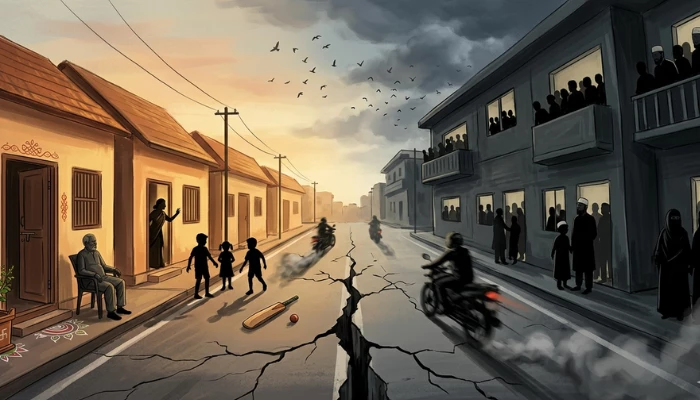
Case Summary
In Tri Nagar, Delhi, Hindu residents were intimidated, harassed, and abused by Muslim residents to make them flee from their local area. On 17th March 2026, a video circulated online which showed the plight of Hindu residents of Tri Nagar, Delhi. In that video, multiple Hindu residents gathered and spoke on camera regarding ongoing issues in their locality, stating that they had been facing sustained harassment, intimidation, and pressure over the past one to one-and-a-half years at the hands of their Muslim neighbours. As per the reports, a building in their locality was purchased by Muslims. Thereafter, continuous pressure was created on Hindus to migrate from there. Earlier, the area had a negligible Muslim population, but it had then increased to more than 20%. The Hindu residents stated that the locality had previously been peaceful and socially cohesive. One resident stated, “We had never seen such a situation before. This used to be a very peaceful area where all festivals were celebrated together.” However, they stated that over the last one to two years, conditions had changed significantly, and daily life had been affected. “Our area used to be very clean and well-maintained. But because of property dealers selling houses to them, our peace had been destroyed,” said Shakunt Sharma, a Hindu resident. She further stated, “Around 20 people lived on a single floor in one house… when we passed, they made lewd comments on women and children.” Describing initial interactions, she stated, “When they first came, they used abusive language and said, ‘I will buy all the houses here, try stopping me if you can.’” She added, “They rode bikes at very high speed… when we objected, they said, ‘What was it to you?’ We had small children who played around on the streets, which created problems for us. Our children could not go out and play because of their rash driving.” Another resident stated, “We had been living here for 60–70 years… our elders built these houses with their own hands.” Despite the situation, residents stated, “We would not leave this place… they were trying to create fear and intimidate us, but we would not go.” Concerns were also raised regarding surveillance and privacy. A resident stated, “They had installed CCTV cameras covering both sides of the lane and around houses… they recorded videos of our children moving around, playing and circulated them. Videos were made of them… we constantly felt fear when they went to school or tuition.” Another resident added, “Even normal activities like sharpening household knives by the local dwellers were recorded and made viral to create suspicion.” Fear among families, especially concerning children, was repeatedly highlighted. Hindu residents stated that due to safety concerns, they had installed gates in their locality. Residents further stated that they were repeatedly intimidated and provoked. They stated, “They, Muslim residents, threw garbage in packets at night… dogs tore it apart and spread it everywhere. It contained bones, eggs and other things… this was done to provoke and create conflict.” Further, they stated, “Three Muslim men were seen on CCTV wearing caps; they caught a man and snatched his mobile phone and money.” He added, “Now tell us, were we safe in our own area?” They further stated that the incidents of snatching and petty crime had increased since they arrived. The residents further stated that crowding and behaviour in public spaces had changed. One resident stated, “There was constant abuse, overcrowding, and disturbances… roads were blocked, and there was filth everywhere.” It was also stated that earlier there were only one or two such families in certain lanes, but then multiple houses had been sold, and “almost the entire lane had been covered.” On the issue of migration, a resident stated, “Many people had already migrated. Those who could not fight were leaving because they were too troubled.” Another resident stated, “My own brother lived in that lane… he was so troubled that he wanted to leave because living there had become difficult.” According to the report, residents also stated that complaints had been made to the authorities, but the police took no proper action. They stated that they had to protect themselves and that running away was no solution. Notably, such systematic patterns of harassing Hindus to make them flee have been documented by Hinduphobia trackers from various other cities as well. For example, in June 2025 in Madhya Pradesh, 40 Hindu families were forced to flee the village after being harassed for their religious identity by Muslims. The Hindu victims stated that they had been persistently suffering molestation, assaults, violent death threats, restriction of religious and cultural practices and forced abandonment of Hinduism by the Muslim villagers. As a result, almost 40 Hindu families put out posters outside their houses reading, 'This house is for sale.' In another instance, in December 2025 in Rajasthan, over 800 Hindu families were forced to flee their homes and migrate due to sustained harassment by the local Muslim community. According to the Hindu Harmony Forum, 800 families had migrated over the past 75 years. Hindu victims explained that boys from the Muslim community drove recklessly through their lanes, and when Hindus objected, they called others to fight those who resisted. Furthermore, boys on motorbikes teased Hindu minor girls on their way to school. In yet another case, on 16th January 2026, in Uttar Pradesh, around 200 Hindu families put up “House for Sale” signs outside their homes and announced their intention to leave the village. The Hindu families were forced to flee after prolonged harassment, expulsion threats, and abuse by members of the Muslim community. The video stated that families from various communities, including Brahmins, had either left the old city to settle in New Malpura or departed with their entire families to other cities.
Why it is Hate Crime ?
This case has been added to the tracker under the primary category "Attack not resulting in death". Within it, the sub-category selected is: Attacked to induce migration from a non-Hindu-dominated area. There have been cases where the Hindus living in an area, often with a majority of non-Hindus or those harbouring animosity towards the Hindu faith, experience threats and violence. The violence is employed to make the Hindus leave the area and relocate, so the area could be turned into an exclusive ghetto for adherents of the non-Hindu faith or those who harbour animosity towards the Hindu faith. In several cases, the aim of the exodus is explicit. However, in several cases, the demand for the exodus of Hindu residents is not explicit; however, violence by non-Hindu residents leaves the Hindu residents no option but to leave the area, thereby turning the area into an exclusive ghetto of non-Hindu residents. In such cases, there are instances of violence against the Hindu residents explicitly. For example, in the Hauz Qazi case of 2019, the Muslim residents claimed that a parking dispute had triggered mob violence against the Hindu residents. However, the violence did turn religious, with a temple being desecrated and directed specifically against the Hindu residents. The Hindu residents of the area were clear that the violence was religiously motivated, and one of the motives was to affect an exodus of the Hindu residents. In such cases, even though the perpetrators have not explicitly expressed the aim of causing an exodus, the given circumstances, violence, and precedent point to the intention of exodus and therefore would be categorised under this sub-category. Such crimes are religiously motivated and therefore are hate crimes. The other sub-category selected is: Attacked for Hindu identity. In several cases, Hindus are attacked merely for their Hindu identity without any perceived provocation. A classic example of this category of religiously motivated hate crime is a murder in 2016. 7 ISIS terrorists were convicted for shooting a school principal in Kanpur because they got ‘triggered’ seeing the Kalava on his wrist and the tilak that he had put. In this, the Hindu victim had offered no provocation except for his Hindu religious identity. The motivation for the murder was purely religious, driven by religious supremacy. Such cases where Hindus are targeted merely for their religious identity would be documented as a hate crime under this category. Another primary category relevant in this case is- Predatory Proselytisation. Within this, the selected subcategory is: Harassment for conversion leading to exodus. There have been cases where the Hindus living in an area, often with a majority of non-Hindus or those harbouring animosity towards the Hindu faith, experience pressure and threats. The pressure, threats or coercion is employed with two aims – the non-Hindu residents of the area want the Hindu residents to either convert their religion to the religion of the dominant residents or leave the area and relocate, so the area could be turned into an exclusive ghetto for adherents of the non-Hindu faith or those who harbour animosity towards the Hindu faith. In several cases, the aim of the exodus is explicit. However, in several cases, the demand for the exodus of Hindu residents is not explicit; however, harassment by non-Hindu residents leaves the Hindu residents no option but to leave the area, thereby turning the area into an exclusive ghetto of non-Hindu residents. In such cases, there are instances of harassment or threats to the Hindu residents explicitly. For example, in the Hauz Qazi case of 2019, the Muslim residents claimed that a parking dispute had triggered mob violence against the Hindu residents. However, the violence did turn religious, with a temple being desecrated and being directed specifically against the Hindu residents. The Hindu residents of the area were clear that the violence was religiously motivated, and one of the motives was to affect an exodus of the Hindu residents. In such cases, even though the perpetrators have not explicitly expressed the aim of causing an exodus, the given circumstances and harassment, coupled with prevailing circumstances and precedent, point to the intention of exodus and would therefore be categorised under this sub-category. Such crimes are religiously motivated and therefore are hate crimes. This case had been added to the tracker as a hate crime because what unfolded in Tri Nagar was not a series of isolated inconveniences but a sustained, collective targeting of Hindu residents. A pattern had been meticulously crafted to create an atmosphere of fear, coercion, and psychological siege, ultimately pushing families towards the brink of migration. The root cause of migration in this case was not a personal dispute but a gradual change in the locality's demographics. Specific buildings had been occupied by Muslims in a manner that altered the demographic balance of the locality, followed by continuous acts that made everyday life difficult for Hindu residents. Streets that had once echoed with children’s laughter then carried hesitation; stepping out of one’s own home began to feel like stepping into uncertainty. The actions described by residents went far beyond routine neighbourhood friction. Overcrowding of buildings, groups of men gathering in visible numbers, reckless bike riding through narrow lanes, abusive remarks, and deliberate provocation created a pattern of intimidation. These had not been random acts; they carried a scornful message, of dominance, of control, of making the Hindu presence feel unwelcome. The Hindus had been made helpless, their children could not play out, and when objections were raised, they had been met with dismissive or aggressive responses. This reinforced the sense that resistance would only escalate the situation. The fear that had been instilled in Hindus was not just of what had happened, but of what could happen next. The intimidation had also entered the private sphere, which was where fear deepened into helplessness. Residents spoke of children being filmed, their movements monitored, and normal household activities being turned into tools for suspicion and ridicule. When families began to feel that even their children were being watched, recorded, and potentially targeted, the very idea of safety collapsed. The installation of gates in the locality had not been an act of preference but a response to perceived danger. It had been a defensive measure, an attempt to reclaim some control in an environment that was steadily slipping away. Further, acts such as throwing garbage, creating filth, and using it as a pretext for confrontation carried a pattern of deliberate provocation. These had not merely been civic issues; they had been repeated behaviours that triggered conflict and created tension. Furthermore, the snatching, verbal abuse, and the gathering of groups at the slightest altercation had made the environment tense, where any one small incident could spiral into something larger. Living under such conditions had meant constant alertness, measuring words, avoiding confrontation, and yet never feeling secure. The most telling indicator of a hate-driven environment had been the growing discussion of migration. When residents openly stated that those who could not fight were leaving, and others were contemplating the same, it reflected the breakdown of normal life. Migration had not been a choice here; it had been a consequence of sustained pressure. For those who stayed, it had not been out of comfort but out of compulsion, attachment to ancestral homes, and the refusal to be pushed out. The repeated assertion, “we would not leave”, had not come from defiance alone, but from the pain of even having to say it. The targeting in this case had not been individual but collective. The hostility had been directed at Hindu residents as a group, affecting entire lanes and neighbourhoods. The pattern of overcrowding, intimidation, surveillance, provocation, and pressure had worked together to create an ecosystem where Hindus felt cornered within their own homes. This had not been coexistence; it had been gradual encroachment paired with psychological pressure. Even the authorities' response, as described by residents, had contributed to this sense of abandonment. When complaints did not translate into effective action, it reinforced the belief that protection would have to be self-arranged. In such a scenario, the burden of safety shifted from the state to the individual, deepening insecurity. This emerging pattern had pointed towards a deeper design where the objective had appeared not just to coexist but to displace gradually. The steady normalisation of pressure, combined with the refusal to accommodate concerns, had signalled an intent to reshape the locality’s character by making Hindu presence increasingly untenable. What had made this particularly concerning was the cumulative effect: each act, however small in isolation, had contributed to a larger climate in which migrating had begun to seem like the only viable option. Such a trajectory had not arisen spontaneously; it was planned meticulously. A calculated progression in which persistence had replaced confrontation, and pressure had replaced force, ultimately achieving the same end: quiet but compelled displacement. Taken together, these elements demonstrated a clear pattern of identity-based targeting. The fear, the pressure to migrate, the disruption of daily life, and the collective nature of the intimidation established that this had not been a neutral civic issue but a religiously charged environment where Hindus had been made to feel unsafe because of who they were. The lived experience of anxiety, restraint, and resistance in the locality reflected the deeper reality: this had not just been about space but about identity, presence, and the right to exist without fear. This case, therefore, met the threshold of a hate crime and warranted inclusion in the tracker as a clear instance of sustained, religion-based targeting and coercive pressure against Hindus. Disclaimer: The victim count has been recorded as 10, based on the number of individuals who appeared on camera in the video and provided first-hand accounts of harassment and intimidation. While multiple residents from the locality have reportedly faced similar issues over an extended period, the exact number of affected individuals could not be independently verified. Therefore, for documentation purposes, the count has been conservatively limited to identifiable victims who explicitly testified to their ordeal.
Victim Details
Total Victim
10
Deceased
0
Gender
- Male 5
- Female 5
- Third Gender 0
- Unknown 0
Caste
- SC/ST 0
- OBC 0
- General 0
- Unknown 10
Age Group
- Minor 0
- Adult 10
- Senior Citizen 0
- Unknown 0


Case Status
Unknown


Perpetrators Details
Perpetrators
Muslim Extremists
Perpetrators Range
Unknown
Perpetrators Gender
unknown
 Sources




