Attack on Hindu sentiments: Dravidian poet makes derogatory remarks against Lord Ram and revered Hindu saint
 Chennai, Tamil Nadu, India
  13 March, 2018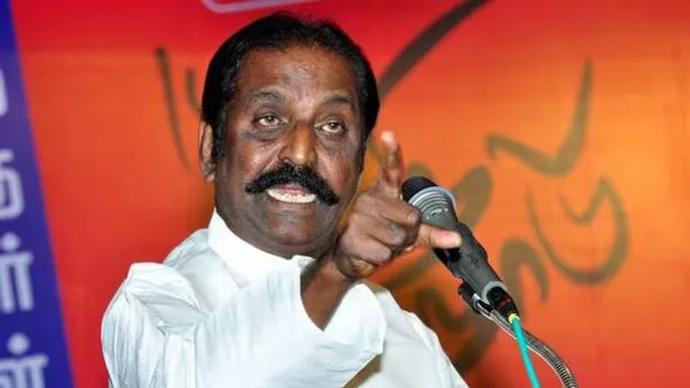
Case Summary
Hindu devotees across India voiced strong objections after the Tamil lyricist and poet Vairamuthu made derogatory remarks against revered figures in Hindu tradition, including the Vaishnavite saint Andal and the revered deity Lord Rama. His objectionable statements targeting Andal and Lord Rama drew widespread criticism from devotees and religious organisations. These groups maintained that the comments disrespected sacred figures central to Hindu devotional life. The controversy resurfaced in public discourse when Vairamuthu later received a major literary honour from the Dravida Munnetra Kazhagam (DMK) government of Tamil Nadu on 14 March 2026, prompting renewed debate among Hindu groups regarding his earlier remarks and their impact on religious sentiment. This occurred in 2018 when Vairamuthu delivered a speech discussing Andal, the eighth-century Tamil poet-saint revered in the Sri Vaishnava tradition and worshipped by devotees as an incarnation associated with the goddess Bhudevi. During the lecture, Vairamuthu referenced a so-called scholarly interpretation and denigrated Andal by calling her a "devadasi". This remark generated significant backlash because many Hindu devotees considered such a description entirely inappropriate for a revered religious figure whom they worshipped as a divine saint. Hindu groups, temple organisations, and political leaders criticised the remark and filed formal complaints, arguing that it demeaned a sacred pillar of Hindu devotion. Vairamuthu responded that he quoted an academic source and intended to discuss historical interpretations rather than insult Andal. Another controversy arose when Vairamuthu made remarks about Lord Rama while discussing the Tamil epic Kamba Ramayanam, a classical Tamil retelling of the Ramayana written by the poet Kambar. During a literary speech interpreting a passage about Rama’s grief after his separation from Sita, Vairamuthu commented that Rama’s actions were those of someone overcome by emotional turmoil. Hindu critics stated this was disrespectful towards a deity worshipped by millions of Hindus and accused the poet of trivialising a sacred figure. The remark triggered political criticism and protests, while supporters claimed the comment was a literary interpretation of a classical text rather than a deliberate insult to the deity. The earlier controversies over Vairamuthu’s remarks resurfaced in 2026 when he received a major literary honour from the DMK government for his contributions to Tamil literature. The award reignited public debate, with Hindu organisations and critics arguing that it overlooked the friction caused by his earlier anti-Hindu statements on revered Hindu figures. Supporters highlighted his lifelong service to Tamil letters, while critics underscored the deep objections from sections of the Hindu community.
Why it is Hate Crime ?
The primary category for this case is "Hate speech against Hindus". The subcategory selected is- "Anti-Hindu slurs, mocking faith". Anti-Hindu slurs and the deliberate mocking of the Hindu faith owing to religious animosity involve the usage of derogatory terms, stereotypes, or offensive references to religious practices, symbols, or figures. One of the common anti-Hindu slurs used against Hindus is “cow-worshipper” and “cow piss drinker”. The intention of using this term is to demean and mock Hindus as a group and their religious beliefs since Hindus consider the cow holy. Additionally, some symbols and the slurs attached to them have a historical context that exacerbates the insult, hate, stereotyping, dehumanisation and oppression against Hindus. Cow worship has been used for centuries to denigrate Hindus, insult their faith and oppress Hindus specifically as a religious group. There has been overwhelming documentation about how cow slaughter has been used to persecute Hindus with cow meat being thrown in temples and places of worship. There has also been overwhelming documentation where cow meat (beef) has been force-fed to Hindus to either forcefully convert them to Islam or denigrate their faith. Apart from cow worship, the Swastika – which holds deep religious significance for the Hindus – has also been misinterpreted and distorted to use as a slur against Hindus. Similarly, the worship of the Shivling has been used by supremacist ideologies and religions to denigrate Hindus owing to religious animosity. Such slurs and denigration stem out of inherent animosity and hate towards Hindus and their faith, therefore, it is categorised as hate speech targeted at Hindus specifically owing to their religious identity. This case constitutes a clear instance of hate speech targeting Hindu religious figures and beliefs, rooted in Vairamuthu's derogatory statements about revered deities and saints. His remarks against Andal and Lord Rama sparked widespread outrage among Hindu devotees and organisations, who condemned them as demeaning to figures central to Hindu devotional life. In Hinduism, deities and saint-poets are sacred manifestations whose teachings underpin religious practice; denigrating them wounds the sentiments of millions and qualifies as anti-Hindu hate speech driven by religious animosity. A primary flashpoint involved Andal, the eighth-century Vaishnavite saint-poet venerated in the Sri Vaishnava tradition as an incarnation of Bhudevi, Earth goddess and Vishnu's consort. One of the twelve Alvars, her hymns in the Nalayira Divya Prabandham, such as Tiruppavai and Nachiyar Tirumozhi, are recited daily in temples and homes, especially during Margazhi. The perpetrator's act of mocking her as a "devadasi" constitutes a hate crime rooted in anti-Hindu animosity, as it deliberately targets a divine figure central to Vaishnava devotion, aiming to demean her sanctity, provoke outrage, and hurt the sentiments of millions of Hindu devotees who regard her as Bhudevi's embodiment. Such calculated insults reveal deep-seated hatred towards Hinduism, systematically undermining its revered icons to incite communal division and establish clear motivation by religious prejudice against the Hindu community. Vairamuthu further insulted Lord Rama. For Hindus, Lord Rama is a revered deity considered the seventh avatar of Vishnu, the embodiment of dharma, righteousness, and ideal kingship, whose Ramayana narrative forms the bedrock of Hindu culture and moral teachings. By portraying Rama as having "lost mental balance," the accused profoundly offended devotees who revere him as a divine ideal, not merely a literary figure. This denigration qualifies as a hate crime driven by anti-Hindu animosity, as it intentionally mocks a foundational deity worshipped by over a billion Hindus, assaults core religious beliefs in Rama's perfection, and exposes the perpetrator's contemptuous intent to desecrate Hindu faith, thereby wounding collective sentiments and perpetuating targeted hostility against Hinduism. The controversy reignited in 2026 when Vairamuthu received a major literary honour from the DMK government, prompting Hindu organisations to decry the blatant oversight of his past anti-Hindu remarks amid longstanding accusations of Dravidian leaders' hostility towards Hindu traditions. This state-sponsored endorsement of a figure documented for derogatory attacks on sacred Hindu deities like Andal and Lord Rama constitutes a hate crime by proxy, as it legitimises and amplifies anti-Hindu animosity through institutional power, deliberately ignoring the hurt inflicted on Hindu devotees and signalling the DMK's complicity in fostering religious prejudice. By honouring such a poet despite widespread objections, the DMK not only overlooks but actively promotes anti-Hindu rhetoric, showcasing their own deep-seated animosity towards Hinduism, undermining Hindu religious sentiments on a societal scale, and perpetuating targeted discrimination against the Hindu community's revered figures and beliefs. This is not the first time the DMK government has engaged in anti-Hindu acts; the Hinduphobia Tracker has previously documented several such instances. For example, in January 2026, DMK associate Karunas declared "there is no religion called Hindu," deliberately stoking sectarian rifts within Hindu communities. Likewise, in February 2026, DMK MP T. M. Selvaganapathy mocked sacred Shiva and Ganesha mantras during a public address, further evidencing a pattern of institutional disdain for Hindu religious practices. Given that this case meets the parameters of an anti-Hindu hate speech, it is being added to the hate crime database of the tracker. Disclaimer: The Hinduphobia Tracker records incident dates based on when the crime occurred, not when the media reported it. In this case, media reports did not specify the exact date of Vairamuthu's denigrating remarks, stating only that they occurred in 2018. The only other date mentioned is 14 March 2026, when the Dravida Munnetra Kazhagam (DMK) government honoured him. Henceforth, an indicative incident date of 14 March 2018 is selected for documentation purposes only.


Case Status
Complaint not filed


Perpetrators Details
Perpetrators
Others
Perpetrators Range
One Person
Perpetrators Gender
male
 Sources




