Hindu sentiments outraged as Indian politician mocks revered chants of Hindu dieties in Tamil Nadu
 Tamil Nadu, India
  17 February, 2026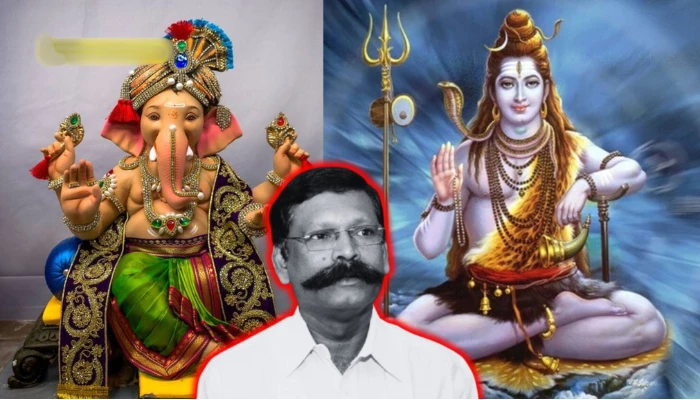
Case Summary
In Tamil Nadu, revered mantras (chants) of Hindu deities were mocked by Dravida Munnetra Kazhagam (DMK) Member of Parliament T. M. Selvaganapathy. During his public address, Selvaganapathy chanted some revered Sanskrit Mantras dedicated to Lord Shiva and Ganesha, and then mocked the chants. He, in a mocking tone, recited the following sacred chants: “Om Tatpurushaya Vidmahe Mahadevaya Dheemahi Tanno Rudrah Prachodayat…Shivaya Namah… Om Shivaya Namah… Om Shiva Shiva Shiva Om…" and "Ekandaya Vidhmaye Vakratundaya Dheemahi Tanno Danti Prachodayat…Om Shreem Kreem Kling Ganapathaye Vara Varada Sarvajanam Me Vashamanaya Swaha…” After this, he stated, “What I said – I don’t understand it, you don’t understand it either.” A video of the accused gained traction online. Hindu devotees, religious organisations, and commentators criticised the remarks and described them as an attack on Hindu beliefs. Many demanded accountability and called upon elected representatives to show respect towards the religious traditions of the Hindu community.
Why it is Hate Crime ?
This case is being added to the tracker under the primary category- Hate Speech against Hindus. The subcategory selected is- Anti-Hindu slurs, mocking faith. Anti-Hindu slurs and the deliberate mocking of the Hindu faith owing to religious animosity involve the usage of derogatory terms, stereotypes, or offensive references to religious practices, symbols, or figures. One of the common anti-Hindu slurs used against Hindus is “cow-worshipper” and “cow piss drinker”. The intention of using this term is to demean and mock Hindus as a group and their religious beliefs since Hindus consider the cow holy. Additionally, some symbols and the slurs attached to them have a historical context that exacerbates the insult, hate, stereotyping, dehumanisation and oppression against Hindus. Cow worship has been used for centuries to denigrate Hindus, insult their faith and oppress Hindus specifically as a religious group. There has been overwhelming documentation about how cow slaughter has been used to persecute Hindus, with cow meat being thrown in temples and places of worship. There has also been overwhelming documentation where cow meat (beef) has been force-fed to Hindus to either forcefully convert them to Islam or denigrate their faith. Apart from cow worship, the Swastika – which holds deep religious significance for the Hindus – has also been misinterpreted and distorted to use as a slur against Hindus. Similarly, the worship of the Shivling has been used by supremacist ideologies and religions to denigrate Hindus owing to religious animosity. Such slurs and denigration stem from inherent animosity and hate towards Hindus and their faith; therefore, it is categorised as hate speech targeted at Hindus specifically owing to their religious identity. This case constitutes a blatant instance of religiously motivated hate speech as the perpetrator publicly recited sacred Hindu mantras and then dismissed them as meaningless by stating, “What I said – I do not understand it, you do not understand it either.” By trivialising revered chants of Lord Shiva and Lord Ganapathy, he did not merely question language or ritual; he reduced the spiritual lifeblood of millions of Hindus to a spectacle of ridicule. This was not casual commentary. It was a deliberate act of mockery aimed at core Hindu devotional practice. Sacred mantras in Hinduism are not ornamental phrases. They are treated as divine sound vibrations, preserved through centuries of disciplined oral tradition. From the Rudra Gayatri invoking Lord Shiva to the Ganapathy mantras recited before every auspicious beginning, these chants form the heartbeat of daily worship in homes and temples across India. Generations wake before sunrise to chant them. Devotees whisper them during grief and celebrate them during festivals. By publicly and mockingly reciting these mantras only to dismiss them as incomprehensible, the perpetrator ridiculed not just sacred words but an entire civilisational heritage. Such derision exposed deep-seated contempt for Hindu spiritual traditions. This act also carried a calculated political undertone. An elected representative holds constitutional responsibility to respect the faith of citizens. Instead, he chose to portray sacred Hindu chants as empty utterances devoid of meaning. That framing implicitly casts Hindu devotion as irrational and foolish. It signals to audiences that Hindu worship deserves laughter rather than respect. When ridicule flows from a position of power, it normalises social contempt and emboldens further hostility towards practising Hindus. The incident, therefore, rises beyond mere satire or debate. It strikes at Hindu identity itself by mocking the very instruments through which devotees connect with the divine. The chants of Lord Shiva and Lord Ganapathy are foundational pillars of Hindu worship. To deride them publicly is to humiliate the community that reveres them. Such targeted scorn, directed specifically at sacred Hindu expressions, reflects clear religious animosity. For these reasons, the case squarely qualifies as religiously motivated hate speech and warrants formal documentation in the hate crime database of the tracker. Disclaimer: The Hinduphobia Tracker records incident dates based on when the crime occurs, rather than when it was reported in the media. Since the media reports in this case did not specify the exact date on which the accused made his speech, the first media report date, 18 February 2026, is taken as an indicative date of the incident. This date is recorded for documentation purposes only.


Case Status
Unknown


Perpetrators Details
Perpetrators
State and Establishment
Perpetrators Range
One Person
Perpetrators Gender
male
 Sources




