Hindu woman in Uttarakhand targeted by radicalised Muslim racket; accused part of Chhangur Peer's pan-India grooming and conversion network
 Dehradun, Uttarakhand, India
  17 July, 2025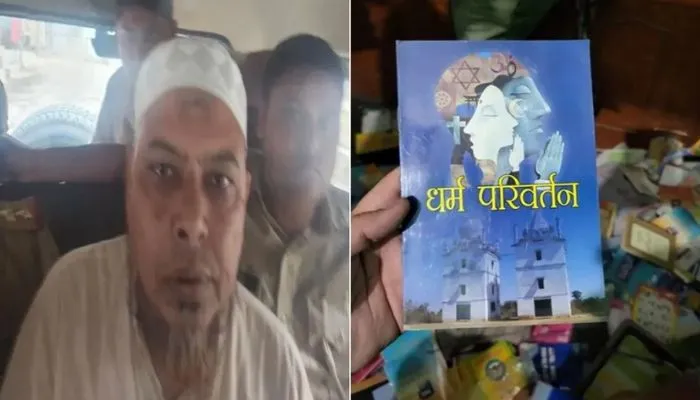
Case Summary
In Ranipokhari, Uttarakhand, a young Hindu woman became the target of an organised attempt to convert her to Islam through online grooming, emotional pressure, and inducements. The victim's father approached the police and revealed that a group of Muslim men and women had been influencing his daughter over the past few months, trying to make her give up her religion. One of the key persons involved was Abdul Rehman. He was under investigation by the Uttar Pradesh Anti-Terror Squad (ATS) in a religious conversion case registered in Agra. Following the initial tip-off from Uttar Pradesh ATS, local police in Dehradun identified Abdul Rahman as a central figure linked to the attempted religious conversion of the woman in Ranipokhri. Abdul Rehman, originally from Firozabad, was earlier a Hindu named Mahendra Pal. He had converted to Christianity first, and later converted to Islam. Acting on the leads, the authorities began tracing his online interactions, particularly through Instagram, where he was found to be in touch with the young woman from Ranipokhri. The police investigation revealed that fake Instagram IDs were being used to approach young people and slowly influence their thinking. The woman from Ranipokhari had unknowingly become part of this network. The police registered a case against five accused, Abdul Rehman, Abu Talib, Ayan, Aman and Shweta, under the Uttarakhand Freedom of Religion Act, which prohibits forced or deceitful religious conversions. Among the accused, two were from Uttar Pradesh, two were from Delhi, and one was from Goa. They were identified for their roles in this network. It is pertinent to note that the accused had been part of a larger religious conversion racket orchestrated by a Muslim cleric known as Chhangur Peer, whose actual name was Jalaluddin. The Uttar Pradesh ATS had recently dismantled this organised network, uncovering its systematic operation aimed at targeting and converting Hindu individuals, particularly women and minors, to Islam. According to the investigation, Chhangur Baba provided financial incentives to Muslim men to lure Hindu women, often under false identities by posing as Hindus, and then pressure them into conversion. Once converted, these women were married off through Nikah ceremonies arranged by Chhangur Baba himself. Authorities also discovered that Chhangur Baba had published a book titled Shijra-e-Tayyaba, intended as a manual to propagate Islam. The ATS investigation revealed that his network operated on a structured incentive model: Rs15–16 lakh was paid for converting Brahmin, Sikh, or Kshatriya women; Rs10–12 lakh for OBC women; and Rs8–10 lakh for those from other castes. He, along with his wife, was arrested on 5 July 2025. The ATS confirmed that the gang had received nearly Rs100 crore in foreign funds to facilitate these illegal conversions across India. Members of his own family were reportedly involved in the operation. Earlier reports from the Hinduphobia Tracker had documented cases linked to Chhangur Baba’s activities. In one such case, a Muslim man named Meraj, acting on Chhangur’s instruction, had deceived a Hindu woman named Aarti by posing as a Hindu. Once she was isolated, Meraj and Chhangur forcibly converted her and conducted her Nikah. In another incident, a Hindu man named Harjeet was coerced into converting to Islam. He had been harassed, offered inducements, and even subjected to false legal complaints, tactics used by Chhangur Baba’s network to compel conversion.
Why it is Hate Crime ?
This case has been added to the tracker under Primary category of: Predatory Proselytisation. The first subcategory under this is: Conversion/ attempts to convert by inducement. Predatory Proselytisation is not just limited to threat, harassment, force and violence, but it also has contours of stealth. In several cases, the Hindu victim is exploited to convert, with non-Hindus taking advantage of their poverty. In such cases, the Hindu victim who is suffering financially is offered monetary benefits, including lucrative offers for jobs, health treatment, education, etc, to induce the victim into changing his/her religion. In such cases, the religious identity of the victim and the aim to disenfranchise him from his faith form the heart of the crime. Also, taking advantage of and exploiting an individual’s economic vulnerabilities is widely acknowledged as exploitation, forms of which are often penalised by law. Such cases therefore are considered religiously motivated hate crimes since the victim’s religious identity forms the very heart of the crime itself. The second subcategory under this is: Proselytisation by grooming, brainwashing, manipulation or subtle indoctrination. The tertiary category under this is: Pattern of targeting Hindus. Religious brainwashing essentially means the often subtle and forcible indoctrination to induce someone to give up their religious beliefs to accept contrasting regimented ideas. Religious grooming or brainwashing also involves propaganda and manipulation. It involves the systematic effort, driven by religious malice and indoctrination, to persuade “non-believers’ to accept allegiance, command, or doctrine to and of a contrasting faith. Cases of such grooming or brainwashing are far more nuanced than direct threats, coercion, inducement and violence. In such cases, it is often seen that there is repeated, subtle and continual manipulation of the victim to induce disaffection towards their own faith and acceptance of the contrasting faith of the perpetrator. While subtle indoctrination is widely acknowledged as predatory, an element which is often understated in such conversions or the attempts of such conversion is the role of loyalty and trust which might develop between the perpetrator and the victim. Fiduciary relationships are often abused to affect such religious conversion. For example, an educator transmitting religious doctrine of a competing faith to a Hindu student. The Hindu student is likely to accept what the teacher is transmitting owing to existence of the fiduciary relationship. The exploitation of the fiduciary relationship to religiously indoctrinate victims would also be included in this category. Since the underlying animosity towards the victim’s faith forms the basis of predatory proselytization, such cases are considered religiously motivated hate crimes. This case constitutes a hate crime because the victim was targeted exclusively on account of her religious identity as a Hindu. The conversion attempt was not incidental or the result of open theological discourse, but a deliberate and orchestrated effort to sever the victim from her native religious community. The perpetrators employed deception, grooming, inducement, and online manipulation, rather than open and voluntary religious exchange, revealing clear evidence of predatory intent. The scheme was not the action of a lone individual, but part of a broader pattern operated by an organised religious network led by Jalaluddin alias Chhangur Peer. The use of fabricated social media profiles, emotional manipulation, and gradual psychological conditioning reflects a form of religious grooming. Such tactics are characteristically aimed at breaking the victim’s confidence in her own faith and replacing it with a manufactured dependence on the religious and emotional framework imposed by the perpetrators. The motive behind this operation was not spiritual upliftment or genuine conversion but religious replacement, supported by a reward-based incentive system. Muslim men were financially incentivised to specifically target Hindu women, including minors, through deceit, coercion, or emotional entrapment. This demonstrates a clear and systematic prejudice towards Hindus, particularly Hindu women, who were selected because of their identity, made vulnerable, and exploited to fulfil a sectarian agenda. The attack on her religious autonomy and the use of inducement, deception, and spiritual subjugation affirm that the perpetrators acted out of religious hostility, making this a case of predatory proselytisation rooted in sectarian hate. A clear and disturbing pattern has emerged across the documented cases involving Maulana Jalaluddin alias Chhangur Baba, revealing a systemic campaign of religiously motivated targeting of Hindus, particularly vulnerable women and minors. In each case, Chhangur Baba acted as the ideological and operational backbone of a conversion racket that preyed specifically on Hindu identity. His network involved grooming Hindu girls through Muslim men who often faked Hindu identities, built trust, and then coerced conversion through a mix of religious indoctrination, blackmail, sexual abuse, and even threats of trafficking or murder. Victims were routinely stripped of their Hindu identity—renamed, made to wear Islamic symbols, force-fed beef, and coerced into Islamic rituals. Chhangur Baba did not act alone; he provided material incentives to his operatives, conducted Islamic marriages (Nikah) only after forced conversion, and even authored a book—Shijra-e-Tayyaba—openly advocating Islamic expansion. The structured incentive system revealed by ATS—where higher bounties were set for converting upper-caste Hindu women—further proves that his operation was not only religiously intolerant but caste-targeted and misogynistic. With foreign funding amounting to ₹100 crore and deep penetration into law enforcement and local communities, Chhangur Baba’s activities constitute a premeditated, hate-driven assault on Hindu society and religious freedom. Hence, this case is documented as a hate crime against Hindus as the victim was targeted solely for her Hindu identity, which was systematically erased through coercion, abuse, and forced religious conversion. Disclaimer: It is important to clarify that none of the media sources covering this case have specified the exact date on which the ordeal of the victim began. Therefore, for documentation purposes, we have recorded the date based on when the incident was reported in the media.
Victim Details
Total Victim
1
Deceased
0
Gender
- Male 0
- Female 1
- Third Gender 0
- Unknown 0
Caste
- SC/ST 0
- OBC 0
- General 0
- Unknown 1
Age Group
- Minor 0
- Adult 1
- Senior Citizen 0
- Unknown 0


Case Status
Case sub-judice


Perpetrators Details
Perpetrators
Muslim Extremists
Perpetrators Range
From 2 To 5
Perpetrators Gender
both
 Sources




