Anti-Hindu statements and vile references to Hindu scriptures for justifying rapes defended by senior politician
 Delhi, Delhi, India
  18 January, 2026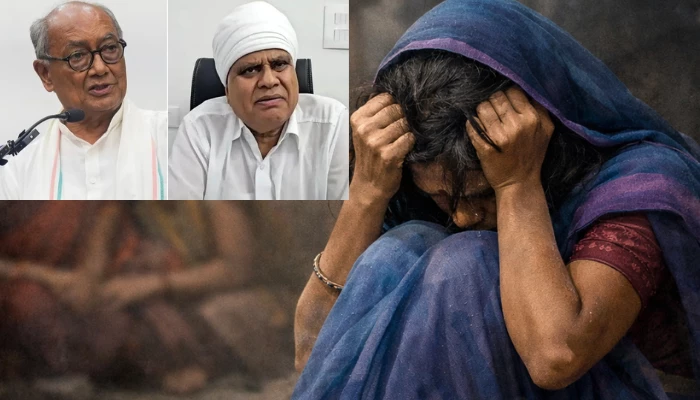
Case Summary
In Madhya Pradesh, Congress MLA Phool Singh Baraiya made controversial remarks invoking Hindu scripture while discussing sexual violence against Scheduled Caste and Scheduled Tribe women. After the remarks triggered widespread condemnation for misquoting religious concepts and trivialising rape, senior Congress leader and former Chief Minister Digvijaya Singh publicly defended Baraiya and urged that the criticism was based on misunderstanding. In a media interview on 17 January, Baraiya claimed that rapes of SC, ST, and OBC women were linked to offenders believing their actions carried religious value. Referring to a text he identified as Rudrayamal Tantra, he alleged that “it is written” that intercourse with a woman of a particular caste yields the “reward of a pilgrimage,” and suggested that offenders treated rape as an alternative to undertaking an actual pilgrimage. In the same interview, he made additional remarks about women being judged by “beauty,” claimed that men could be “distracted” into rape by seeing a “beautiful girl,” and further suggested that rape could not occur without consent, including while speaking about assaults on infants. Following public backlash, Digvijaya Singh defended Baraiya by framing the comments as social commentary rather than distancing the party from the statements. Singh argued that Baraiya was citing content from a book and that action should be directed at the author and publisher instead. Singh said Baraiya had pointed to remarks contained in a book attributed to a former head of the Philosophy Department at Patna University, identified as Jha, and noted that the book was published by Rajkamal Prakashan.
Why it is Hate Crime ?
This case has been added to the hate tracker under the primary category: Hate speech against Hindus. The first sub-category applied is Subversion of scriptures. Subverting the religious scriptures of Hindus has particularly devastating consequences. Subversion of the scriptures of Hindus is often done to justify or promote hatred, discrimination, or violence against specific individuals or groups of Hindus. Religious scriptures are often nuanced, and those who harbour religious animosity towards Hindus often misquote or misrepresent the scripture to legitimise their animosity and hate towards the faith and its adherents. Any such misquoting of scriptures or subversion to justify hate, violence and discrimination against Hindus owing to religious animosity is hate speech and is categorised as such. The second sub-category selected is 'Anti-Hindu slurs and mocking of faith'. Anti-Hindu slurs and the deliberate mocking of the Hindu faith owing to religious animosity involve the usage of derogatory terms, stereotypes, or offensive references to religious practices, symbols, or figures. One of the common anti-Hindu slurs used against Hindus is “cow-worshipper” and “cow piss drinker”. The intention of using this term is to demean and mock Hindus as a group and their religious beliefs since Hindus consider the cow holy. Additionally, some symbols and the slurs attached to them have a historical context that exacerbates the insult, hate, stereotyping, dehumanisation and oppression against Hindus. Cow worship has been used for centuries to denigrate Hindus, insult their faith and oppress Hindus specifically as a religious group. There has been overwhelming documentation about how cow slaughter has been used to persecute Hindus, with cow meat being thrown in temples and places of worship. There has also been overwhelming documentation where cow meat (beef) has been force-fed to Hindus to either forcefully convert them to Islam or denigrate their faith. Apart from cow worship, the Swastika – which holds deep religious significance for the Hindus – has also been misinterpreted and distorted to use as a slur against Hindus. Similarly, the worship of the Shivling has been used by supremacist ideologies and religions to denigrate Hindus owing to religious animosity. Such slurs and denigration stem from inherent animosity and hate towards Hindus and their faith; therefore, it is categorised as hate speech targeted at Hindus specifically owing to their religious identity. This case was added to the hate tracker, with the role of Digvijaya Singh recorded as abetment and justification of anti-Hindu hate speech. Firstly, by defending Phool Singh Baraiya, Digvijaya Singh contributed to the normalisation of scriptural subversion and anti-Hindu rhetoric. When influential political figures justified or minimised hate speech, they amplified its impact and legitimised hostility towards the targeted community. Such defence provided moral and social cover for continued attacks on the Hindu faith and identity. Secondly, subverting Hindu scriptures by misrepresenting them as endorsing crimes such as rape was a recognised method of demonising Hinduism. While Baraiya directly engaged in this act, Digvijaya Singh’s defence validated the distortion instead of correcting it. By failing to acknowledge the philosophical and spiritual nature of Hindu texts and by shielding the offender, he facilitated the spread of a narrative that defamed Hindu religious traditions. Thirdly, supporting an individual who mocked sacred Hindu concepts such as “teerth phal” amounted to indirect participation in the denigration of the Hindu faith. Mockery of Hindu beliefs, when defended by senior leaders, reinforced stereotypes portraying Hinduism as regressive and immoral. This contributed to a hostile environment in which Hindu religious identity was routinely belittled. Lastly, by justifying remarks that associated rape with Hindu scriptures, Digvijaya Singh indirectly enabled narratives that dehumanised Hindu women and portrayed Hindu society as inherently violent and oppressive. Such narratives fostered prejudice, social hostility, and justification for discrimination against Hindus. Hate speech was not limited to the original utterance; it also included endorsement, justification, and defence by influential figures. When a senior political leader supported an offender instead of condemning hate-driven speech, it strengthened anti-Hindu animosity and weakened accountability. Therefore, Digvijaya Singh’s defence of Phool Singh Baraiya was recorded as part of this case and added to the hate crime tracker for enabling and legitimising hate speech against Hindus and the Hindu faith.


Case Status
Unknown


Perpetrators Details
Perpetrators
State and Establishment
Perpetrators Range
One Person
Perpetrators Gender
male
 Sources




