Sanatan Dharma demeaned: Politician claims Hindu texts legitimise rape as “teerth phal”
 Bhander, Madhya Pradesh, India
  16 January, 2026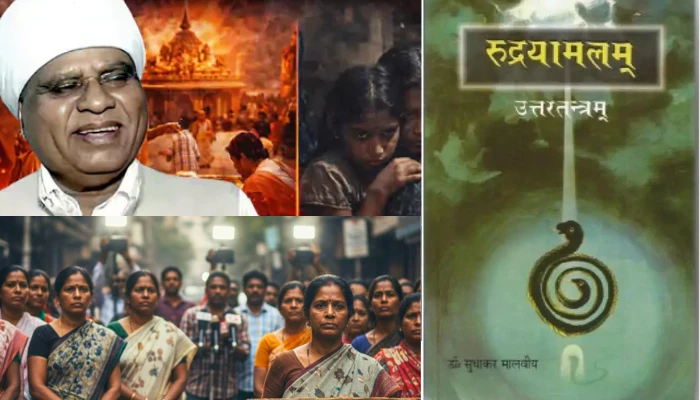
Case Summary
In Bhander, Madhya Pradesh, Congress leader Phool Singh Baraiya made a series of remarks that demeaned Hindu scriptures by portraying them as endorsing sexual violence and offering religious rewards for rape. On 17 January 2026, Baraiya claimed that Hindu religious texts supposedly suggest that assaulting women from the Scheduled Caste, Scheduled Tribe, and OBC communities brings “teerth phal” or spiritual merit, effectively framing rape as a pilgrimage like act. By repeatedly attributing this idea to Hindu scripture, he maligned Hindu dharma and painted sacred texts as inherently immoral and criminal. He further misquoted the Rudrayamal Tantra to claim that ancient Hindu writings promise “punya” for sexual violence, and even suggested that if a man cannot go on a pilgrimage, assault becomes an alternative path to spiritual benefit. He also made a disturbing claim that rape cannot occur without consent, including in cases involving infants and minors, reinforcing a defamatory narrative that Hindu belief systems normalise sexual crimes. The remarks drew strong condemnation from Madhya Pradesh Chief Minister Mohan Yadav and leaders across parties, who said such statements spread hatred and trivialise rape. Baraiya later posted a video attempting to distance himself, saying he was quoting another person, but the framing still relied on insulting Hindu scriptures and presenting them as legitimising rape.
Why it is Hate Crime ?
This case has been added to the hate tracker under the primary category: Hate speech against Hindus. The first sub-category applied is Subversion of scriptures. Subverting the religious scriptures of Hindus has particularly devastating consequences. Subversion of the scriptures of Hindus is often done to justify or promote hatred, discrimination, or violence against specific individuals or groups of Hindus. Religious scriptures are often nuanced, and those who harbour religious animosity towards Hindus often misquote or misrepresent the scripture to legitimise their animosity and hate towards the faith and its adherents. Any such misquoting of scriptures or subversion to justify hate, violence and discrimination against Hindus owing to religious animosity is hate speech and is categorised as such. The second sub-category selected is 'Anti-Hindu slurs and mocking of faith'. Anti-Hindu slurs and the deliberate mocking of the Hindu faith owing to religious animosity involve the usage of derogatory terms, stereotypes, or offensive references to religious practices, symbols, or figures. One of the common anti-Hindu slurs used against Hindus is “cow-worshipper” and “cow piss drinker”. The intention of using this term is to demean and mock Hindus as a group and their religious beliefs since Hindus consider the cow holy. Additionally, some symbols and the slurs attached to them have a historical context that exacerbates the insult, hate, stereotyping, dehumanisation and oppression against Hindus. Cow worship has been used for centuries to denigrate Hindus, insult their faith and oppress Hindus specifically as a religious group. There has been overwhelming documentation about how cow slaughter has been used to persecute Hindus, with cow meat being thrown in temples and places of worship. There has also been overwhelming documentation where cow meat (beef) has been force-fed to Hindus to either forcefully convert them to Islam or denigrate their faith. Apart from cow worship, the Swastika – which holds deep religious significance for the Hindus – has also been misinterpreted and distorted to use as a slur against Hindus. Similarly, the worship of the Shivling has been used by supremacist ideologies and religions to denigrate Hindus owing to religious animosity. Such slurs and denigration stem from inherent animosity and hate towards Hindus and their faith; therefore, it is categorised as hate speech targeted at Hindus specifically owing to their religious identity. The third sub- category is 'Call for genocide/violence against Hindus/specific sects of Hindus'. Hate speech is defined as any speech, gesture, conduct, writing, or display that is prejudicial against a specific individual and/or group of people, which leads to or may lead to violence, prejudicial action or hate against that individual and/or group. Often, animosity against Hindus or a specific panth/sampradaya/group of Hindus or a specific ideology they hold manifests itself in hate speech and calls for genocide/violence against that specific section of Hindus. For example, it has often been seen that those who hold animosity against the Hindu faith use specific sects/sampradaya/panths of Hindus as a proxy to express hate against Hindus as a whole. It has been seen that the word ‘Hindutva’ has been used to call for violence against those who say they believe in ‘Hindutva’. It is observed that ‘Hindutva’ is only used as a proxy to call for violence against Hindus as a whole, as seen in the Dismantling Global Hindutva conference, where speakers admitted that ‘Hindutva’ cannot be eradicated till ‘Hinduism’ is eradicated. The eradication of an entire faith, in turn, is a genocidal call against the entire community that practices that faith. Further, it is also observed that violence against a specific section of Hindus is made, justifying these calls by weaving exaggerated tales of historical injustices. Often, those who hold animosity towards Hindus and their faith attempt to make their animosity more palatable by justifying their hate for a specific section, claiming that they are against that particular section because of their faith in the broader community and the religion they profess. Such calls for violence against specific sections of Hindus, as mentioned, are a proxy for their animosity against the entire community and the faith they profess, and therefore, would be considered hate speech under this category. This case was added to the tracker as a hate crime against Hindu women and Hindu scriptures. Congress Member of the Legislative Assembly Phool Singh Baraiya, in an interview, deliberately distorted Hindu religious concepts to associate them with rape, one of the most heinous crimes committed against women. Firstly, Hindu religious texts are deeply philosophical, symbolic, and context-driven. Individuals harbouring animosity towards Hinduism frequently misquote, misrepresent, or fabricate interpretations of these texts to legitimise hatred, ridicule, or hostility towards the Hindu faith and its adherents. By falsely asserting that Hindu scriptures offered spiritual rewards (“teerth phal”) for acts of sexual violence, Phool Singh Baraiya deliberately distorted a pious Hindu scripture, the Rudrayamal Tantra. The Rudrayamal Tantra is a Shaiva Tantric text focusing on the worship of Shiva (Rudra) through rituals, mantras, and yoga. It contains a significant section, the Uttara Khanda, centred on Kundalini and goddess worship, detailing initiation, chakra meditation, vital breaths, and various sadhanas for spiritual realisation. However, in its entirety, the Rudrayamal Tantra did not justify rape at all. It did not encourage or prescribe it either. In fact, the term “Rudrayamal” is derived from “Rudra”, meaning Shiva or the state of being one with Shiva, and “Amal”, meaning achievement. The tantra, in essence, explained the path of spiritual elevation and union with Shiva through the awakening and refinement of inner energy. By attributing criminal behaviour to Hindu texts, Baraiya defamed Hinduism, portrayed it as morally corrupt, and misled the public into believing that Hindu belief systems endorsed sexual violence. This constituted a textbook example of scriptural subversion used to malign a religious community. Secondly, by publicly asserting that Hindu scriptures justified rape, Baraiya did not merely offer a misguided opinion but mocked and demeaned the Hindu faith itself. His remarks framed Hindu religious philosophy as barbaric and regressive, reinforcing long-standing stereotypes used to vilify Hinduism as oppressive and immoral. Such narratives have historically been deployed to delegitimise Hindu religious identity and portray Hindus as inherently unethical. Furthermore, linking rape to “teerth phal” weaponised a sacred Hindu concept associated with spiritual purification and devotion, reducing it to a tool of mockery and defamation. This deliberate misuse of religious terminology reflected religious animosity, not social critique. Thirdly, his remarks inflicted violence upon a specific section of Hindu women and implied that the Hindu religion devalued women’s bodily autonomy and dignity. By presenting Hinduism as complicit in sexual violence, Baraiya’s statements attacked both Hindu faith and Hindu identity, created social hostility, and reinforced prejudice against Hindus. Moreover, his remarks targeted women of specific sections and normalised violence against them. His speech created the impression that committing rape against Hindu women was a pious act permitted by scripture and encouraged such criminal behaviour. By distorting religious concepts to justify heinous crimes like rape and by siding with perpetrators through moral rationalisation, he provided social cover for sexual violence. Such deliberate defamation of a faith to justify or explain violence fell squarely within the definition of hate speech against Hindus, driven by religious animosity. Therefore, this case is added to the tracker.


Case Status
Unknown


Perpetrators Details
Perpetrators
State and Establishment
Perpetrators Range
One Person
Perpetrators Gender
male
 Sources




