Hindu youth's body recovered gagged and tortured after reported missing in Takht Punjab, Pakistan
 Rahim Yar Khan, Punjab, Pakistan
  18 January, 2026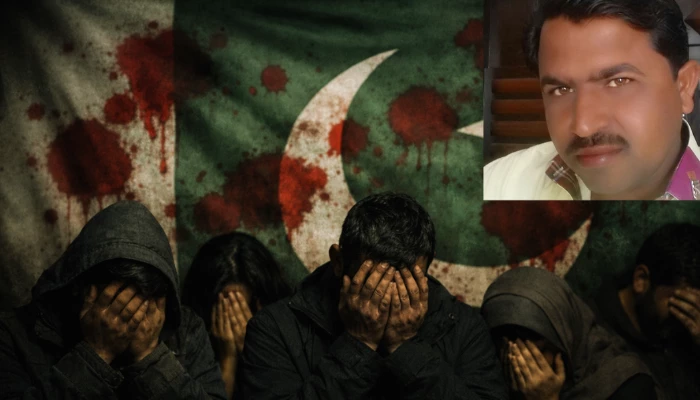
Case Summary
In the Takht Punjab area of Rahim Yar Khan, the body of a Hindu minority member, Krishan Kumar Jaipal, was found tortured and gagged. The incident came to light when a body in the Takht Punjab area of Rahim Yar Khan was discovered in a brutal condition. The body was later identified as that of Krishan Kumar Jaipal, a young member of the Hindu minority community in Pakistan. As per available information, Krishan Kumar Jaipal had disappeared under mysterious circumstances. While efforts were underway to trace Krishan Kumar Jaipal, only his body was recovered. It was found bound, gagged, and subjected to torture, and was recovered in a severely brutalised state. Rahim Yar Khan once again bore witness to a tragic and disturbing incident that highlighted the deep-rooted insecurity faced by religious minorities in Pakistan. This horrific killing was not an isolated incident. It formed part of a painful and recurring pattern of targeted killings, forced conversions, abductions, and sexual violence against religious minorities, carried out with alarming impunity. The persistent failure to bring perpetrators to justice had turned minority communities into easy targets.
Why it is Hate Crime ?
This case has been added to the tracker under the primary category- Attack resulting in Death. The subcategory selected is- Attacked for Hindu identity. In several cases, Hindus are attacked merely for their Hindu identity without any perceived provocation. A classic example of this category of religiously motivated hate crime is a murder in 2016. 7 ISIS terrorists were convicted for shooting a school principal in Kanpur because they got ‘triggered’ seeing the Kalava on his wrist and the tilak that he had put. In this, the Hindu victim had offered no provocation except for his Hindu religious identity. The motivation for the murder was purely religious, driven by religious supremacy. Such cases where Hindus are targeted merely for their religious identity would be documented as a hate crime. Under this category, cases where the attack led to the death of the Hindu victim/s would be documented. The case of Krishan Kumar Jaipal was not an isolated one. Over a period of years, many such cases were documented by the Hinduphobia Tracker, where Hindu minorities suspiciously disappeared or were abducted by Islamic perpetrators and were later converted, killed, or subjected to severe torture by those perpetrators. The real and painful reason behind the continued targeting of minorities was religious animosity arising from the victim's identity as a Hindu. The other reason for the failure of the protection of minorities was the absence of accountability. Time and again, cases involving minority victims were delayed, deliberately weakened, or completely ignored. As a result, a culture of impunity took root, allowing violence against minorities to continue unchecked. There were many such cases, including: The accused involved in the gang rape and murder of Karishma Bai in Bahawalpur Cholistan remained unpunished, even as anniversaries of the crime passed in silence. In Sialkot, Kashif Masih, Afzal Masih, Akram Masih, Neha Masih, and Shabbir Masih were brutally executed, yet justice remained elusive. Priya Kumari, a seven-year-old minority girl from Sindh, had remained missing for over four years, with no recovery or closure for her family. Similarly, the murderers of Dr Nimrat Kumari, a dental surgeon, had not been brought to justice even after six long years. The brutal murder of Kailash Kohli, belonging to the Kolhi community, a Dalit Hindu community, by a Muslim man named Sarfaraz Nizamani over a minor dispute. All these cases displayed the severity of violence inflicted on Hindu minorities in Pakistan and reflected a pattern of systematic persecution that stripped communities of safety, dignity, and hope. Being Hindu in Pakistan meant living under constant fear, where everyday life was shaped by the risk of abduction, forced conversion, sexual violence, or death. Families lived with the daily anxiety that a loved one might disappear without warning, only to be found brutalised or never found at all. The repeated failure of institutions to protect minorities reinforced a sense of abandonment, leaving victims isolated and perpetrators emboldened. As these horrors accumulated over time, they revealed not just individual acts of violence, but a sustained environment of terror in which Hindu minorities were made to feel unwelcome, unprotected, and expendable in their own homeland. Since this case meets the parameters of a religiously motivated offence, it is being added to the hate crime database of the Hinduphobia Tracker. Disclaimer: The Hinduphobia Tracker records the dates of incidents based on when the crime occurs rather than when it is reported by the media. In this case, media reports did not state the exact date when the crime occurred. Hence, the date when the media report was published, 19 January 2026, is selected as the indicative date of the incident. This is recorded for documentation purposes only.
Victim Details
Total Victim
1
Deceased
1
Gender
- Male 1
- Female 0
- Third Gender 0
- Unknown 0
Caste
- SC/ST 0
- OBC 1
- General 0
- Unknown 0
Age Group
- Minor 0
- Adult 1
- Senior Citizen 0
- Unknown 0


Case Status
Unknown


Perpetrators Details
Perpetrators
Muslim Extremists
Perpetrators Range
Unknown
Perpetrators Gender
unknown
 Sources




