Caste politics weaponised against Hindu community: Indian politician claims tribals are ‘not Hindus’
 Dungarpur, Rajasthan, India
  3 October, 2025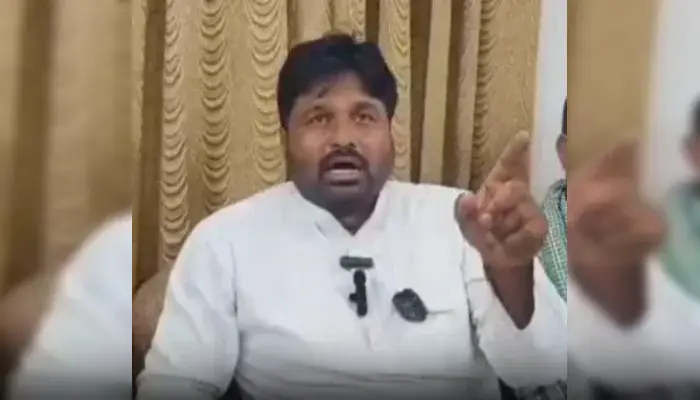
Case Summary
In Dungarpur, Rajasthan, Hindu religious sentiments were insulted by Congress State President Ganesh Ghogra, who, in a press conference, claimed that the tribal community were not Hindu. He claimed that tribals possess a distinct cultural and religious identity, separate from Hindu traditions and practices. He also accused the BJP (Bhartiya Janta Party) and RSS (Rashtriya Swayamsevak Sangh) of disrupting the social atmosphere and spreading unrest in the name of religious conversion, describing these organisations as “contractors” of the Adivasis. Ghogra criticised political parties for attempting to undermine the tribal identity to further their own agendas and claimed that the policies of these organisations were creating tension and discontent within tribal society. He emphasised that the true identity and religious rights of tribal people should be respected, but argued that the current political and social conditions were challenging these rights. His statements sparked widespread debate among local politicians and public discourse due to his views on tribal identity and religion. Additionally, this was not the first time members of the Congress Party were involved in such incidents. The Hinduphobia Tracker earlier documented an incident on 3rd September 2025 in Chhindwara, Madhya Pradesh, where senior Congress leader Umang Singhar denied the Hindu identity of the tribal community and publicly declared that tribals were separate from Hindus.
Why it is Hate Crime ?
This case has been added to the tracker under the primary category- Hate speech against Hindus. Within it, the sub-category selected is- Anti-Hindu slurs, mocking faith. Anti-Hindu slurs and the deliberate mocking of the Hindu faith owing to religious animosity involve the usage of derogatory terms, stereotypes, or offensive references to religious practices, symbols, or figures. One of the common anti-Hindu slurs used against Hindus is “cow-worshipper” and “cow piss drinker”. The intention of using this term is to demean and mock Hindus as a group and their religious beliefs since Hindus consider the cow holy. Additionally, some symbols and the slurs attached to them have a historical context that exacerbates the insult, hate, stereotyping, dehumanisation and oppression against Hindus. Cow worship has been used for centuries to denigrate Hindus, insult their faith and oppress Hindus specifically as a religious group. There has been overwhelming documentation about how cow slaughter has been used to persecute Hindus with cow meat being thrown in temples and places of worship. There has also been overwhelming documentation where cow meat (beef) has been force-fed to Hindus to either forcefully convert them to Islam or denigrate their faith. Apart from cow worship, the Swastika – which holds deep religious significance for the Hindus – has also been misinterpreted and distorted to use as a slur against Hindus. Similarly, the worship of the Shivling has been used by supremacist ideologies and religions to denigrate Hindus owing to religious animosity. Such slurs and denigration stem out of inherent animosity and hate towards Hindus and their faith, therefore, it is categorised as hate speech targeted at Hindus specifically owing to their religious identity. This case has been added to the tracker because Congress leader Ganesh Ghogra’s statements claiming that tribals are distinct from Hindus were a deliberate attempt to undermine and insult Hindu religious sentiments, aimed at dividing the Hindu society across caste lines. It sought to undermine and delegitimise the Hindu identity of tribal communities and to portray them as separate from the broader Hindu civilisational framework. This same anti-Hindu propaganda is also promoted by groups such as Ambedkarites, Phuleites, and Periyarites, who claim that Dalits are not Hindus. The same playbook is used to divide Hindu society along caste lines. In reality, Tribals and Dalits are an inseparable part of the Hindu collectivity because their traditions, practices, and ways of life are deeply rooted in the broader Hindu civilisational framework. The rituals of tribals, such as nature worship, ancestor veneration, and reverence for sacred groves, align with the Vedic and Puranic traditions of Hinduism. The attempt to separate tribals from Hindu identity often comes from external ideological or political forces seeking to fragment the unity of Hindu society. In reality, tribal communities share the same festivals, pilgrimages, temples, and spiritual practices as other Hindus, while maintaining their local distinctiveness within the larger Hindu umbrella. Thus, tribals are not just a part but an essential foundation of the Hindu collectivity, preserving some of the most ancient, unbroken traditions of Sanatan Dharma. By declaring that tribals were “not Hindus” and insisting that they must preserve a separate identity, Ganesh Ghogra directly attacked the historical, cultural, and religious connections between tribal traditions and Hinduism. Such remarks go beyond political rhetoric and constitute an attack on Hindu religious sentiments, as they aim to erode the collective spiritual and cultural identity of Hindus. Ghogra’s statement cannot be viewed merely as a political comment; it had a clear motive to divide Hindu society along micro-identities such as caste and region. His views aligned with several leftists and Islamists, who often weaponise identity politics to target Hindus. It attempts to weaken the unifying factor (Hindu religious identity) of Indian society, which transcends caste distinctions and geographical boundaries, by creating a perception that tribals should distance themselves from Hinduism. For leaders like Ghogra, as well as the Congress party, the micro identities of caste, region, and language are secondary; their real target is Hinduism, as a religious identity. Their goal is to divide the Hindu society across fictitious caste, anti-Brahmanism, or rhetoric about social hierarchies. For example, the 2015 Karnataka caste survey and the 2024 Telangana caste survey, both of which were conducted by the Congress government, created divisions within Hindu society under the guise of social equity. Furthermore, in his press conference, Ghogra also criticised the BJP (Bharatiya Janata Party) and RSS (Rashtriya Swayamsevak Sangh), accusing them of disrupting the social atmosphere and spreading unrest in the name of religious conversion. His criticism of these organisations stemmed primarily from the fact that both the BJP and the RSS work for the Hindu cause and have been actively involved in preserving and strengthening Hindu identity across communities. Since these organisations have long sought to integrate tribals and other marginalised groups within the broader Hindu fold, his remarks were effectively directed against their pro-Hindu efforts. By describing them as “contractors” of the Adivasis, Ghogra attempted to vilify Hindu cultural outreach and portray genuine initiatives of unity and inclusion as divisive politics. Therefore, in this context, Ghogra’s speech represented a deliberate attempt to fragment the Hindu society by promoting a narrative of division, targeting Hindu religious identity rather than political or social issues. Such actions not only seek to fragment Hindu society along caste lines but also aim to diminish its collective religious identity. His remarks constitute hate speech because they were intended to demean, marginalise, and create animosity towards Hindus by exploiting caste lines. Disclaimer: The Hinduphobia Tracker records incidents based on the date when an event occurred or when the victim's ordeal began. It is important to clarify that none of the media sources covering this case have specified the exact date when the statements were made. Therefore, for documentation purposes, we have recorded the date based on when the incident was reported in the media, 4th October 2025. This is used as an indicative date of the incident.


Case Status
Unknown


Perpetrators Details
Perpetrators
Others
Perpetrators Range
One Person
Perpetrators Gender
male
 Sources




