Sikh terrorist threatens Hindus to leave Punjab and refrain from celebrating Diwali, issues violence threats
 Canada
  24 September, 2025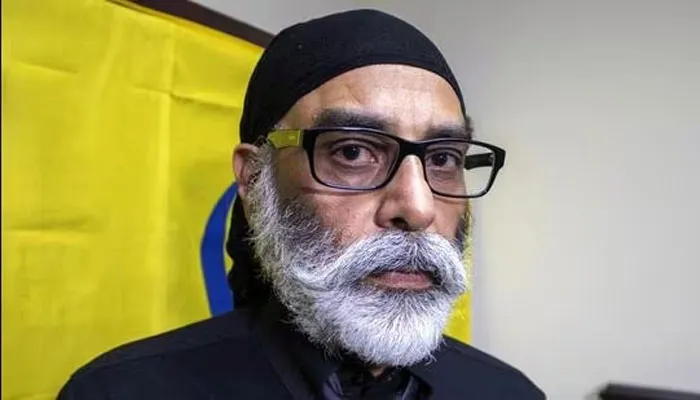
Case Summary
A Khalistani terrorist group named Sikhs For Justice (SFJ) issued a fresh threat video ahead of Diwali 2025. On 19 October 2025, its chief, Gurpatwant Singh Pannun, declared that only those Hindus who refrained from celebrating Diwali and instead observed Deepmala on Bandi Chhor Divas would be allowed to reside in Punjab. He ordered people from other states to leave Punjab by that date, warning of severe repercussions if his diktat was ignored. In the video, Pannun proclaimed that Punjab was not part of India and threatened raids at Batala railway station before the deadline. He singled out Hindutva supporters, demanding they vacate Punjab, and cautioned that failure to comply would invite violent consequences. Pannun also showcased visuals from Batala railway station, boasting that Khalistani slogans had been painted on signboards and electricity boxes. He further referred to the Achaleshwar Dham temple, expanding his rhetoric against Hindu institutions. The video closed with a direct threat to Punjab Director General of Police Gaurav Yadav, where Pannun warned he would “destroy” the Bhagwant Mann-led AAP government. This fresh threat highlights SFJ’s continued attempts to incite fear, provoke communal division, and undermine Indian sovereignty through violent intimidation. The Hinduphobia Tracker earlier recorded another threat by Pannu during Diwali 2024. On November 2, 2024, he issued a threatening message against Hindus celebrating Diwali. In a video, Pannun instructed Sikh youths in Punjab to prevent Hindus from bursting firecrackers during the festival. He urged them to first ask Hindus politely to refrain from using firecrackers, but if that failed, he suggested using traditional Khalsa methods, implying the use of force. Pannun threatened that no Hindu temple or household should engage in firework displays on Diwali.
Why it is Hate Crime ?
The primary category in this case is: Hate speech against Hindus. The subcategory under this is: Violent threats. Violent threats, explicit, implicit or implied, is the most dangerous form of hate speech since it goes beyond discriminatory and prejudicial language to express the intent of causing harm to an individual or a group of people based on their religious identity and faith. There could be several different kinds of threats that are issued to Hindus based on religious animosity. An explicit threat would mean the direct threat of violence towards an individual Hindu, a group of Hindus or Hindus at large. Physical violence, death threats, threats of destruction of property belonging to Hindus and threats of genocide would mean explicit threats against Hindus for their religious identity. Implicit threats may not be a direct threat but implied through the use of symbols of actions – for example – in the Nupur Sharma case, other than explicit threats, there were also implicit threats when Islamists took to the streets to burn and beat her effigies. It implies that they want to do the same to Nupur Sharma – thereby is considered an implicit threat. Violent threats can be delivered in person, through letters, phone calls, graffiti, or increasingly through social media and other online platforms. It would be important to understand that a threat – explicit or implicit, online or offline – to an individual who happens to be a Hindu does not qualify as a religiously motivated threat. Such a threat, while vile and dangerous, could be owing to non-religious reasons and/or personal animosity. To qualify as a religiously motivated threat, it would need to exhibit an indication that the individual is being targeted for religious reasons and/or owing to his/her religious identity as a Hindu. This case has been included in the Hinduphobia Tracker because it represents a clear instance of religiously motivated hate speech against Hindus in the form of violent threats. Gurpatwant Singh Pannun, the chief of the banned Khalistani outfit Sikhs For Justice (SFJ), once again attempted to weaponise fear and intimidation by issuing threats that directly targeted Hindus, their festivals, and their presence in Punjab. His declaration that only those who abandon Diwali would be permitted to live in Punjab was not a benign statement about cultural observance but a coercive ultimatum meant to isolate, suppress, and marginalise Hindus on account of their religious identity. By warning of “serious consequences” and threatening raids at Batala railway station, Pannun expressed an intent to convert religious difference into grounds for violence. The language and imagery used in his message fulfil the criteria of violent threats, as they were explicit in both form and intent. He demanded that Hindus vacate Punjab, threatened damage to Hindu institutions such as the Achaleshwar Dham temple, and went so far as to warn the state’s Director General of Police of destruction. These actions are not political critiques or cultural assertions; they are deliberate efforts to menace Hindus into abandoning their religious expression and vacating their homeland. In this sense, the threats align precisely with the definition of hate speech rooted in religious animosity. Pannun is not a first-time offender. His pattern of conduct over the years has consistently revolved around targeting Hindus during their most sacred festivals, particularly Diwali. The Hinduphobia Tracker has already recorded his threat of November 2024, in which he ordered Sikh youths to stop Hindus from bursting firecrackers during Diwali. That threat contained both implicit and explicit elements, as he encouraged using “Khalsa methods” if persuasion failed, language clearly implying violence. His insistence that no Hindu household or temple should display fireworks amounted to an attempt to suppress Hindu religious and cultural practices through fear. The continuity between the 2024 threat and the 2025 escalation demonstrates that Pannun’s strategy is systematic rather than spontaneous. His threats are repeated year after year, always timed around Hindu religious observances, and always directed at creating a hostile and unsafe environment for Hindus in Punjab. This establishes him as a repeat offender whose words are not rhetorical flourishes but part of a consistent campaign of intimidation and exclusion. The significance of including this case in the tracker lies not only in the immediate threat posed but also in the broader context of anti-Hindu hostility. When a terrorist leader explicitly commands Hindus to stop celebrating their festivals, abandon their traditions, and even vacate a state under threat of violence, it constitutes a hate crime against Hindus rooted in their identity. It seeks to erase their presence and suppress their culture in a manner that is both discriminatory and violent. By documenting such threats, the Hinduphobia Tracker ensures that these acts are not dismissed as rhetoric but recognised for what they are: an organised, persistent campaign of hate and intimidation against Hindus. Disclaimer: It is important to clarify that none of the media sources covering this case have specified the exact date on which the hate speech against Hindus was made. The viral video clip in question is also undated. Therefore, for documentation purposes, we have recorded the date based on when the incident was reported in the media.


Case Status
Unknown


Perpetrators Details
Perpetrators
Sikh Extremists
Perpetrators Range
One Person
Perpetrators Gender
male
 Sources




