Visually impaired Hindu man forcefully converted to Islam, circumcision attempted; radical Muslim preacher Zakir Naik's teachings used to brainwash victims
 Bareilly, Uttar Pradesh, India
  24 August, 2025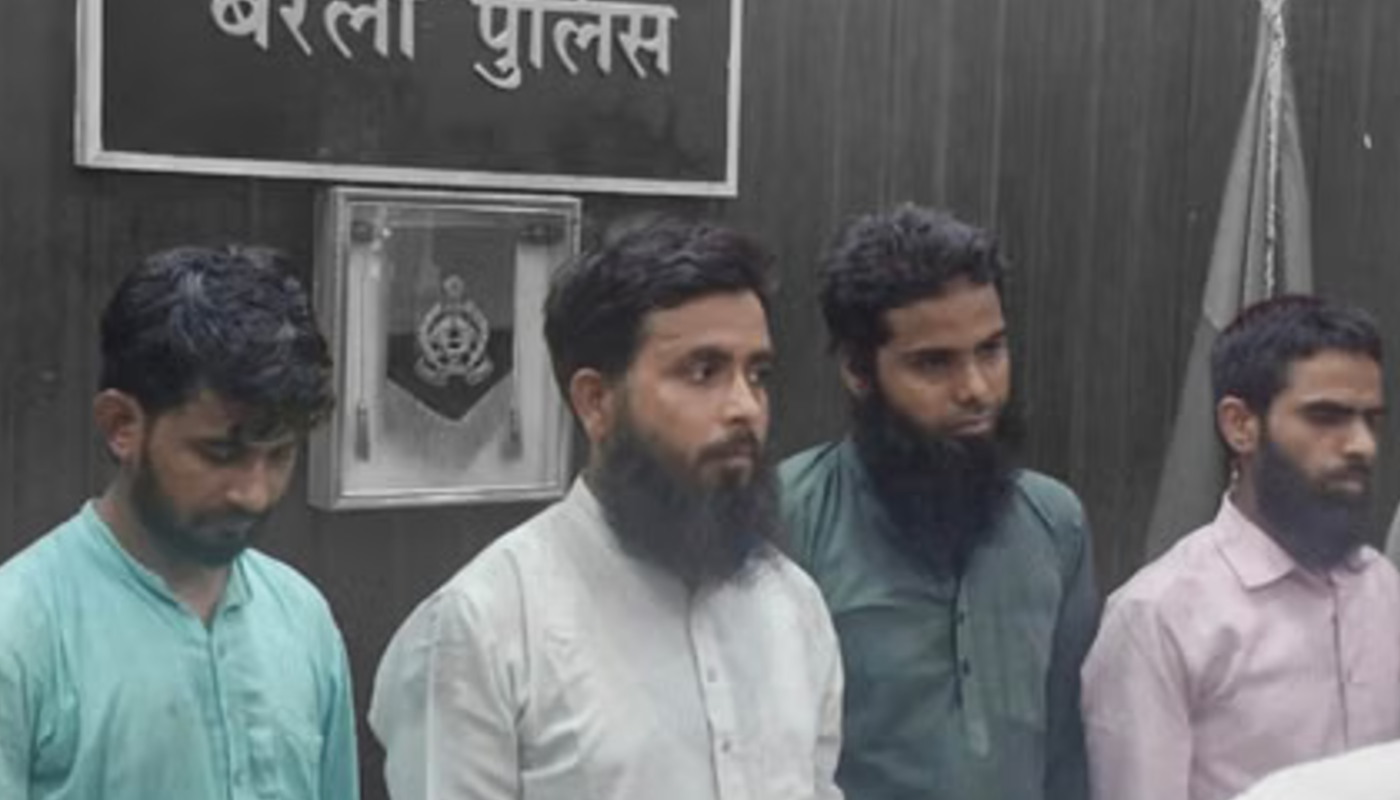
Case Summary
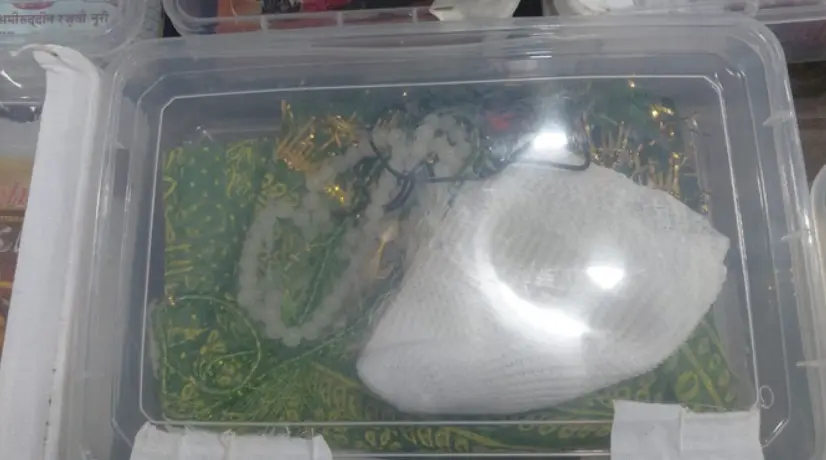
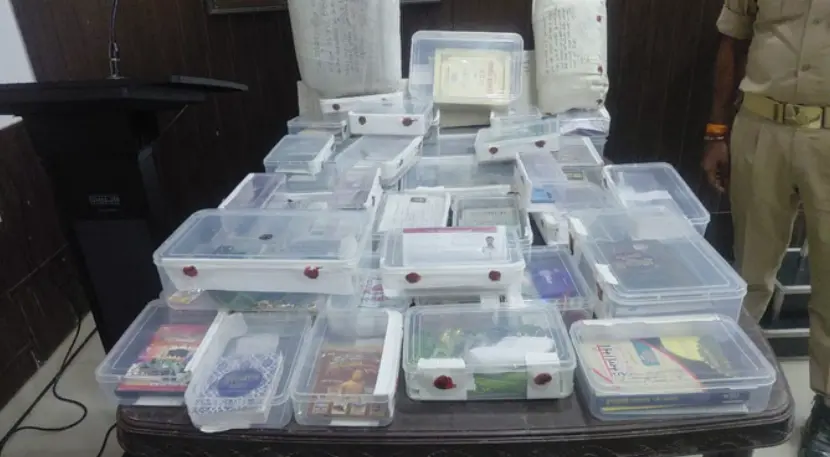
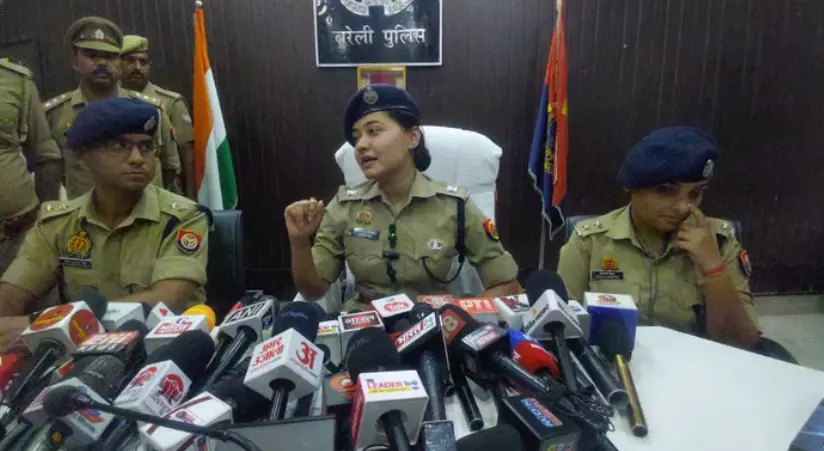
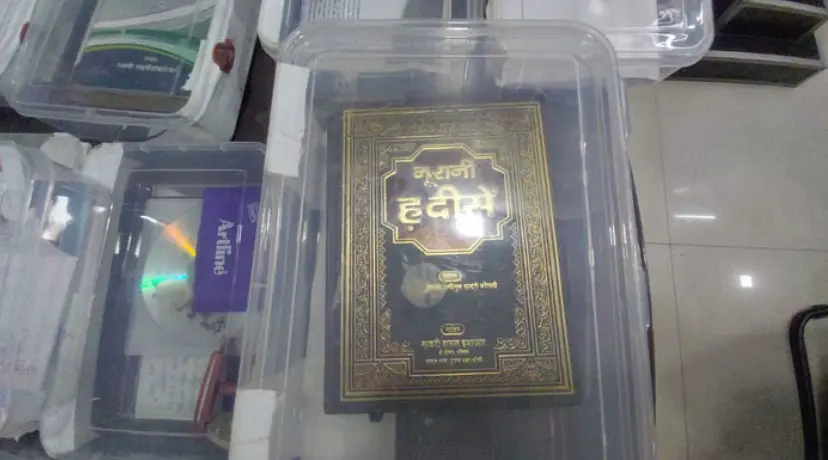
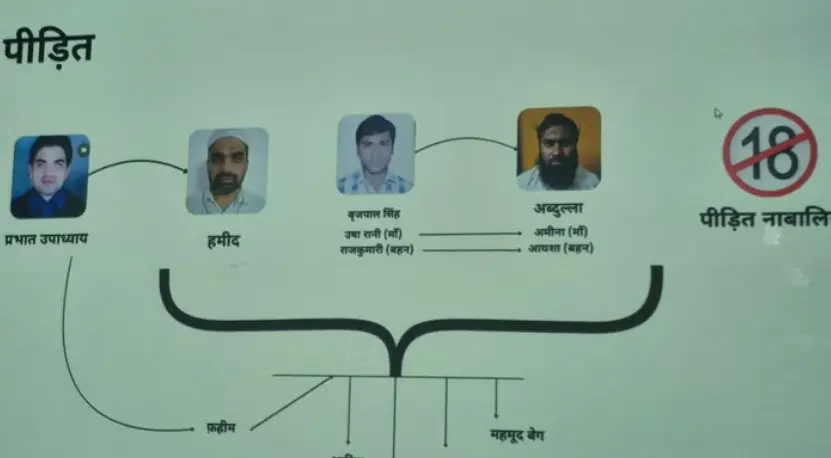
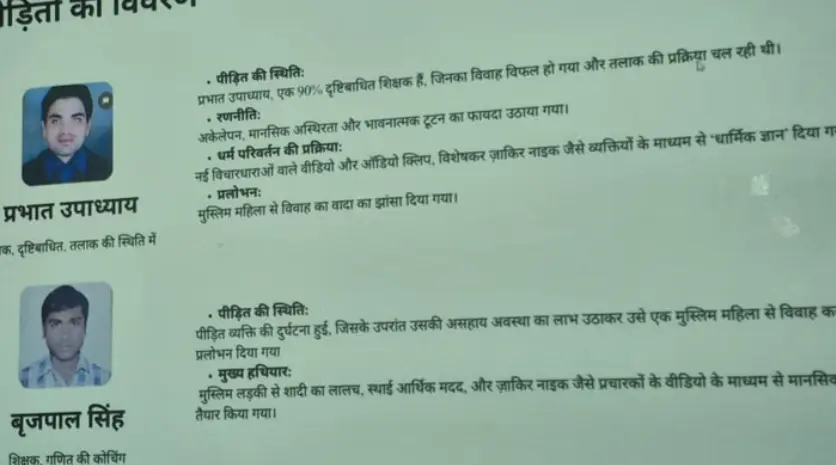
In Bareilly, Uttar Pradesh, police rescued a visually impaired Hindu man who was about to be circumcised by an Islamist conversion racket led by madrasa operator Abdul Majeed. The gang, linked to wider forced conversion networks, targeted vulnerable Hindus through deceit and inducements. Investigations revealed that the gang used the teachings of radical preacher Zakir Naik to indoctrinate and brainwash victims. The police exposed a syndicate working on the lines of the infamous Chhangur Peer gang. The group was led by Abdul Majeed, a madrasa operator from Bhuta, who, along with his associates Salman, Arif, and Faheem, ran a well-organised network to lure Hindus into Islam through promises of marriage, financial inducements, and emotional manipulation. Investigations revealed that the gang specifically targeted vulnerable individuals, including the disabled, drug addicts, and those under distress, to trap them into religious conversion. A Hindu woman named Akhilesh Kumari, resident of the Kwarsi police station area in Aligarh, lodged a complaint at Bhuta police station. She stated that her visually impaired son, Prabhat Upadhyay, had been trapped by Abdul Majeed and his associates and was being held at a madrasa in Faiznagar. According to her complaint, the group was preparing Prabhat’s circumcision and intended to rename him “Hamid” after conversion. Acting on the information, Bhuta police raided the madrasa on August 25, 2025, where they found four to five men gathered around Prabhat and preparations underway for circumcision. The police intervention stopped the act in time. During the raid, the police recovered 10 religious books, 12 CDs containing videos and sermons of Islamist preacher Zakir Naik, three certificates of conversion, Aadhaar cards, a passport, and other related documents. Abdul Majeed was arrested along with Salman, a tailor; Arif, Salman’s aide; and Faheem, a barber from Saidpur Chunnilal in Bhojipura. All four were presented in court and sent to jail. Police interrogation revealed the modus operandi of the gang. Abdul Majeed, the kingpin, disguised himself as a hawker selling clothes while secretly running the madrasa and overseeing conversions. Salman handled the distribution of religious literature and CDs to indoctrinate victims, while his aide Arif helped in luring and influencing them. Faheem collected personal information about potential targets and passed it on to the group. Victims were isolated, manipulated through religious material, and eventually converted after being promised marriage or monetary support. Investigations also uncovered that the gang had already converted several individuals and families. One such family was that of Brijpal Sahu, a resident of Subhash Nagar. Brijpal was first manipulated into marrying a Muslim woman, after which his sister was also married to a Muslim youth. Later, their mother, Usha Kumari, was converted and renamed Amina, while Brijpal’s sister became Ayesha. Police also confirmed that a teenager was targeted by the gang, drugged, and brainwashed until his behaviour and mannerisms were altered. The police found that Prabhat Upadhyay, who had been detained at the madrasa, had already undergone partial conversion before the raid. The gang’s next target was reportedly a B.Com student from Izzatnagar, but the plan was foiled when Prabhat’s mother filed a complaint, leading to the arrests. A financial probe revealed a complex money trail connected to the group. Salman and his wife operated 12 bank accounts, while Abdul Majeed had 5 accounts. Together, more than 2,000 suspicious transactions were detected. The gang often travelled across states, claiming to collect donations for running madrasas. Police were probing whether these financial dealings involved foreign funding and if there were links to the wider Chhangur gang network. SP South Anshika Verma, while addressing the media, confirmed that this was not an isolated incident but a carefully planned operation targeting vulnerable Hindus. She stated that further members of the network are being identified and more arrests are expected. The four accused were in judicial custody, and police seized propaganda material, bank records, and conversion documents to strengthen the case. The Hinduphobia Tracker documented several cases of conversions related to Chhangur Peer. Chhangur, alias Jalaluddin, is a Muslim Peer who, along with his accomplices, had forcibly converted several Hindus to Islam by use of deceit, force, coercion, manipulation, and threats. In his case, the ATS (Anti-terrorism Squad) registered a case against 10 people, including Chhangur Peer and arrested him along with his wife on 5th July 2025. The ATS confirmed that the Muslim accused received foreign funding of Rs 100 crore to carry out illegal conversions of Hindus and other non-Muslims in India. Even his family was involved in the conversions of Hindus to Islam. Jalaluddin alias Chhangur had links with Pakistan’s ISI. He also used a Christian missionary network for carrying out forced religious conversions. In all cases related to Chhangur, Hindu victims were religiously profiled, deliberately targeted because of their religious identity, and were forced to convert to Islam through the use of force, deception, harassment, incentives, and intimidation.
Case Images
Why it is Hate Crime ?
The primary category under this is: Predatory Proselytisation. The first subcategory under this is: Conversion/attempts to convert by inducement. Predatory Proselytisation is not just limited to threat, harassment, force and violence, but it also has contours of stealth. In several cases, the Hindu victim is exploited to convert, with non-Hindus taking advantage of their poverty. In such cases, the Hindu victim who is suffering financially is offered monetary benefits, including lucrative offers for jobs, health treatment, education, etc, to induce the victim into changing his/her religion. In such cases, the religious identity of the victim and the aim to disenfranchise him from his faith form the heart of the crime. Also, taking advantage of and exploiting an individual’s economic vulnerabilities is widely acknowledged as exploitation, forms of which are often penalised by law. Such cases therefore are considered religiously motivated hate crimes since the victim’s religious identity forms the very heart of the crime itself. The second subcategory under this is: Proselytisation by grooming, brainwashing, manipulation or subtle indoctrination. The tertiary category under this is: Pattern of targeting Hindus. Religious brainwashing essentially means the often subtle and forcible indoctrination to induce someone to give up their religious beliefs to accept contrasting regimented ideas. Religious grooming or brainwashing also involves propaganda and manipulation. It involves the systematic effort, driven by religious malice and indoctrination, to persuade “non-believers’ to accept allegiance, command, or doctrine to and of a contrasting faith. Cases of such grooming or brainwashing are far more nuanced than direct threats, coercion, inducement and violence. In such cases, it is often seen that there is repeated, subtle and continual manipulation of the victim to induce disaffection towards their own faith and acceptance of the contrasting faith of the perpetrator. While subtle indoctrination is widely acknowledged as predatory, an element which is often understated in such conversions or the attempts of such conversion is the role of loyalty and trust which might develop between the perpetrator and the victim. Fiduciary relationships are often abused to affect such religious conversion. For example, an educator transmitting religious doctrine of a competing faith to a Hindu student. The Hindu student is likely to accept what the teacher is transmitting owing to the existence of the fiduciary relationship. The exploitation of the fiduciary relationship to religiously indoctrinate victims would also be included in this category. Since the underlying animosity towards the victim’s faith forms the basis of predatory proselytisation, such cases are considered religiously motivated hate crimes. This case has been added to the tracker because the acts carried out are clear examples of religiously motivated hate crimes. The targeting of Prabhat Upadhyay, a visually impaired Hindu man, shows the deliberate choice of a vulnerable victim whose disability was exploited to forcefully convert him. Police raided the madrasa while preparations were underway for his circumcision, and he was to be renamed “Hamid.” This reflects the intent to erase his Hindu identity, making his religion the central reason for targeting. The case also demonstrates conversion attempts through inducement. The gang lured vulnerable Hindus with promises of marriage, financial support, and emotional assurances. Poverty, disability, and distress were exploited to push victims into conversion. Such inducements were not acts of help but a way to strip Hindus of their faith, proving that religious identity was the reason they were chosen, which makes it a hate crime. In this case, the gang not only confined Prabhat but also surrounded him with religious literature, CDs of preachers like Zakir Naik, and systematic exposure to propaganda designed to reshape his mind. This was not just a physical act of forcing a ritual but a deeper attempt to psychologically condition the victim into rejecting Hinduism and embracing Islam. By keeping him confined and isolating him, the perpetrators created an environment where repeated and continual exposure to indoctrination could take place. One of the most shocking aspects of the Bareilly conversion racket is the targeting of a visually impaired Hindu man, Prabhat Upadhyay. Exploiting his disability and dependence, the perpetrators attempted to erase his Hindu identity by forcibly renaming him “Hamid” and preparing him for circumcision. The act of circumcision was explicitly religious, intended to mark his permanent detachment from Hindu dharma and assimilation into another faith. This demonstrates the cruel exploitation of disability for religious conversion and shows the premeditated intent to attack Hindu identity through physical, irreversible means. The seizure of books, CDs, and conversion certificates shows that this was not accidental but part of a deliberate strategy. Victims were manipulated over time, sometimes drugged, and pushed to adopt a new identity against their will. Such brainwashing goes beyond inducement and reflects an intentional system of breaking a Hindu victim’s trust in his own faith while instilling loyalty toward the perpetrators’ religion. This form of grooming is more insidious but equally violent in its effect, as it erodes the core of one’s identity without open threats but through manipulation and deceit. The gang was also found to have forcibly converted multiple Hindu families using the same techniques of deceit, coercion, and foreign-funded propaganda. The fact that entire families like that of Brijpal Sahu were systematically converted, renamed, and absorbed into a different faith shows that Hindus were chosen as a community to be targeted. When looked at together, the use of inducement, exploitation of poverty and disability, grooming and indoctrination, and a clear pattern of targeting Hindus all confirm that this case is not simply about individual wrongdoing but about religiously motivated hatred. The aim was to weaken Hindu identity by attacking individuals and families, stripping them of their faith, and forcibly absorbing them into another religion. Because the religious identity of the victims formed the very basis of their targeting, the crime is fundamentally a hate crime driven by hostility toward Hindus and Hinduism. While it is acknowledged that one of the victims is an adult and legally entitled to choose or change her religion, this case is distinct because the conversion was not the result of free will or an informed decision. Rather, it was the outcome of a deliberate and systematic process of grooming, manipulation, and indoctrination carried out by members of the well-organised conversion racket. This racket, active in the region, specifically targets vulnerable Hindus, employing calculated methods of emotional manipulation, subtle coercion, and sustained pressure. The victim was gradually drawn into this web of influence, ultimately leading her to abandon her Hindu identity and adopt Islamic practices. Since the operation is part of a broader, ongoing system rather than an isolated act, the conversion cannot be viewed as genuine belief but as the product of predatory tactics designed to weaken the Hindu community. Such actions constitute a religiously motivated hate crime against Hindus, striking at the core of their faith and identity. This gang resembles the modus operandi of Chhangur Peer's conversion network. The Chhangur Peer case is not merely an individual crime but a manifestation of a larger ideological campaign aimed at the gradual Islamisation of India. This agenda seeks to erode Hindu identity and alter the country's demographic and cultural fabric. Muslim extremists often harbour deep-seated animosity towards Hindus and view India as a Hindu collectivity that must be dismantled or subdued. The ideological roots of this mindset go back to the very basis of the Partition of India, which was that the Muslims believed that Islam was a nation unto itself, which could not survive with a Hindu collectivity like India. Historically, Islamic conquests have not always relied solely on military force; they have also operated through psychological coercion, forced conversions, and cultural erasure. This case reflects the continuation of that same mindset in modern forms. Such actions stem from inherent hostility towards the victim's professed faith since Abrahamic faiths believe that any non-adherent to the faith is subject to being dehumanised till they convert. Therefore, coercion, blackmail, threats, inducement, and the exploitation of children were all attempts aimed at dismantling the Hindu identity of the victim and his two minor daughters. Since such predatory actions stem from doctrinal animosity towards the Hindu faith and its adherents, this case is being documented as a religiously motivated hate crime. Disclaimer: It is important to clarify that none of the media sources covering this case have specified the exact date when the victim's ordeal began. The earliest date mentioned is August 25, 2025, when the madrasa was raided by the police. Since Hinduphobia Tracker records the incident based on when the victim’s ordeal began and not when it was reported, we have considered the date of the incident as August 25, 2025, though the media reported the incident on August 26, 2025. Disclaimer: For this case, the number of victims has been recorded as five—namely, Prabhat Upadhyay, one additional individual, and three members of Brijpal Sahu’s family.
Victim Details
Total Victim
5
Deceased
0
Gender
- Male 3
- Female 2
- Third Gender 0
- Unknown 0
Caste
- SC/ST 0
- OBC 0
- General 1
- Unknown 4
Age Group
- Minor 0
- Adult 1
- Senior Citizen 0
- Unknown 4


Case Status
Arrested


Perpetrators Details
Perpetrators
Muslim Extremists
Perpetrators Range
From 2 To 5
Perpetrators Gender
male
 Sources




