Hindu Holika Dahan festival disrupted by Muslim villagers in Rajasthan
 Beawar, Rajasthan, India
  16 March, 2022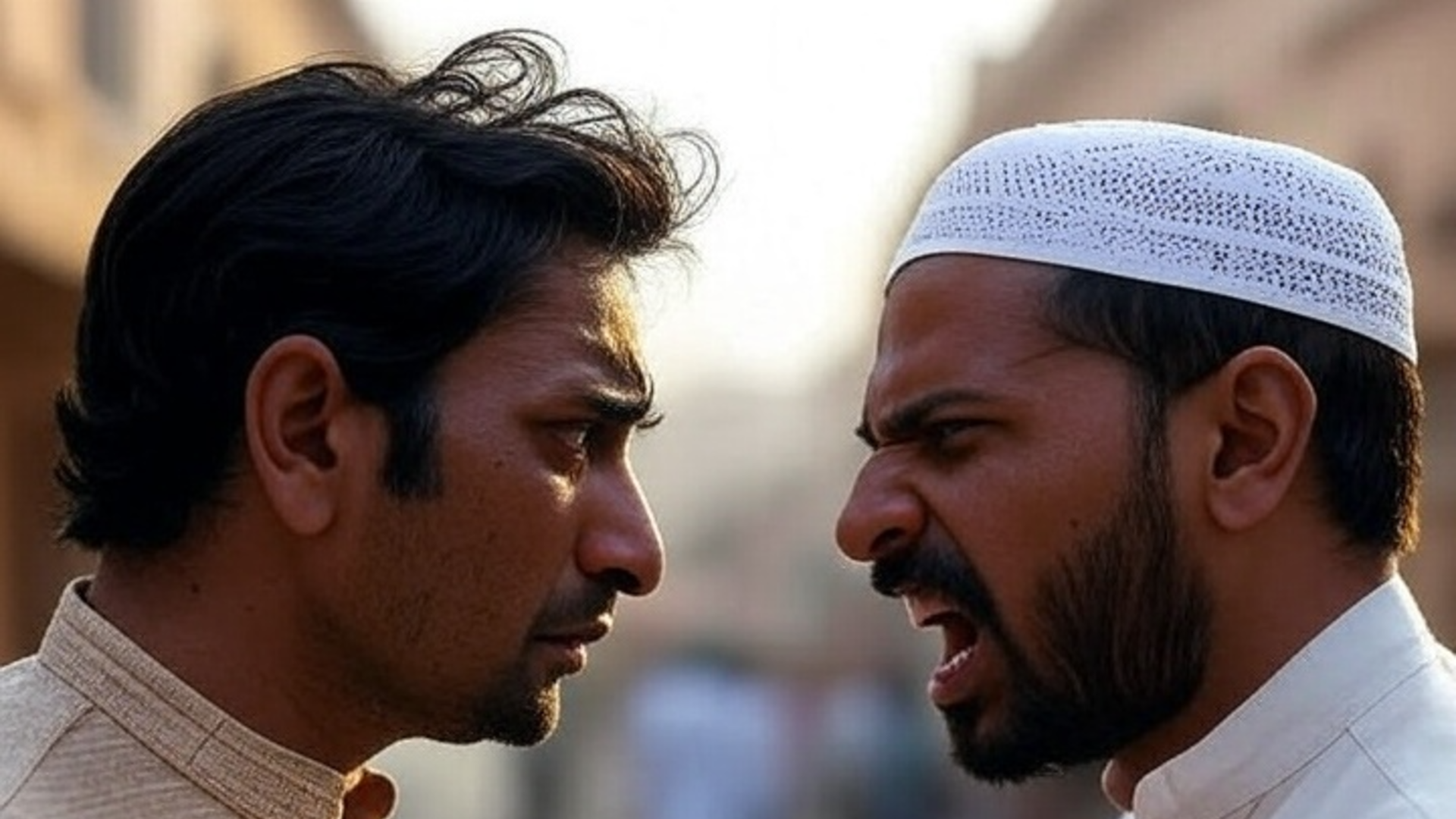
Case Summary
A Hindu festival was obstructed in Suhawa village of Ajmer district, Rajasthan, where Muslim villagers forcibly prevented the celebration of Holika Dahan. Hindu families belonging to the Cheeta-Mehrat community attempted to light the ceremonial fire marking the festival, but were threatened and stopped by local Muslim men, many of whom had embraced hardline religious views in recent years under the influence of external Islamic clerics. The celebration followed only after the Police intervened. The confrontation occurred as part of a broader pattern in the region, where Hindu rituals and traditions came under systematic attack. Over the past two decades, multiple villages, especially those with mixed Hindu-Muslim populations, have witnessed a gradual erasure of Hindu customs through community-level coercion. The Cheeta-Mehrat community, historically known for its blended identity, has become a primary target of these pressures. The Hinduphobia Tracker has already documented a case where, in Suhawa village, Sajjan Kathat, a Hindu man, was expelled from his own village after he refused to circumcise his young son. This demand was made by local Muslim men who had recently begun enforcing stricter Islamic practices across the village. Sajjan was banned from accessing his farmland, denied water, excluded from social gatherings, and left entirely cut off from his ancestral land. In another case that the Hinduphobia Tracker has documented, Hindu families were prevented from performing Hindu cremation rituals for their deceased kin. In one case, a family required police protection to carry out the last rites. In another, a family had to plead with government officials to allot space for a cremation site because the village refused to allow it. Community leaders such as Chhotu Singh Chauhan from the Rajasthan Cheeta Mehrat Hindu Magra-Merwara Mahasabha warned of deliberate efforts to suppress Hindu identity in the region. According to him, Islamic missionaries and clerics were actively working to transform OBC communities such as Cheeta, Mehrat, and Kathat into full-time adherents of Islam, abandoning all traces of their Hindu roots. The installation of new mosques, madrasas, and the enforcement of Islamic dress and dietary codes became increasingly visible.
Why it is Hate Crime ?
The primary category in this case is: Attack not resulting in death. The subcategory under this is: Attacked for Hindu identity. In several cases, Hindus are attacked merely for their Hindu identity without any perceived provocation. A classic example of this category of religiously motivated hate crime is a murder in 2016. 7 ISIS terrorists were convicted for shooting a school principal in Kanpur because they got ‘triggered’ seeing the Kalava on his wrist and the tilak that he had put. In this, the Hindu victim had offered no provocation except for his Hindu religious identity. The motivation for the murder was purely religious, driven by religious supremacy. Such cases where Hindus are targeted merely for their religious identity would be documented as a hate crime under this category. The other primary category selected is - Restriction/ban on Hindu practices. The sub-category selected is - Restriction on expression of Hindu identity. An example of the state-affected prejudicial and targeted orders against the Hindu community would be a government denying the right of a Hindu or a group of Hindus to hold a religious procession owing to the animosity of non-Hindu groups. Denial of the religious right of the Hindus to assuage the non-Hindu group which harbours animosity to a point where it could lead to violence against Hindus is not only a failure of law and order but is a prejudicial order against Hindus, denying them their fundamental rights to express their religious identity. An example of a hate crime against Hindus by a non-Hindu would be a non-Hindu institution forcing its Hindu employees to abandon religious symbols that a Hindu would wear as an expression of faith owing to inherent prejudice against the faith professed by the victim or a non-Hindu group of people restricting a Hindu group from constructing a place of worship simply because the demography of the area in which the temple is being built is dominated by non-Hindus. Such actions are driven by religious animosity and/or prejudice against Hindus and their faith and would therefore be categorized as a hate crime. The disruption of Holika Dahan in Suhawa village, Rajasthan, was not just an act of local resistance; it was a clear expression of religious hostility targeted at Hindus for practising their faith. What unfolded wasn’t a misunderstanding or an isolated clash. It was part of a broader pattern, where public expressions of Hindu belief are gradually being pushed out of common life. The families in Suhawa who tried to perform the traditional ritual were not only stopped, but they were also threatened, harassed, and ultimately made to feel unwelcome in their home village. This kind of aggression isn’t spontaneous. It’s part of a steady and deliberate attempt to marginalise Hindu practices. Over time, it chips away at the confidence of local communities, making it harder for them to celebrate their festivals, hold processions, or simply gather together. While there may not be a formal ban on these rituals, the constant pressure, fear, and confrontations are often enough to silence them. Holika Dahan is an essential religious ritual marking the beginning of Holi and holds deep spiritual and cultural significance for Hindus. Preventing Hindu families from performing this festival, through threats and intimidation, directly suppresses their right to publicly express and practise their faith. The obstruction was not due to logistical or safety concerns but was rooted in growing religious hostility, influenced by external hardline clerics aiming to impose Islamic norms over a Hindu-majority tradition. Such targeted prevention, requiring police intervention to restore the Hindus’ right to perform their ritual, meets the definition of a religiously motivated hate crime as it seeks to erase Hindu religious expression through coercion and intimidation. What happened in Suhawa fits into a larger historical trend. Hindu communities in different parts of the world have long faced situations where they’re forced to stop their traditions, convert, or even leave their homes. These acts are not driven by local disputes alone, but often rest on religious ideas that see Hindu customs as something to be erased. The cumulative effect of such repeated confrontations is the gradual constriction of Hindu religious life in those regions, effected not through formal prohibition but through calibrated pressure. The Suhawa incident, therefore, does not merely represent localised friction but belongs to a lineage of deliberate suppression rooted in Islamic theological animosity towards non-Islamic worship. Disclaimer: Media reports do not specify the exact date in 2022 when the suppression of Holika Dahan occurred in Suhawa village. It is known that the incident happened during the Holika Dahan festival period, which fell on 17 March 2022. Media coverage emerged on 28 July 2025, but the Hinduphobia Tracker records the incident based on the incident date, rather than when it became publicly known. Therefore, the date of the incident has been selected as 17 March 2022.


Case Status
Unknown


Perpetrators Details
Perpetrators
Muslim Extremists
Perpetrators Range
Unknown
Perpetrators Gender
unknown
 Sources




