Hindu temple sanctity violated as Muslim youth performs Namaz before deity in Tamil Nadu
 Tiruppur, Tamil Nadu, India
  25 October, 2025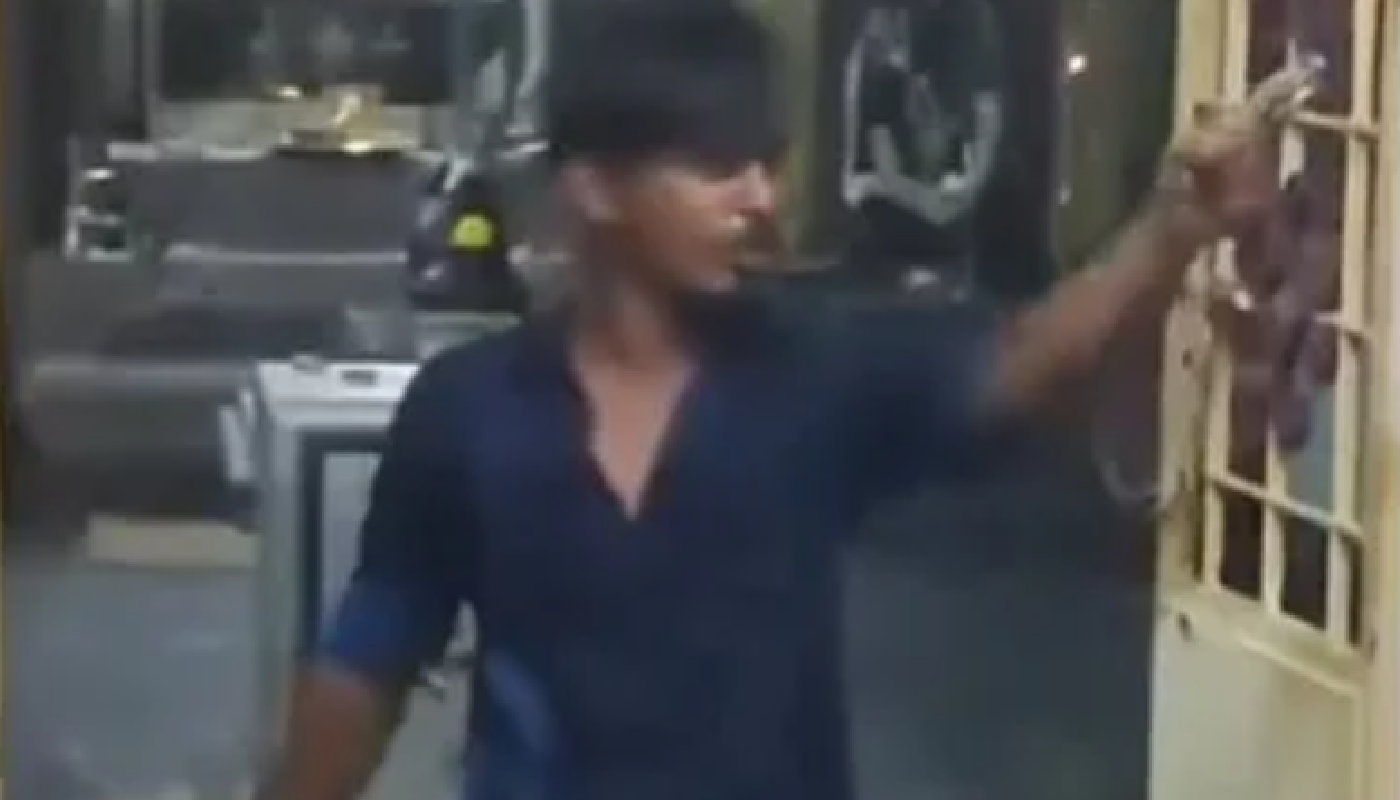
Case Summary
A Muslim youth named Ajmal Khan, aged 21 and a resident of Poochukaadu, entered the Raja Ganapathi Temple at Sengunthapuram on the Tirupur-Mangalam Road in Tamil Nadu on October 26, 2025, and performed Namaz with his back turned towards the temple’s main deity. According to eyewitnesses, temple priest Naganathan and other devotees requested Ajmal Khan to leave the premises, but he refused and continued his prayers. When he began arguing with the priest and worshippers, more people gathered and escorted him out of the temple. Following a complaint by the priest and devotees, the Central Police began an investigation. Police officials later stated that Ajmal Khan had consumed alcohol before the incident and entered the temple after being denied entry to his home by his parents. They claimed to have warned him not to repeat such behaviour and mentioned that he might be booked under sections relating to public disturbance. Vishwa Hindu Parishad functionary Saravanan Karthik demanded a detailed background check on Ajmal Khan, calling the act unacceptable and urging that the matter be investigated by the National Investigation Agency if necessary. He emphasised that a Muslim youth performing Namaz inside a Hindu temple could not be dismissed as a trivial offence. Hindu Munnani members further stated that such incidents could be part of an “I Love Mohammed” campaign, suggesting a deliberate pattern of provocation. They warned that this was not an isolated event in Tamil Nadu and urged Hindus and authorities to treat it as a serious and organised attempt to disrupt communal harmony. The “I Love Mohammed” arose from a controversy deliberately misrepresented by Muslim groups. On 5th September 2025, violence broke out in Rawatpur, Kanpur, during a Barawafat procession, when Muslims attacked and defaced Hindu posters. This followed a complaint by Hindus, in which police removed an “I Love Muhammad” poster that had been fixed on the Ram Navami gate on 4th September 2025. An FIR was then lodged against Muslims for vandalising Hindu posters, but they twisted the narrative, claiming that police action had been taken against Muslims merely for putting up “I Love Muhammad” posters. This distortion fueled widespread mobilisation, turning the campaign into a nationwide agitation marked by violence against both the police and Hindus.
Why it is Hate Crime ?
The primary category in this case is: Attack on Hindu religious representations. The subcategory under this is: Breaking rules of place of worship. Sanatan Dharma is not a religion of one book, which is to say that while it has religious scriptures that form the central tenets of the faith, there are several traditions followed through thousands of years, mostly passed from generation to generation orally. One of these oral traditions or written traditions is the rules of specific temples. Certain temples have rules which are traditional rules, dependent on the worship of the presiding deities. These rules and traditions have been followed for thousands of years whether they find scriptural mention or not. Such traditions are based on the nature and rules of worship of the presiding deity of that temple. Any non-compliance of these traditions owing to animosity towards the faith or for the sake of activism stems not only from the lack of faith in the presiding deity but also disregard for the faith of the devotees of that deity/temple and implicit bias against the faith, the tradition and the deity itself. Since these specific traditions are central to the faith of the devotees of that specific temple and presiding deity, any non-compliance with these traditional rules would be considered a religiously motivated hate crime. Another subcategory under this is: Defiling religious customs. Sanatan Dharma is not a religion of one book, which is to say that while it has religious scriptures that form the central tenets of the faith, there are several traditions followed through thousands of years, mostly passed from generation to generation orally. There are several such customs and traditions that are followed by various Hindus and Hindu sects. Defiling of these traditions and customs is a breach of an individual or group’s religious practices. Such practices can range from dietary restrictions like not eating non-vegetarian food for a certain period of the year, not eating non-vegetarian food at all, not eating beef since the cow is considered holy in Hinduism, the sanctity of religious customs followed in the house (like many ISCKON devotees), etc. Any malicious action leading to the breach of such traditions or defilement of these traditions owing to animosity towards the faith or for the sake of activism stems not only from the lack of faith in the religion itself but also from disregard for the faith of the devotees who follow the customs/traditions and implicit bias against the faith, the tradition itself. Since these specific traditions are central to the faith of the devotees of that specific sect of Hindus, any non-compliance with these traditional rules would be considered a religiously motivated hate crime. This case has been added to the Hinduphobia Tracker because it constitutes a deliberate act of defilement and violation of the sanctity of a Hindu place of worship. The incident at the Raja Ganapathi Temple in Sengunthapuram was not a mere act of trespass but a conscious breach of long-standing temple traditions that define how the presiding deity must be worshipped. Ajmal Khan, a Muslim youth, entered the temple and performed Namaz. Hindu temples are sacred spaces governed by rules and traditions specific to each deity and temple, passed down through generations. These rules are not arbitrary but form the spiritual and ritual core of Sanatan Dharma’s temple worship. When an individual disregards these customs, especially while engaging in an act of worship belonging to another faith within the temple premises, it amounts to an insult to the deity, a violation of the temple’s sacred order, and an affront to the faith of its devotees. Here, the temple’s sanctity was violated when a non-adherent entered and conducted prayers unrelated to the temple’s tradition. By offering Namaz inside a Hindu shrine, Ajmal Khan not only disrespected the temple’s ritual order but also symbolically rejected the divinity of the deity worshipped there. It also fits under the subcategory Defiling religious customs. In Sanatan Dharma, every act of worship, from the direction of prayer to bodily posture, is considered sacred. Performing a non-Hindu religious rite in front of a Hindu deity constitutes a desecration of these customs. Such an act, carried out knowingly and in defiance of requests to stop, reveals a deeper intent to challenge and undermine Hindu religious traditions rather than a simple error or moment of intoxication. Hence, this case is classified as a hate crime against Hindus because it reflects animosity and disregard for the sanctity of Hindu worship, its customs, and its places of reverence. It represents not just a personal transgression but a symbolic act of religious defiance, targeting the collective faith and traditions of Hindu devotees. In several cases, where Muslims vandalise or desecrate Hindu places of worship, a usual trope to shield the perpetrator is to attribute the crime to the mental health of the accused or the intoxicated state, claiming that the crime was committed since the perpetrator was ‘mentally ill’ or ‘drunk’. The police and the media, in many such cases, where the crime has been committed against the Hindu faith by a non-Hindu perpetrator, deny that the crime committed was in any way motivated by a religious bias and attribute it to the perpetrator’s mental health. Many a time, the police downplay incidents of low-level communal crime because it is their jurisdiction that comes under question. The police also often say that the crime was committed because the accused was mentally unstable, because they wish to ensure that, owing to the crime already committed, there is no further flare-up in the area. In fact, there are many cases where this strategy has been used by the media to downplay such incidents where the crime was committed by a Muslim perpetrator, for example, the attack on the Gorakhnath temple or the incident in Telangana where two Muslim women wearing a burqa tried to damage temple and church idols. Likewise, in this case too, when a Muslim man was caught offering Namaz, the police attributed the act to his drunk status. The use of the "mental illness" or "drunk" trope to justify crimes targeting Hindu temples or idols by Muslim perpetrators raises critical questions. If perpetrators are indeed drunk, why do they specifically target Hindu idols and places of worship, leaving mosques untouched? This selective focus suggests that such acts are not driven by mental health issues or the intoxicated state but by religious animosity. The repeated use of this narrative to downplay crimes against Hindus reflects a strategic effort to whitewash religious hatred, obscuring the true motivations and intentions behind the attacks. Here, it is also important to mention that the Hindu organisations warned that such incidents could be part of an “I Love Mohammed” campaign. The “I Love Muhammad” campaign, which began in Kanpur, was initially presented as a spontaneous act of devotion but quickly transformed into a coercive movement marked by intimidation, threats, and direct assaults against Hindus. It soon extended beyond personal religious expression into an organised display of supremacy, one that sought to impose Islamic slogans, symbols, and authority over public spaces and, most gravely, over Hindu temples, the holiest expressions of Sanatan Dharma. As Hindu Munnani members stated that this act could be a part of the “I Love Muhammad” campaign, it reinforces the religious nature of this crime.


Case Status
Unknown


Perpetrators Details
Perpetrators
Muslim Extremists
Perpetrators Range
One Person
Perpetrators Gender
male
 Sources




