Hindu devotees financially duped by Muslim man wearing tilak and masquerading as Hindu
 Auraiya, Uttar Pradesh, India
  14 December, 2025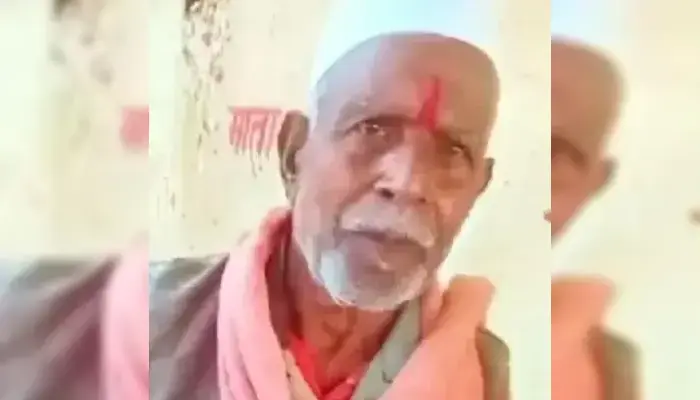
Case Summary
In Auraiya, Uttar Pradesh, Hindu devotees at a temple faced financial exploitation by a Muslim man named Abdul, who masqueraded as a Hindu by wearing a tilak. The accused forcibly applied a tilak on Hindu devotees and forced them to pay money to him. This occurred at the Durvasa Rishi temple in Dowamafi village of Auraiya. The accused forcibly demanded money from the devotees after applying a tilak to them. This led to a confrontation with the devotees, leading to his true identity being revealed. This incident occurred amidst a grand fair held at the temple premises. Devotees from far and wide came every day for darshan. On 15th December 2025, in the morning at around 11 am, Abdul, a resident of Ulfat Nagar locality of Kalan police station and town of Shahjahanpur district, was caught by some devotees from the temple premises due to suspicion. When asked his name, Abdul first gave his name as Dulara, son of Lalman. When questioned strictly, he told the truth. He said, "I have two sons and three daughters. All of them are married. The eldest son is a private doctor who lives in Bareilly. The younger son owns a grocery store in Badaun. His wife lives at home. He visits religious sites and applies tilak (a mark on the face) to devotees. Having developed a close relationship with the priests and staff, he had stayed overnight for some days. He cooked, ate, and slept with the staff on the premises." Reports confirmed that a few days earlier, the daughters of the temple priest visited the temple. The priests and other sadhus touched their feet, but Abdul did not touch their feet. This aroused suspicion. On the day of the incident, Abdul entered the temple and forcibly put tilak and garlands on the devotees, demanding money from them. Local devotees protested and asked everyone to stand at the temple gate. This led to an argument. Meanwhile, someone suspected him of being Muslim. When questioned, he initially deceived them with a fake Hindu identity, but then he revealed his real name, Abdul. At the time of writing this report, the Station House Officer Jeetmal Chaudhary said that the accused had been detained for interrogation. The truth would emerge only after investigation.
Why it is Hate Crime ?
The primary category in this case is: Attack on Hindu religious representations. The subcategory under this is: Desecration of Hindu religious symbol. Icons and symbols or a religious representation of a spiritual ideal are widely revered in Hinduism. Iconography is of vital significance in the Hindu milieu. It helps connect people’s spiritual beliefs with the real world. Iconography within the Hindu faith takes several shapes and forms. Murtis are of most significance to Hindus, to which daily rituals, prayers and offerings are done. Besides the murtis, there are several other symbols which have deep significance in the Hindu faith – the Om and Swastika for example. Since these Hindu religious symbols hold paramount importance in Hinduism, any desecration of symbols, icons, murtis, religious representations and manifestations, is driven by animosity towards the faith itself which manifests itself through these murtis, icons and symbols. Therefore, any desecration of these Hindu religious symbols and representations is considered religiously motivated hate crimes under this category. Another subcategory in this case is: Defiling religious customs. Sanatan Dharma is not a religion of one book, which is to say that while it has religious scriptures that form the central tenets of the faith, there are several traditions followed through thousands of years, mostly passed from generation to generation orally. There are several such customs and traditions that are followed by various Hindus and Hindu sects. Defiling of these traditions and customs is a breach of an individual or group’s religious practices. Such practices can range from dietary restrictions like not eating non-vegetarian food for a certain period of the year, not eating non-vegetarian food at all, not eating beef since the cow is considered holy in Hinduism, the sanctity of religious customs followed in the house (like many ISCKON devotees), etc. Any malicious action leading to the breach of such traditions or defilement of these traditions owing to animosity towards the faith or for the sake of activism stems not only from the lack of faith in the religion itself but also from disregard for the faith of the devotees who follow the customs/traditions and implicit bias against the faith, the tradition itself. Since these specific traditions are central to the faith of the devotees of that specific sect of Hindus, any non-compliance with these traditional rules would be considered a religiously motivated hate crime. In this case, a Muslim man named Abdul faked his identity, posed as a Hindu, wore Hindu religious symbols like a tilak, and entered the Durvasa Rishi temple in Auraiya, Uttar Pradesh, to financially scam and dupe Hindu devotees. This act went beyond a mere crime of opportunity; it revealed deep-seated religious animosity towards the Hindu community. By occurring inside a revered Hindu temple and using sacred markers like a tilak to deceive and exploit devotees, Abdul desecrated these sacred symbols, turning them into tools for targeting Hindu victims and marking the incident as a clear instance of religiously motivated hate crime. The tilak holds profound significance in Hinduism as a sacred mark symbolising divine blessings, spiritual purity, and devotion, applied during rituals to invoke protection and grace. Abdul's forcible application of a tilak on unsuspecting Hindu devotees, followed by demands for money, mocked and perverted this holy practice, showcasing his deep-seated religious animosity and deliberate disrespect for Hindu faith. This outrage unfolded during a grand religious fair at the temple, drawing devotees from afar for darshan. Using Hindu symbols like tilak and garlands as instruments of deception in such a sacred setting amounted to defiling core Hindu practices, where applying tilak represents an act of reverence. Abdul's exploitation of this ritual for financial gain exposed his contempt for Hindu faith and traditions, constituting a blatant, religiously motivated hate crime. If this were simply a random crime of opportunity, Abdul would have targeted people of his own faith equally, not exclusively Hindus inside a temple using their religious symbols. His selective focus on Hindu devotees within their place of worship, leveraging a tilak to defraud them, demonstrated calculated bias, hatred, and undermining of the Hindu faith, confirming it as a religiously motivated offence. Abdul admitted in his testimony that he routinely visits Hindu religious sites, applies a tilak to devotees, and extracts money from them. This pattern revealed a premeditated, calculated scheme to exploit Hindu devotees by misusing sacred symbols, far from a one-off act, and solidifying its status as a religiously motivated hate crime. Notably, this marks yet another instance where Muslims masqueraded as Hindus to financially exploit devoted Hindu worshippers, preying on their faith and generosity. The Hinduphobia Tracker previously documented a striking parallel in November 2025, when two Muslim men disguised as Hindu sadhus were arrested in Mau district, Uttar Pradesh. Dressed in saffron robes and carrying a sarangi, they went door-to-door extorting large sums from Hindus under the guise of puja and bhiksha, roaming Mau and nearby districts for days to dupe trusting families. The incident unfolded in the Sarailakhansi police station area, where the men prowled ward neighbourhoods in their saffron attire. Local residents grew wary of their suspicious conduct and alerted the Station House Officer. Police arrived swiftly, detaining both impostors on the spot. These repeated patterns—exploiting Hindu sacred symbols and spaces for gain—expose a deliberate targeting of the Hindu community rooted in religious hostility. Given that this case, alongside prior similar offences, meets the criteria for a religiously motivated crime, it has been added to the Hinduphobia Tracker's hate crime database.


Case Status
Arrested


Perpetrators Details
Perpetrators
Muslim Extremists
Perpetrators Range
One Person
Perpetrators Gender
male
 Sources




