Hindus cheated as 2 Muslim men disguise as saffron clad sadhus going door to door demanding money
 Mau, Uttar Pradesh, India
  7 November, 2025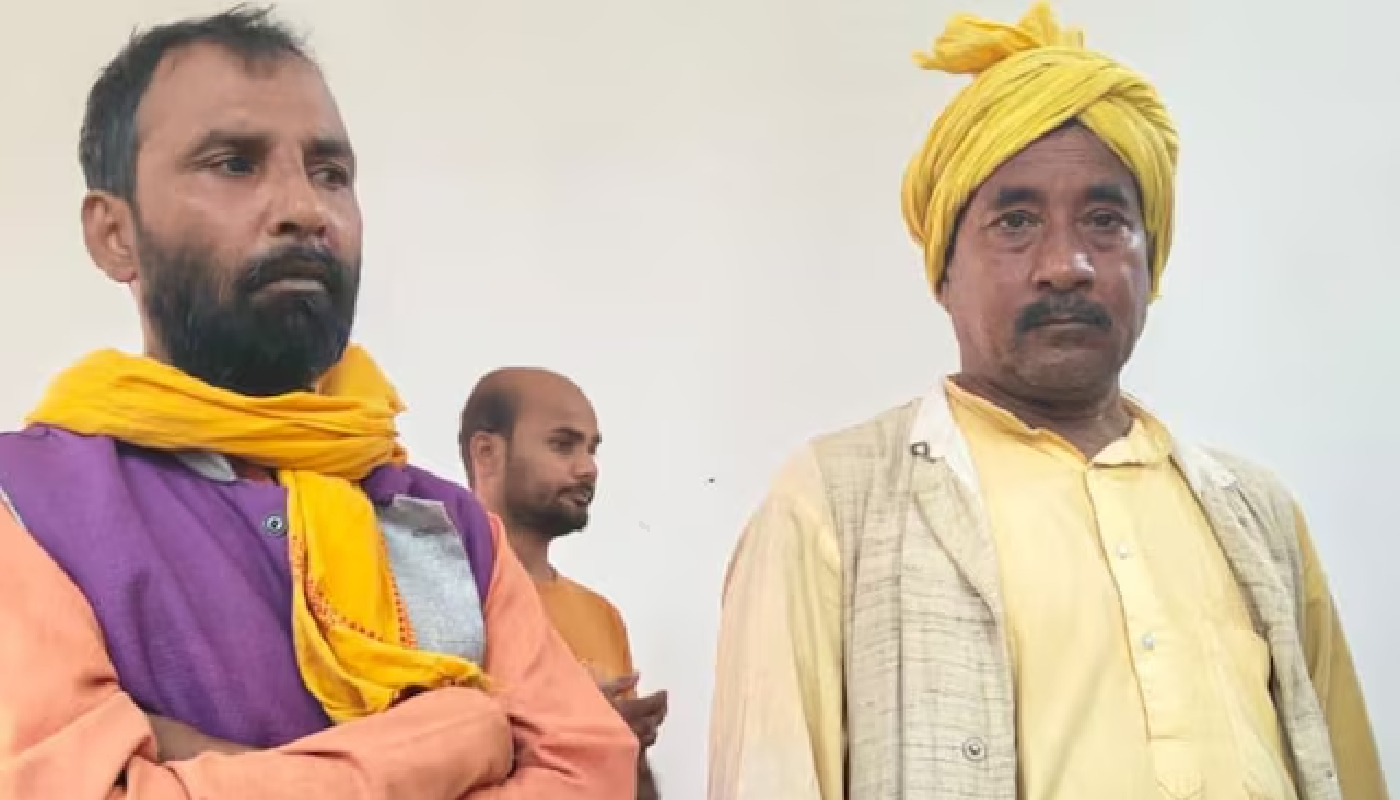
Case Summary
2 Muslim men disguised as Hindu sadhus were arrested in the Mau district of Uttar Pradesh. They wore saffron clothes, carried a sarangi and went door to door demanding large amounts of money from Hindus in the name of puja and bhiksha. They had been roaming across the Mau district and neighbouring districts for several days, pretending to be Hindu saints in order to deceive people and collect money. The incident took place under the Sarailakhansi police station area, where they were moving around in the Ward areas while wearing saffron attire. Local residents became suspicious after observing their behaviour. They alerted the SHO of Sarailakhansi police station. Police reached immediately and detained both men. During interrogation, both disclosed that their real names were Malalu Khan and Mohammad Chalan. This revelation shocked even the SHO because both had been confidently presenting themselves as sadhus. Police recovered saffron clothes and a sarangi from their possession. Police registered a case against both of them and produced them before the court.
Why it is Hate Crime ?
The primary category in this case is: Attack on Hindu religious representations. The subcategory under this is: Desecration of Hindu religious symbol. Icons and symbols or a religious representation of a spiritual ideal are widely revered in Hinduism. Iconography is of vital significance in the Hindu milieu. It helps connect people’s spiritual beliefs with the real world. Iconography within the Hindu faith takes several shapes and forms. Murtis are of most significance to Hindus, to which daily rituals, prayers and offerings are done. Besides the murtis, there are several other symbols which have deep significance in the Hindu faith – the Om and Swastika for example. Since these Hindu religious symbols hold paramount importance in Hinduism, any desecration of symbols, icons, murtis, religious representations and manifestations, is driven by animosity towards the faith itself which manifests itself through these murtis, icons and symbols. Therefore, any desecration of these Hindu religious symbols and representations is considered religiously motivated hate crimes under this category. Another subcategory in this case is: Defiling religious customs. Sanatan Dharma is not a religion of one book, which is to say that while it has religious scriptures that form the central tenets of the faith, there are several traditions followed through thousands of years, mostly passed from generation to generation orally. There are several such customs and traditions that are followed by various Hindus and Hindu sects. Defiling of these traditions and customs is a breach of an individual or group’s religious practices. Such practices can range from dietary restrictions like not eating non-vegetarian food for a certain period of the year, not eating non-vegetarian food at all, not eating beef since the cow is considered holy in Hinduism, the sanctity of religious customs followed in the house (like many ISCKON devotees), etc. Any malicious action leading to the breach of such traditions or defilement of these traditions owing to animosity towards the faith or for the sake of activism stems not only from the lack of faith in the religion itself but also from disregard for the faith of the devotees who follow the customs/traditions and implicit bias against the faith, the tradition itself. Since these specific traditions are central to the faith of the devotees of that specific sect of Hindus, any non-compliance with these traditional rules would be considered a religiously motivated hate crime. This case has been added to the tracker because the intent of the crime was not merely to cheat individuals out of money. The two Muslim men deliberately wore saffron, carried the objects associated with the daily practice of Sanatan spiritual life, and impersonated the identity of Hindu sadhus. They did not try to deceive people as generic beggars. They targeted the specific visual and sacred identity of a Hindu saint. They attacked Sanatan representation itself because the saffron clothes and sadhu persona are not costumes or theatrical props. For Hindus, saffron is the visible sign of renunciation, spiritual commitment, purity and tapasya. It is a sacred and venerated marker. These men did not simply misuse clothing. They desecrated the most visible symbols of Hindu spiritual culture. Their own confession to the police also confirms that this was not a one-day impulse. They had been doing this across districts, moving from village to village, impersonating sadhus, and deceiving Hindus in several places. This systematic repetition shows that the objective was larger than personal gain. It was a sustained attempt at normalising the disrespect and trivialisation of Hindu spiritual identity. It is this structured repetition that classifies this incident as a religiously motivated harm. Because the crime did not simply take place in a Hindu space. The Hindu identity itself was used as a weapon to fool Hindus and extract money by lowering the sanctity of Hindu symbols. Saffron is not a neutral colour. In Hindu culture, it is the colour of Sannyasa and the colour of the spiritual path. When this sacred symbol is dishonoured, the harm is not individual; it is collective. It injures the sacred trust and dignity that Hindus have in their spiritual representation. Their act attempted to make the Hindu public believe that Hindu sadhus go house to house and extract money. This is a direct humiliation of the Hindu ascetic tradition. The choice of target is particularly telling. These men could have chosen to defraud individuals of their own faith or of no particular faith at all. Instead, they specifically targeted Hindu households, knowing that Hindus are culturally inclined to offer charity and donations to those appearing as holy men. This selective targeting demonstrates not only intent to exploit but also an undercurrent of religious animosity — a willingness to violate Hindu sanctity because it could be done without fear of reciprocal outrage. Further, this act falls under defiling religious customs because the practice of bhiksha given to a sadhu is an honour-based offering. Hindus give bhiksha out of devotion and respect for the spiritual path. Here, that trusted mechanism of offering was hijacked for deception by non-Hindus. It is an attack on the core relationship between the Hindu householder and the sadhu. Therefore, this case is documented not as a petty fraud but as an incident where Hindu religious symbols were desecrated, Hindu customs were defiled, and the dignity of Sanatan representation was intentionally harmed. Disclaimer: It is important to clarify that none of the media sources covering this case have specified the exact date on which the Muslim men started the deception. Therefore, for documentation purposes, we have recorded the date based on when the incident was reported in the media.


Case Status
Arrested


Perpetrators Details
Perpetrators
Muslim Extremists
Perpetrators Range
From 2 To 5
Perpetrators Gender
male
 Sources




