Woman molested under the guise of miracle healing by Muslim man in Hapur; media misrepresents perpetrator as ‘Tantrik’
 Hapur, Uttar Pradesh, India
  5 December, 2025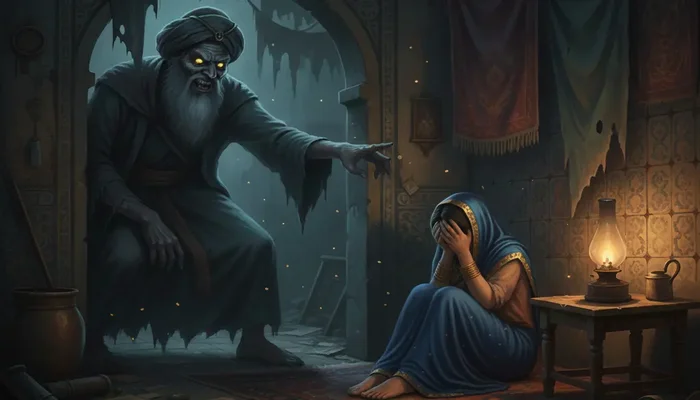
Case Summary
In a clear instance of anti-Hindu misrepresentation, mainstream media outlet Amar Ujala deliberately circulated fake news framing a Muslim occult practitioner as a “Tantrik,” thereby twisting the narrative to sensationalise a religiously motivated crime. A Tantrik is a Hindu practitioner of Tantra, a system of esoteric spiritual practices and rituals aimed at harnessing and awakening divine energy (Shakti) within the body and universe to achieve liberation, spiritual enlightenment, and unity with the highest principle (Shiva). Tantriks perform specialised rites, meditation, and yogic techniques to attain transcendent powers and spiritual freedom. However, Amarujala published a report with the first line stating “कोतवाली क्षेत्र में झाड़-फूंक कराने पहुंची महिला के साथ तांत्रिक ने शर्मनाक हरकत कर दी।.” (A tantrik did a shameful act with a woman who had come to the Kotwali area for exorcism). In the news report, the accused “Tantrik” is actually Rahees, a Muslim occult practitioner, who molested a Hindu woman under the guise of spiritual treatment in Pilkhuwa, Hapur. The victim had gone to the accused to seek treatment for a headache along with her young daughter on 29 November 2025. She left her daughter sitting outside and entered the room. There, the accused, Rahis, touched the Hindu woman inappropriately under the pretext of performing some miracle healing. When she objected, the Muslim man threatened to harm her husband if she disclosed the matter to anyone. Frightened by the threat and the assault, she did not speak immediately but informed her husband about the entire incident the following day. On 7th December 2025, she, accompanied by her husband, went to Kotwali police station and submitted a written complaint. Following her complaint, the police registered a case and arrested the accused. By deliberately labelling a Muslim man as a “Tantrik,” Amar Ujala falsely appropriated a Hindu spiritual term to describe a criminal act, sensationalising the story while simultaneously maligning Hindu traditions. This deliberate misrepresentation highlights a pattern of anti-Hindu bias in media reporting, conflating Hindu spiritual practices with criminality while ignoring the actual religious coercion perpetrated by individuals of another faith. Notably, this is not the first time the media has labelled Muslim perpetrators as 'Tantriks'. The Hinduphobia Tracker has previously reported several incidents where Muslim predators were deliberately misrepresented as Tantriks by media outlets. In one such case from Garoth, Madhya Pradesh, a Muslim occult practitioner named Mubarak Mansuri deceived several Hindu women by disguising himself as a Hindu Tantrik and sexually exploited them. Media coverage, especially by Dainik Bhaskar, misrepresented his identity as that of a Hindu Tantrik. In another incident, in Meerut, Uttar Pradesh, the police arrested Mohammad Asad for the ritualistic murders of two boys, aged 14 and 11. He admitted these were part of a planned series of 11 child sacrifices to gain supernatural powers, a practice he said he learned from his father. Despite the accused being a Muslim, the Times of India described him as a Hindu Tantrik and used a generic image of a Hindu Tantrik. Similarly, Rashid, a Muslim occult practitioner from Bahroda village, Meerut, abducted a 17-year-old Hindu girl. The girl’s father filed a complaint at the Kithore police station, accusing Rashid of luring his daughter. The family reported she left home at 4 a.m., taking Rs 5.93 lakh in cash, eight tolas of gold jewellery, and expensive clothing. A local villager witnessed her leaving with Rashid. Even in this case, the media reported the Muslim perpetrator as a 'Tantrik'.
Why it is Hate Crime ?
This case has been added to the hate tracker under the primary category: Hate speech against Hindus, and within this, the sub-category selected is: Anti-Hindu subversion and prejudice. Under this, the tertiary category selected is: Mislabelling/Misrepresentation of perpetrator's religion as Hindu. Hate speech is defined as any speech, gesture, conduct, writing, or display that is prejudicial against a specific individual and/or group of people, which leads to or may lead to violence, prejudicial action or hate against that individual and/or group. Media plays a specific and overarching role in perpetuating prejudicial attitudes towards a community owing to unfair, untrue coverage and/or misrepresentation/misinterpretation, selective coverage and/or omission of facts about issues affecting a specific religious group. This type of bias can dehumanise the victim group, making it easier for others to justify harmful actions against them, which aligns with the objectives of hate speech laws aimed at preventing such harm. It is often observed that the media takes a prejudicial stand against the Hindu community, driven by their need to shield the aggressor community, which happens to be a numeric minority; however, that is the one perpetrating violence against Hindus. For example, the media is often quick to contextualise religiously motivated crimes against Hindus, omit or misrepresent facts that point towards religiously motivated hate crimes, justify and/or downplay religiously motivated hate crimes, or simply present fake news to stereotype Hindus. Such media bias leads to the denial of persecution and is often used to dehumanise Hindus, leading to justification for violence against them. For example, the media covered several fake allegations of Hindus targeting Muslims and forcing them to chant Jai Shree Ram. Most of these cases were proven false and fabricated after police investigation. These fake news reports were subsequently never retracted or clarified. Such fake news led to the justification of violence and dehumanisation of Hindus based on the argument that since Hindus targeted Muslims and forced them to chant Jai Shree Ram, the dehumanisation of Hindus and violence against them was par for the course and merely a retaliation. Such media bias leads to prejudicial portrayals of Hindus and offers a justification for violence against them and, therefore, is considered hate speech under this category. This case exemplifies anti-Hindu hate speech through the deliberate misrepresentation of the Muslim perpetrator, Rahees, as a “Tantrik,” a term specific to Hindu tradition and spirituality. The media outlet Amar Ujala deliberately appropriated this Hindu term to describe a Muslim occult practitioner who molested and threatened a woman in the name of spiritual healing, thereby falsely linking the criminal acts with Hindu practitioners of Tantra. The religious marker in this incident lies in the deliberate use of the term "Tantrik" by the media, which is typically associated with Hindu religious practices, to describe Rahees, a Muslim occult practitioner. This choice of language serves to obfuscate the perpetrator's Muslim identity and, in effect, misrepresents the nature of the crime by connecting it to a term commonly linked with Hindu practices, rather than accurately reflecting his religious background. By referring to Rahees as a "Tantrik” without clarifying his Muslim identity, the media creates a misleading narrative that distances the perpetrator from his actual faith, potentially diverting attention from the fact that the crime involved sexual harassment and intimidation of a woman by a Muslim man. This misappropriation tarnishes the image of Hindu Tantriks and Hindu spirituality by associating them with acts of coercion and illegal conversion committed by a non-Hindu perpetrator. It paints Hindus and the Tantrik tradition in a negative light, fostering societal suspicion, hatred, and potential discrimination against them. Such deliberate distortion is an insult to Hinduism and its ancient spiritual practices. This unjust portrayal contributes to the stigmatisation of Hindus and exposes them to further communal prejudice. This strategic use of terminology reflects a broader media bias that seeks to downplay or conceal the religious identity of perpetrators when they are Muslim, while simultaneously emphasising the religious identity of Hindu individuals in comparable situations. The media's failure to highlight Rahees's Muslim identity, coupled with their use of a term associated with Hindu practices, demonstrates a clear bias, distorting the truth and minimising the communal aspect of the crime. This biased reporting not only misrepresents the facts but also perpetuates an agenda of shielding the Muslim community from scrutiny, while unfairly implicating Hindu traditions. Furthermore, this incident is not isolated but part of a recurring media pattern. The media has repeatedly labelled Muslim occultists or exorcists who committed crimes as “Tantriks,” a Hindu term, thereby deliberately misrepresenting the Hindu community through misinformation. Such repeated mislabeling serves a calculated agenda, fostering communal divisions and amplifying anti-Hindu sentiment by conflating criminal acts with Hindu religious practices. This pattern reveals a systemic media bias that exploits Hindu religious terminology to malign Hindus unfairly and intensify communal tensions. Given these facts, this case clearly meets the parameters of religiously motivated hate speech. By falsely attributing a Muslim perpetrator’s criminal acts to a Hindu religious identity, the media spread misinformation designed to incite hatred and deepen societal divisions against Hindus and Hinduism. Therefore, this case is being added to the hate crime database.


Case Status
Unknown


Perpetrators Details
Perpetrators
Others
Perpetrators Range
Unknown
Perpetrators Gender
unknown
 Sources




