Media spreads anti-Hindu bias: Muslim exorcist who raped woman during superstition rituals falsely labelled as ‘Tantrik’
 India
India  23 August, 2025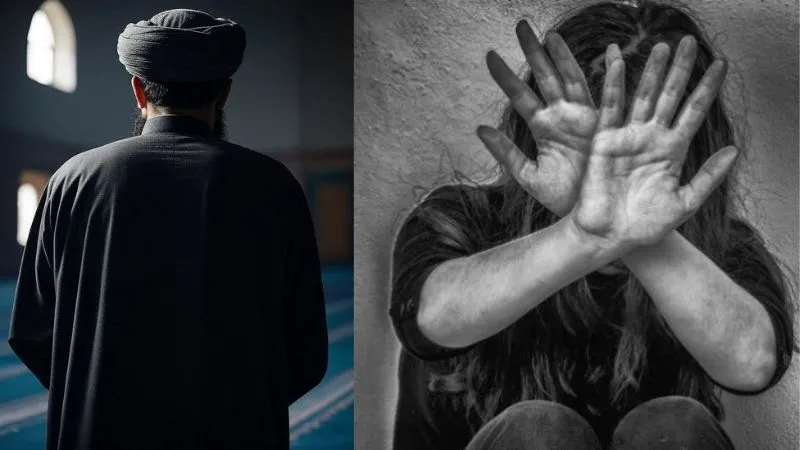
Case Summary
A deliberate anti-Hindu fake news story was circulated by mainstream media outlets such as Dainik Bhaskar and India Today. They misrepresented a Muslim exorcist who committed rape of a Muslim woman as a Tantrik. A Tantrik is a Hindu practitioner of Tantra, a system of esoteric spiritual practices and rituals aimed at harnessing and awakening divine energy (Shakti) within the body and universe to achieve liberation, spiritual enlightenment, and unity with the highest principle (Shiva). Tantriks perform specialised rites, meditation, and yogic techniques to attain transcendent powers and spiritual freedom. Reports stated that in Mathura, Uttar Pradesh, a Muslim exorcist named 'Aalim' Mushtaq Ali raped a Muslim woman and threatened to kill her. The woman had no children. Distressed by this, she had approached Mushtaq, an exorcist, seeking a solution. The Muslim female victim said, "Even after eight years of marriage, I did not have any children. I was told that Mushtaq Ali, who lives near the mosque in Button Wali Gali, Nauhjheel, Mathura, could cure this. Believing this, I went to the Tantrik with my sister-in-law about one month ago. He said I would have to come here every Thursday." The woman stated that the second time she went there, she was accompanied by her husband. Upon arrival, Mushtaq took her to a room and said, "I had forbidden you from bringing anyone else except your sister-in-law." On 21st August 2025, she returned to her sister-in-law’s house. There, the Muslim exorcist took her to a room, closed the door, lit incense sticks, and spread smoke. Taking advantage of this, Mushtaq raped her. The woman said, "I tried to make noise but could not. He kept me locked in the room for about one hour. He threatened that if I told anyone, he would get my sister-in-law and husband killed." The woman said she somehow managed to save her life and returned home to Agra with her sister-in-law, informing her husband of the incident. She lodged a complaint against Mushtaq at the SSP office on 24th August 2025. Following this incident, the media started calling Mushtaq a 'Tantrik.' This case involves a Muslim victim and a Muslim rapist; labelling him a Tantrik, a Hindu term, reveals anti-Hindu bias and misinformation spread by the media. Notably, this is not the first time the media has labelled Muslim perpetrators as 'Tantriks'. The Hinduphobia Tracker has previously reported several incidents where Muslim perpetrators were deliberately misrepresented as Tantriks by media outlets. In one such case from Garoth, Madhya Pradesh, a Muslim occult practitioner named Mubarak Mansuri deceived several Hindu women by disguising himself as a Hindu Tantrik and sexually exploited them. Media coverage, especially by Dainik Bhaskar, misrepresented his identity as that of a Hindu Tantrik. In another incident, in Meerut, Uttar Pradesh, the police arrested Mohammad Asad for the ritualistic murders of two boys, aged 14 and 11. He admitted these were part of a planned series of 11 child sacrifices to gain supernatural powers, a practice he said he learned from his father. Despite the accused being a Muslim, the Times of India described him as a Hindu Tantrik and used a generic image of a Hindu Tantrik. Similarly, Rashid, a Muslim occult practitioner from Bahroda village, Meerut, abducted a 17-year-old Hindu girl. The girl’s father filed a complaint at the Kithore police station, accusing Rashid of luring his daughter. The family reported she left home at 4 AM, taking ₹5.93 lakh in cash, eight tolas of gold jewellery, and expensive clothing. A local villager witnessed her leaving with Rashid. Even in this case, the media reported the Muslim perpetrator as a 'Tantrik'.
Case Images


Why it is Hate Crime ?
This case has been added to the tracker under the primary category- Hate speech against Hindus. Within this, the sub-category selected is- Anti-Hindu subversion and prejudice. Under this, the tertiary categories, namely, 'Anti-Hindu fake news or downplaying' and 'Mislabelling/Misrepresentation of perpetrator's religion as Hindu', have also been selected. Hate speech is defined as any speech, gesture, conduct, writing, or display that is prejudicial against a specific individual and/or group of people, which is leading to or may lead to violence, prejudicial action or hate against that individual and/or group. Media plays a specific and overarching reach in perpetuating prejudicial attitudes towards a community owing to unfair, untrue coverage and/or misrepresentation/misinterpretation, selective coverage and/or omission of facts of/pertaining to issues affecting a specific religious group. This type of bias can dehumanise the victim group, making it easier for others to justify harmful actions against them, which aligns with the objectives of hate speech laws aimed at preventing such harm. It is often observed that the media takes a prejudicial stand against the Hindu community driven by their need to shield the aggressor community which happens to be a numeric minority, however, is the one perpetrating violence against Hindus. For example, the media is often quick to contextualise religiously motivated crimes against Hindus, omit or misrepresent facts that point towards religiously motivated hate crimes, justify and/or downplay religiously motivated hate crimes or simply present fake news to stereotype Hindus. Such media bias leads to the denial of persecution and is often used to dehumanise Hindus, leading to justification for violence against them. For example, the media covered several fake allegations of Hindus targeting Muslims and forcing them to chant Jai Shree Ram. Most of these cases were proved false and fabricated after police investigation. These fake news reports were subsequently never retracted or clarified. Such fake news led to the justification of violence and dehumanisation of Hindus based on the argument that since Hindus targeted Muslims and forced them to chant Jai Shree Ram, the dehumanisation of Hindus and violence against them was par for the course and merely a retaliation. Such media bias leads to prejudicial portrayal of Hindus and offers a justification for violence against them and therefore, is considered hate speech under this category. This case exemplifies anti-Hindu hate speech through the deliberate misrepresentation of the Muslim perpetrator, Mushtaq Ali, as a “Tantrik,” a term specific to Hindu tradition and spirituality. The media outlets, including India Today and Dainik Bhaskar, deliberately appropriated this Hindu term to describe a Muslim exorcist who committed rape, thereby falsely linking the criminal act with Hindu practitioners of Tantra. This misappropriation tarnishes the image of Hindu Tantriks and Hindu spirituality by associating them with a heinous crime committed by a non-Hindu. It casts Hindus and the Tantrik tradition in a negative light, fostering societal suspicion, hatred, and potential discrimination against them. Such deliberate distortion is an insult to Hinduism and its ancient spiritual practices. This unjust portrayal contributes to the stigmatisation of Hindus and exposes them to further communal prejudice and violence. Furthermore, this incident is not isolated but part of a recurring media pattern. The media has repeatedly labelled Muslim occultists or exorcists who committed crimes as “Tantriks,” a Hindu term, thereby deliberately targeting Hindus through misinformation. Such repeated mislabeling serves a calculated agenda, fostering communal divisions and amplifying anti-Hindu sentiment by conflating criminal acts with Hindu religious practices. This pattern revealed a systemic media bias that exploited Hindu religious terminology to malign Hindus unfairly and intensify communal tensions. Given these facts, this case clearly meets the parameters of religiously motivated hate speech. By falsely attributing a Muslim perpetrator’s criminal act to a Hindu religious identity, the media spread misinformation designed to incite hatred and deepen societal divisions against Hindus and Hinduism. Therefore, this case is being added to the hate crime database.


Case Status
Unknown


Perpetrators Details
Perpetrators
Others
Perpetrators Range
Unknown
Perpetrators Gender
unknown
 Sources




