Hindu scholar threatened with violence for defending Hindu religious rights by Indian politician
 Tamil Nadu, India
  3 December, 2025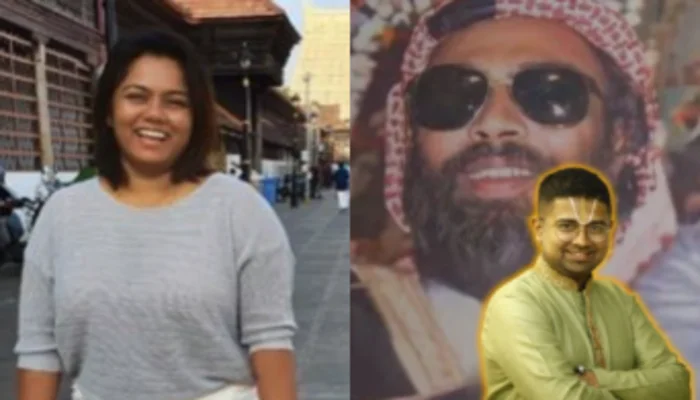
Case Summary
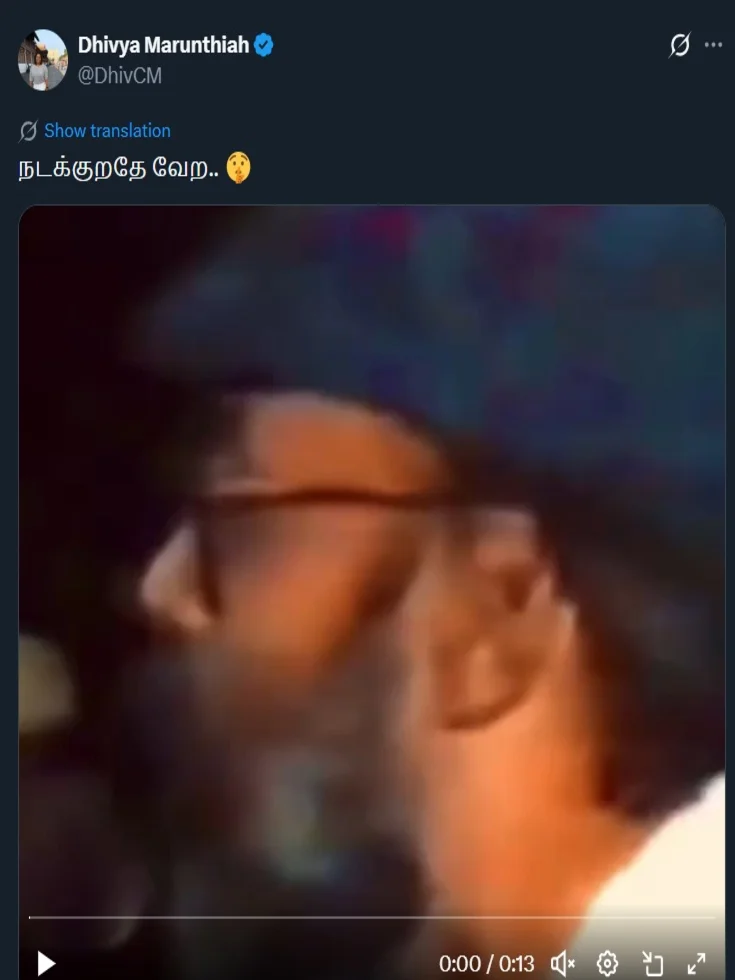
Hindu Vedic scholar Dushyant Sridhar was implicitly threatened with violence for defending Hindu religious rights. The threat came from senior Congress leader Dhivya Marunthiah, who used the image and words of a known Islamist extremist to intimidate him. During a News18 panel discussion, Sridhar spoke about the Karthigai Deepam dispute at Thirupparankundram Hill, where Hindus were prevented from lighting the traditional Deepam despite a valid Madras High Court order. The obstruction came from the DMK government and its Dravidianist supporters, who opposed the continuation of the centuries-old Hindu ritual. Sridhar later posted the discussion on Twitter, explaining the historical and religious significance of the tradition. Dhivya Marunthiah, who serves as the State Vice-President (OBC) of the Congress party, reacted by reposting Sridhar’s remarks along with a video of Islamist extremist Ahmed Ali, known as Palani Baba. Instead of responding to Sridhar’s arguments, she chose a clip in which Ali threatens Hindu activists, saying “I am giving you a final warning, stay at home,” followed by a warning that he would “turn into an extremist” if Hindus continued asserting their identity. She shared only the portion that intimidates Hindus and left out the part where he explicitly declares he would become an extremist. Ahmed Ali, or Palani Baba, was a central figure in Islamic militancy in Tamil Nadu during the 1980s and 1990s. He was known for violent speeches against Hindus and was linked to several killings in Coimbatore. His activities later expanded into a militant network that contributed to the formation of Al Ummah, a group connected to Pakistan’s ISI and Lashkar e Taiba, which went on to carry out the 1998 Coimbatore bombings targeting BJP leaders LK Advani and Murli Manohar Joshi.
Case Images
Why it is Hate Crime ?
This case has been added to the tracker under the primary category of - Hate Speech against Hindus. Within it, the subcategory selected is - Violent threats. Violent threats, explicit, implicit or implied, is the most dangerous form of hate speech since it goes beyond discriminatory and prejudicial language to express the intent of causing harm to an individual or a group of people based on their religious identity and faith. There could be several different kinds of threats that are issued to Hindus based on religious animosity. An explicit threat would mean the direct threat of violence towards an individual Hindu, a group of Hindus or Hindus at large. Physical violence, death threats, threats of destruction of property belonging to Hindus and threats of genocide would mean explicit threats against Hindus for their religious identity. Implicit threats may not be a direct threat but implied through the use of symbols of actions – for example – in the Nupur Sharma case, other than explicit threats, there were also implicit threats when Islamists took to the streets to burn and beat her effigies. It implies that they want to do the same to Nupur Sharma – thereby is considered an implicit threat. Violent threats can be delivered in person, through letters, phone calls, graffiti, or increasingly through social media and other online platforms. It would be important to understand that a threat – explicit or implicit, online or offline – to an individual who happens to be a Hindu does not qualify as a religiously motivated threat. Such a threat, while vile and dangerous, could be owing to non-religious reasons and/or personal animosity. To qualify as a religiously motivated threat, it would need to exhibit an indication that the individual is being targeted for religious reasons and/or owing to his/her religious identity as a Hindu. This case has been added to the tracker because Hindu Vedic scholar Dushyant Sridhar was implicitly threatened with violence for defending Hindu religious rights. When Sridhar spoke about the lawful Hindu right to light the Karthigai Deepam at Thirupparankundram Hill, Congress leader Dhivya Marunthiah did not respond to his arguments. Instead, she reposted his remarks along with a video of Islamist extremist Palani Baba, a figure known for violent threats and for directing attacks against Hindus in Tamil Nadu. The clip she shared was deliberate and carried a clear message. It showed Palani Baba warning Hindus to “stay at home” and threatening to “turn into an extremist” if Hindus continued asserting their identity. By choosing a video of an extremist who had targeted and killed Hindus, Dhivya used extremist imagery to intimidate Sridhar and to signal that speaking for Hindu rights could invite violent consequences. This was an act of targeted intimidation rooted in hostility toward a Hindu individual for defending Hindu customs. Sridhar’s remarks were lawful, peaceful, and focused on history, tradition, and a High Court affirmed ritual. The threatening response he received revealed an attempt to silence Hindu voices and discourage Hindus from asserting their religious identity. Since the intimidation was driven by animosity toward Hinduism and directed at a Hindu scholar for upholding Hindu rights, this incident has been added to the tracker. Disclaimer: The Hinduphobia Tracker records incidents based on when an event occurred or when the victim's ordeal began. It is important to clarify that none of the media sources covering this case has specified the exact date when Dhivya Marunthiah posted her tweet. Therefore, for documentation purposes, we have recorded the date based on when the incident was reported in the media, 4 December 2025.
Victim Details
Total Victim
1
Deceased
0
Gender
- Male 1
- Female 0
- Third Gender 0
- Unknown 0
Caste
- SC/ST 0
- OBC 0
- General 1
- Unknown 0
Age Group
- Minor 0
- Adult 1
- Senior Citizen 0
- Unknown 0


Case Status
Unknown


Perpetrators Details
Perpetrators
Others
Perpetrators Range
One Person
Perpetrators Gender
female
 Sources




