Hindu staff face religious discrimination at Al Falah University, not given sweets on Diwali while Muslim staff given free rations during Ramadan
 Faridabad, Haryana, India
  4 December, 2025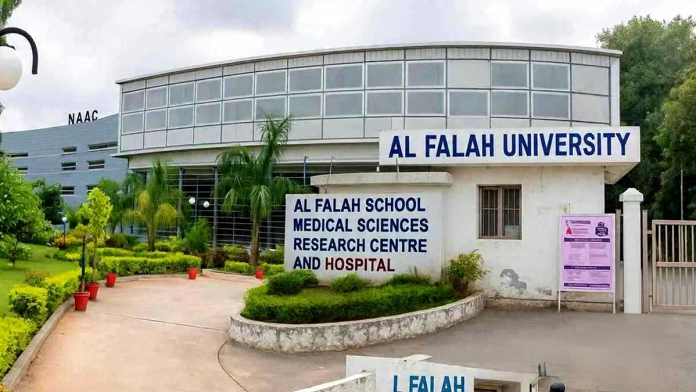
Case Summary
Faridabad’s Al Falah University is under a major investigation after links to the Delhi blast case surfaced, and testimonies from former staff have revealed a disturbing pattern of anti-Hindu discrimination within the institution. Hindu employees said they were routinely sidelined, denied basic courtesies such as Diwali sweets, while Muslim staff received free rations during Ramadan. Further, Muslim employees received a generous amount of monthly free rations, while Hindu staff received nothing similar. Former Hindu staff members stated that the workplace atmosphere grew even more threatening due to the behaviour of certain Kashmiri medical workers and doctors on night duty, who frequently praised Pakistan and openly raised pro-Pakistan slogans. For Hindu employees, this created a sense of intimidation and exclusion, layered on top of the institutional bias they already faced. These accounts emerged alongside revelations that between 100 and 150 fake patient files were being created every day inside the university’s medical college and hospital. This fabrication of records was carried out on the instructions of Dr Mujammil Shakeel, who has connections to a terrorist group, and Dr Umar Nabi, who later executed a suicide bombing. Staff who refused to follow these illegal directives were marked absent and had their salaries cut, creating an increasingly hostile environment, especially for Hindu employees. Several former staff members also described how Kashmiri medical workers and doctors on night duty openly praised Pakistan and shouted pro-Pakistan slogans, adding to the sense of intimidation faced by Hindu workers. Sources further revealed that Dr Shaheen Saeed often accompanied Dr Mujammil to the NIT Market to purchase explosives and suspicious materials, which investigators are now scrutinising. Laxman, a nursing employee from Rajasthan who worked there from July to October 2025, stated that each staff member was forced to create five fake patient files daily during night shifts, with pre-signed doctor entries and fabricated medicine records. The files were collected every morning and used to fraudulently claim funds meant for poor patients. Employees who refused had their salaries stopped, although this rule did not apply to Kashmiri workers. Muslim employees received 80 kilograms of free rations monthly, while Hindu staff received nothing similar. Of the roughly 200 nursing employees, about 80 per cent are Muslim and 20 per cent Hindu, with nearly 35 per cent of doctors and medical staff coming from Kashmir. It is important to mention here that earlier, Hindu female students at the university had reported feeling pressured to adopt Islamic markers to secure academic benefits. They said they received higher marks when they wore the hijab or maintained close associations with Muslim male students, and felt that academic reward depended on conforming to practices tied to the dominant religious culture on campus. These concerns gained further attention because the university, established by the Al Falah Charitable Trust, was already under scrutiny for its links to the Delhi Red Fort blast suspects, as well as questions surrounding its accreditation, funding, and institutional conduct. Hindu students reported that religious identity appeared to influence academic treatment, creating a climate where conformity was rewarded, and dissent carried risk. Parents of students have since reached out to central and state authorities, demanding a high-level committee to ensure student safety and uninterrupted education. Students have reported feeling unsafe and unable to focus since the university’s terror links surfaced, with many struggling even to sleep. More than 360 parents from Uttar Pradesh, Bihar, Punjab, Delhi, and the NCR region have united to voice their concerns. The Delhi blast itself took place on 10 November near Gate Number 1 of the Red Fort metro station, killing around 15 people and injuring more than 20 after a powerful explosion inside a white Hyundai i20. The government confirmed it was a terrorist attack tied to individuals from Al Falah University. The suicide bomber, Dr Umar Nabi, was an assistant professor who used ammonium nitrate to carry out the blast, while arrests include Dr Mujammil Shakeel and Dr Shaheen Saeed, whose networks connect them to Jaish-e-Mohammed and Ansar Ghazwat ul Hind. The investigation into this terror module of educated professionals was ongoing at the time of writing this report.
Why it is Hate Crime ?
This incident has been added to the tracker under the category- Attack not resulting in death. Within this, the subcategory selected is- Attacked for Hindu identity. In several cases, Hindus are attacked merely for their Hindu identity without any perceived provocation. A classic example of this category of religiously motivated hate crime is a murder in 2016. 7 ISIS terrorists were convicted for shooting a school principal in Kanpur because they got ‘triggered’ seeing the Kalava on his wrist and tilak that he had put. In this, the Hindu victim had offered no provocation except for his Hindu religious identity. The motivation for the murder was purely religious, driven by religious supremacy. Such cases where Hindus are targeted merely for their religious identity would be documented as a hate crime under this category. The accounts emerging from Al Falah University show a pattern in which individuals were singled out and mistreated specifically because they were Hindu. Hindu staff members consistently reported being denied even the most basic courtesies during their own festivals, while preferential treatment was extended to employees from the dominant religious group. They were forced to work in an environment where pro-Pakistan slogans were shouted openly and where refusal to participate in illegal activities, such as producing fake medical files, resulted in punishment that disproportionately affected them. This reflects an atmosphere where Hindus were not simply employees but a targeted minority whose identity made them vulnerable to discrimination and coercion. Earlier, Hindu female students also described feeling compelled to adopt Islamic markers to secure fair academic treatment. Their testimony indicated that higher marks were awarded when they wore the hijab or maintained associations that aligned with the dominant religious identity on campus. This went beyond casual bias; it placed Hindu students in a position where their academic success appeared conditioned on visibly distancing themselves from their own cultural and religious identity. The pressure to discard Hindu markers and take on Islamic ones functioned as a daily tool of control, amounting to predatory proselytisation that used academic leverage to push students toward religious conformity. Taken together, these patterns show that the hostility faced by Hindus was not incidental or isolated. Both staff and students experienced discrimination that directly targeted their identity and forced them to navigate an environment that treated their Hindu background as a liability. This created a sustained climate of fear, exclusion, and humiliation. The fact that these experiences unfolded within an institution now under investigation for links to terror networks only deepened the sense of vulnerability. For the Hindu community inside Al Falah University, the cumulative effect of daily mistreatment amounted to being attacked, not physically alone, but through systematic targeting of their religious identity. Disclaimer: The exact date on which the discrimination began has not been specified in the available accounts. For documentation purposes, the date of reporting has been used as the incident date.


Case Status
Unknown


Perpetrators Details
Perpetrators
Muslim Extremists
Perpetrators Range
Unknown
Perpetrators Gender
unknown
 Sources




