Hindu girl students pressured to wear hijab and conform to Islamic norms to secure higher marks at Al Falah University
 Faridabad, Haryana, India
  16 November, 2025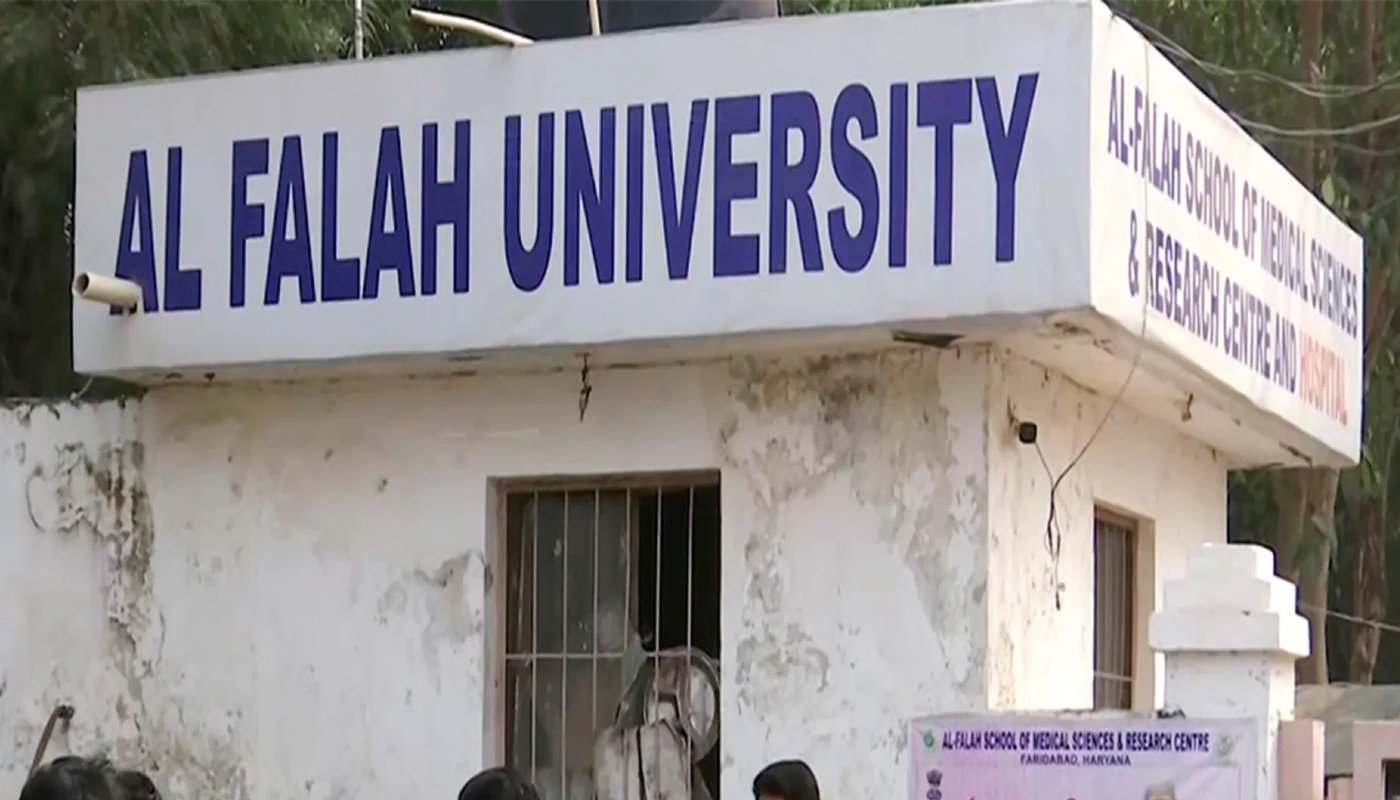
Case Summary
Hindu girl students were forced into adopting Islamic markers inside Al Falah University, Faridabad, Haryana, according to accounts from Hindu female students who said they received higher marks when they wore the hijab and formed close associations with Muslim male students. Their statements described a pattern in which academic reward appeared to depend on visible compliance with practices linked to the Muslim identity of the campus environment. These claims came from students who said they felt pressured to conform in order to avoid academic disadvantage. The incident took place at Al Falah University in Faridabad, an institution that recently came under national scrutiny. The university was established by the Al Falah Charitable Trust and became widely discussed after investigators probing the Delhi Red Fort terror blast traced many suspects to the campus. The inquiry also uncovered concerns about the university’s accreditation, funding, and overall institutional conduct. These developments drew further attention to the allegations made by Hindu students, who said that the academic environment fostered an unequal dynamic. The students reported that they sensed an institutional push to adopt certain practices and that the marking pattern reinforced this pressure. Their testimony suggested that religious identity influenced academic treatment, and that Hindu students felt marginalised in settings where conformity was rewarded. The fact that these concerns surfaced in an institution already facing questions about credibility intensified the seriousness of the accounts.
Why it is Hate Crime ?
The primary category in this case is: Predatory Proselytisation. The subcategory under this is: Proselytisation by grooming, brainwashing, manipulation or subtle indoctrination. Religious brainwashing essentially means the often subtle and forcible indoctrination to induce someone to give up their religious beliefs to accept contrasting regimented ideas. Religious grooming or brainwashing also involves propaganda and manipulation. It involves the systematic effort, driven by religious malice and indoctrination, to persuade “non-believers’ to accept allegiance, command, or doctrine to and of a contrasting faith. Cases of such grooming or brainwashing are far more nuanced than direct threats, coercion, inducement and violence. In such cases, it is often seen that there is repeated, subtle and continual manipulation of the victim to induce disaffection towards their own faith and acceptance of the contrasting faith of the perpetrator. While subtle indoctrination is widely acknowledged as predatory, an element which is often understated in such conversions or the attempts of such conversion is the role of loyalty and trust which might develop between the perpetrator and the victim. Fiduciary relationships are often abused to affect such religious conversion. For example, an educator transmitting religious doctrine of a competing faith to a Hindu student. The Hindu student is likely to accept what the teacher is transmitting owing to existence of the fiduciary relationship. The exploitation of the fiduciary relationship to religiously indoctrinate victims would also be included in this category. Since the underlying animosity towards the victim’s faith forms the basis of predatory proselytisation, such cases are considered religiously motivated hate crimes. The other subcategory selected is- harassment, threat, coercion for conversion. Harassment covers a wide range of behaviours of an offensive nature. It is commonly understood as behaviour that demeans, humiliates, and intimidates a person, including threats and coercion. Harassment and threats, in this case, find their root on discriminatory grounds which has the effect of nullifying a person’s rights or infringing upon his freedom to exercise his right specifically owing to the victim’s religious identity. Verbal and physical threats and psychological or physical harassment are often used against Hindu victims because they choose to practice their professed religion. Religious harassment also includes forced and involuntary conversions by harassment, threats or coercion. Coercion includes intimidatory tactics like force-feeding a Hindu victim beef to convert to another religion, forceful circumcision etc. In several cases documented, non-Hindu perpetrators or those who harbour specific animosity towards Hinduism, harass victims simply based on their religious identity. Such cases often also include harassment to ensure the Hindu victim abandons his/her professed religion and adopts the religion of the perpetrator. Such cases, where Hindu victims are harassed to convert to the perpetrator’s religion, are rooted in animosity towards the victim’s religious identity and are therefore documented as religiously motivated hate crimes. This case qualifies as a hate crime because the experiences described by the Hindu girl students point to a pattern of predatory proselytisation carried out through grooming, manipulation and subtle indoctrination. Their accounts show that academic incentives were used as tools to influence their behaviour. The students said they received higher marks when they wore the hijab or formed close associations with Muslim male students, and that their academic performance seemed tied to how visibly they conformed to Islamic markers on campus. This kind of pressure creates a slow shift in identity, where daily choices are shaped not by genuine belief but by fear of academic loss. The environment they described reflects grooming and manipulation because the pressure did not come through open threats but through repeated signals that compliance would bring rewards while noncompliance would result in disadvantage. When young students feel compelled to change their appearance, adopt symbols of another faith or adjust their behaviour to fit a religious environment not their own, it shows an attempt to influence their beliefs through psychological and institutional pressure rather than free choice. Their accounts also fall under harassment and coercion for conversion because the unequal marking pattern created a climate in which Hindu students felt targeted and marginalised. The suggestion that their academic future depended on adopting Islamic practices shows an attempt to push them away from their Hindu identity. Even without explicit verbal threats, the power imbalance placed them in a position where conforming to another religion’s markers felt necessary for success and safety. Taken together, these elements show a clear identity-based motive. The pressure was directed at Hindu students specifically, and the goal was to reshape their outward identity and gradually influence their religious alignment. This makes the incident a form of predatory proselytisation that uses coercive academic practices to weaken their connection to their own faith. Disclaimer: It is important to clarify that none of the media sources covering this case has specified the exact date on which the coercion started. Therefore, for documentation purposes, we have recorded the date based on when the incident was reported in the media.


Case Status
Unknown


Perpetrators Details
Perpetrators
Muslim Extremists
Perpetrators Range
Unknown
Perpetrators Gender
unknown
 Sources




