Hindu temple targeted for the second time in six months; idol of Goddess Parvati damaged in Gorakhpur, Uttar Pradesh
 Gorakhpur, Uttar Pradesh, India
 13 November, 2026
Case Summary
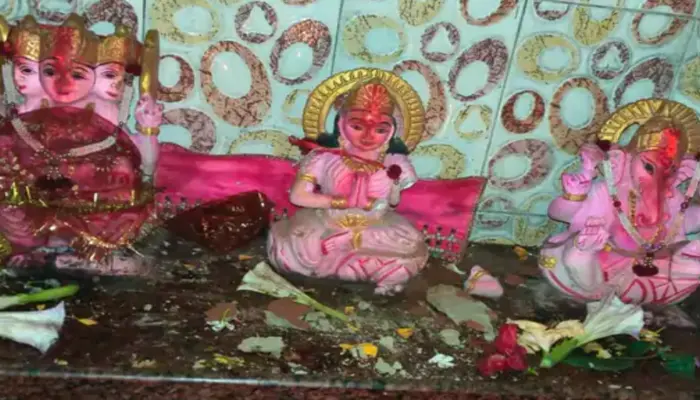
In Bharasad village, located in the GIDA police station area of Sahjanwa, Gorakhpur district, Uttar Pradesh, the idol of Goddess Parvati at an ancient Shiva temple was deliberately damaged for the second time within six months. The incident came to light on Saturday evening, 14 November 2026, when a woman arrived at the temple at around 5 pm, as part of her daily routine, to offer prayers. During her visit, she noticed that the idol of Goddess Parvati had been damaged. She immediately raised an alarm and informed nearby residents about the incident. Within a short time, a large number of villagers gathered at the temple premises and expressed their anger over the damage to the idol. The villagers questioned the security arrangements and police patrolling in the area, pointing out that the temple was situated barely 150 metres from the local police outpost, yet a similar incident had occurred for the second time within six months. They demanded that those responsible be identified and action be taken against them. They also called for stronger security arrangements to protect the temple and other religious sites, emphasising that safeguarding places of worship should be a priority for the administration. The villagers further urged the police to prevent such incidents and any attempts by disruptive elements to disturb the local atmosphere. Following the incident, police personnel from GIDA police station reached the temple and attempted to pacify the gathered villagers. GIDA Circle Officer (CO) Abha Singh also arrived at the spot along with police personnel and inspected the site. She claimed that CCTV footage showed a small child damaging the hand of the idol of Goddess Parvati. The police subsequently sought to calm the situation as villagers continued to demand action and better security arrangements. The incident had caused anger among local residents, particularly because it was the second such occurrence at the temple within six months, despite its close proximity to the police outpost.
Why it is Hate Crime ?
This case has been added to the tracker under the primary category of - Attack on Hindu religious representations. Within it, the sub-category selected here is - Desecration of Hindu religious symbols. Icons and symbols or a religious representation of a spiritual ideal are widely revered in Hinduism. Iconography is of vital significance in the Hindu milieu. It helps connect people’s spiritual beliefs with the real world. Iconography within the Hindu faith takes several shapes and forms. Murtis are of most significance to Hindus, to which daily rituals, prayers and offerings are done. Besides the murtis, there are several other symbols which have deep significance in the Hindu faith – the Om and Swastika for example. Since these Hindu religious symbols hold paramount importance in Hinduism, any desecration of symbols, icons, murtis, religious representations and manifestations, is driven by animosity towards the faith itself which manifests itself through these murtis, icons and symbols. Therefore, any desecration of these Hindu religious symbols and representations is considered religiously motivated hate crimes under this category. The other sub-category selected here is - Attack on temples. In Hinduism, a temple is the abode of the Deity. The Deity in the Temple is consecrated, thereby, making it a real, breathing entity. Hindus believe that not just the Deity but the temple premises itself are sacred to Hindus since Hindus hold the faith that the entire Temple space is an amalgamation of the divine energy of the deity. Given the central significance of Temples in Hindu Dharma, any attack against a Hindu Temple or its peripheral premises is an attack on the faith itself and is born out of animosity towards the faith, of which, the Temple is a central tenet. Any manner of attack against a Temple and/or its premises would therefore be considered a religiously motivated hate crime. The incident involved the targeting of a religious site and the deliberate damage of a place of worship, thereby directly affecting the religious sentiments of the Hindu community. The damage was particularly significant because the site was an established place of Hindu worship, where devotees visited to offer prayers. The act of vandalism interfered with the community's ability to practise and maintain its religious traditions in a safe environment. Idols of Hindu deities hold profound religious and spiritual significance in Hinduism, as they serve as sacred representations through which devotees worship and establish a connection with the divine. They are not regarded merely as decorative objects or ordinary statues, but are consecrated through religious rituals and treated as embodiments of the deity's divine presence. Devotees offer prayers, perform rituals and seek blessings before these sacred representations as an integral part of their religious practice. Consequently, damaging, desecrating or defiling an idol is not simply an act of physical vandalism but also constitutes interference with an important aspect of Hindu religious worship. Such acts can deeply hurt the religious sentiments of devotees, undermine the sanctity of a place of worship and cause distress to the wider Hindu community for whom the deity and its consecrated representation hold immense spiritual and cultural importance. The earlier incident in June 2026 further provided context to the November occurrence. The previous episode had involved theft and damage at a religious site, threats against a person who objected to the vandalism, and remarks that villagers considered offensive to their religious sentiments. The recurrence of damage within six months highlighted the vulnerability of Hindu religious institutions and places of worship to repeated acts of vandalism and interference. Such incidents demonstrated how Hindu religious establishments and sacred representations are subjected to repeated desecration, acts which are rooted in religious animosity. Such repeated acts of vandalism and desecration of Hindu religious sites reflect a pattern of hostility towards Hindu religious institutions, sacred representations and places of worship. These actions stem from religious animosity towards Hinduism and demonstrate the vulnerability of Hindu places of worship to repeated targeting. Given the repeated damage to the same religious establishment and the wider impact of such acts on Hindu devotees, this incident has been included in the Hate Crime Database to document and highlight hostility directed towards Hindu religious institutions and their sacred symbols.


Case Status
Complaint filed


Perpetrators Details
Perpetrators
Unknown
Perpetrators Range
Unknown
Perpetrators Gender
unknown
 Sources



