Hindu youth branded ‘ISKCON militant’, threatened, assaulted and jailed over relationship with Muslim girl in Bangladesh
 Sandwīp, Chittagong Division, Bangladesh
 23 August, 2026
Case Summary
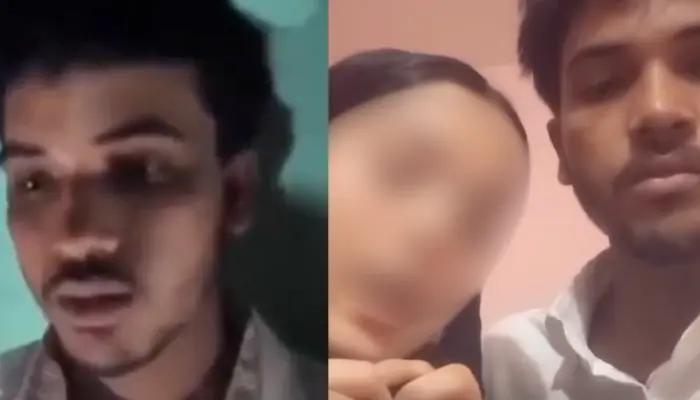
In Bangladesh, a Hindu youth was targeted, and his father was assaulted over his relationship with a Muslim girl. The campaign against them began after a local content creator, Rasel Chowdhury, who has around 19,000 Facebook followers, started publishing inflammatory posts targeting the victim, Joyonto Mojumdar, also known as Joyonto Das. Chowdhury branded Joyonto an “ISKCON militant” and accused him of trapping Muslim girls and sending them to India, where they were supposedly converted and forced into prostitution. These claims triggered a targeted campaign against Joyonto and his family. Joyonto and his ailing father, Arup Mojumdar, were hounded; his father was assaulted, and both were arrested. Joyonto was also compelled to issue a video statement on social media in which he was pressured to confess to being associated with ISKCON and participating in the conversion of Hindu girls. Arup Mojumdar earned his living selling betel leaves at the local market It began when Joyonto, a pharmacist at a local shop in Santoshpur, met a Muslim girl named Jannatul Aprin, and the two fell in love. Joyonto belonged to a humble Hindu family. His father, Arup Mojumdar, earned his living selling betel leaves at the local market. Joyonto's family soon realised Joyonto's relationship with the Muslim girl would have consequences and sent him away to Chattogram. On August 24th 2026, the Muslim girl left her village on the northern shore of Sandwip, an island off Bangladesh’s southeastern coast and went to live with Joyonto. According to the victim's father, Arup, within hours, a mob gathered and arrived at his residence. Arup, who was still recovering from major surgery, was brutally assaulted. The attackers demanded to know where his son was. When the police intervened, however, they did not protect the family. Instead, police took Arup into custody. The same day, Rasel Chowdhury, a local Muslim content creator with around 19,000 Facebook followers, began publishing inflammatory posts targeting Joyonto. He accused him of being associated with ISKCON, which has increasingly been portrayed as a threat in Bangladesh. Without presenting any evidence, Chowdhury claimed that Joyonto was part of a nationwide conspiracy to lure Muslim girls into romantic relationships, abduct them and traffic them to India for sexual exploitation and forced religious conversion. These accusations helped fuel a campaign of hostility against Joyonto and his family. On August 25, a day after Joyonto's father was assaulted and taken into police custody, Joyonto and Aprin appeared together in a video posted on his Facebook account. In the video, Aprin directly addressed her family and the local community, making it clear that she was in Chattogram of her own free will. She said Joyonto had not influenced or pressured her; in fact, she forced him to take her. She further said that they were living together, getting married and urged people not to interfere in their lives. Her statement, however, did little to undo the hostility already unleashed against Joyonto and his family. While Arup remained in police custody, Aprin's parents filed complaints accusing Joyonto of abducting their daughter. On August 27, Joyonto left his hiding place in Halisahar, Chattogram, to meet a neighbour from Sandwip who had reportedly offered to help him. However, the neighbour betrayed his trust and helped another mob locate and capture him. Joyonto was assaulted and forced to record a video confession. In the video, he was made to repeat the very accusations that had been used to incite hostility against him: that he was associated with ISKCON, had abducted Aprin to push her into prostitution, and was part of a conspiracy to lure Muslim girls into sexual slavery. While recording the video, Joyonto appeared visibly scared, and it seemed as if someone behind the camera was prompting him to make these statements on record. The video was subsequently circulated on Facebook. Soon after, videos emerged where Muslims openly threatened the Hindu victim with death and instigated others to kill him. Police arrested Joyonto and took him back to Sandwip. Meanwhile, police sent Aprin back to her family. Recently, in a similar incident in Rangpur, Bangladesh, a Hindu man was subjected to religiously motivated humiliation and intimidation by a Muslim mob over his association with a Muslim woman. The victim's hands were tied with a rope and paraded through the streets, with the Muslim crowd calling him an ISKCON member and threatening him with execution. The incident came to public attention after a video circulated on social media. The footage showed a Hindu youth with his hands tied with a rope as several Muslim individuals escorted him through the streets. The crowd following him raised slogans as they paraded him from one location to another. A few of the slogans heard in the footage were "ISKCON dhar jobai kor", meaning "catch ISKCON, slaughter them" and "Break down and demolish the establishments of Hindus!” These attacks against Hindus are happening against the broader backdrop of the historical persecution faced by Hindus in Bangladesh. While the Hindu minority has endured discrimination, targeted violence, and religious hostility over decades, such persecution has intensified in distinct spurts during periods of political and social instability. The latest major escalation began after the ouster of Sheikh Hasina’s government in August 2024, continued after the death of Sharif Osman Bin Hadi in December 2025, and resurfaced in the immediate aftermath of the 13th National Parliamentary Election in 2026. Following the ouster of Sheikh Hasina, multiple incidents involving attacks on Hindu homes, temples and religious institutions were documented, alongside intimidation, arson and mob violence targeting Hindu localities. The Hinduphobia Tracker recorded 336 incidents involving the Hindu minority during this period, reflecting the scale of the escalation and the continuing vulnerability of Hindus in Bangladesh. A further spurt of violence followed the death of Sharif Osman Bin Hadi, a Muslim political activist and student leader known for his anti-Hindu and anti-India rhetoric, in December 2025. In the aftermath, Hindu communities were subjected to retaliatory violence, with Hindu homes and properties selectively attacked and several families forced to flee. Among the victims was Dipu Chandra Das, who was lynched and whose body was subsequently set ablaze by a Muslim mob over false blasphemy allegations. The Hinduphobia Tracker documented 51 incidents of anti-Hindu violence in the period following Hadi’s death alone, further illustrating how existing hostility towards the Hindu minority intensified during moments of communal mobilisation. During the same period, posters and written material calling for the extermination of Hindus were also displayed in public spaces. Such rhetoric, when viewed alongside incidents of arson, vandalism, assault and targeted intimidation, reflected an environment in which hostility towards Hindus was not merely episodic but repeatedly resurfaced in more intense forms during periods of unrest. The most recent escalation followed the 13th National Parliamentary Election in 2026. In the immediate aftermath of the election results, Hindu families in districts including Noakhali, Rangpur, Nilphamari, Sylhet, Thakurgaon and Dinajpur faced attacks involving arson, looting, assault and vandalism of Hindu homes and temples. In several instances, Hindu properties were selectively targeted, and families were threatened with displacement. The present incident therefore occurred within a much longer history of persecution of Hindus in Bangladesh, where hostility towards the community has persisted over time and intensified in repeated spurts. The latest cycle began after the ouster of Sheikh Hasina and continued through subsequent periods of political and communal upheaval, leaving the Hindu minority increasingly vulnerable to targeted violence, intimidation and religious hostility.
Why it is Hate Crime ?
The primary category selected in this case is: Men attacked for being associated with non-Hindu women. Within this, the subcategory selected is: Attacked/killed for being associated or suspected of being associated with Muslim women. There have been several cases documented of Hindu men/boys being attacked specifically by Muslim groups/mobs for merely being associated with, or suspected of being associated with, or being seen with a Muslim woman in public. In most of such cases, the Hindu man is not in a relationship with the Muslim woman; however, the mob proceeds to threaten and/or assault the Hindu man for merely being associated with the Muslim woman in any capacity. The rise of such crimes stems from a particularly sinister campaign run by several Muslim ideologues and activists. The campaign claims that Hindu men are attempting to ‘lure’ Muslim women into relationships to ensure that Muslim women leave their faith and follow Hinduism. The propaganda has been spearheaded with the help of WhatsApp groups and the extensive use of social media, sans evidence of the same. In many cases, pamphlets were fabricated to lend credence to this campaign. The root of this campaign lies in the fact that several cases of sectarian crimes against Hindu women in relationships with Muslim men have been documented. In such cases, Hindu women have often been forced/pressured to convert to Islam, assaulted, threatened and even murdered owing specifically to their religious identity and their refusal to give up that religious identity to adopt Islam. To delegitimize the suffering of Hindu women when such sectarian crimes are committed against them, the theory of ‘Bhagwa Love Trap’ was floated by sections of the Muslim community. As this theory gained traction, Muslim mobs started targeting Hindu men who were seen with Muslim women. In several such cases, the Hindu man was assaulted merely for offering to drop a Muslim woman in his vehicle or being friends. The differentiating factor between such cases and legitimate cases of Hindu women being targeted while in a relationship with Muslim men is that there is no sectarian violence and no force/pressure to convert. The nature of sectarian violence against Hindu women is not about two adults in a consensual relationship, working together, studying together, or even marrying each other where religious considerations are declared. In this category of crimes, it is pertinent to remember that in none of the cases is there an element of the Hindu man masking his identity or forced religious conversion. Such cases are driven by specific religious motivations and are against the religious identity of the victim and are therefore qualified as hate crimes. This case demonstrates how religious identity can become the basis for targeted hostility against Hindus in Bangladesh. Joyonto's relationship with a Muslim girl was used to initiate a campaign against him, but the nature of the accusations and the manner in which he was targeted reveal a deeper religious dimension. He was not merely accused of being involved in an interfaith relationship. He was specifically branded an “ISKCON militant”, portrayed as part of an organised Hindu conspiracy against Muslim girls and subjected to a campaign that demonised his religious affiliation. His Hindu identity and association with ISKCON were repeatedly invoked to portray him as a threat to the Muslim community. This targeting must also be viewed against the wider climate of hostility towards ISKCON in Bangladesh, particularly following the ouster of Sheikh Hasina's government in August 2024. ISKCON and its members have faced increasing hostility, while Hindu religious figures who raised their voices against atrocities targeting the minority community have faced intimidation and legal action. The arrest of former ISKCON leader Chinmoy Krishna Das in November 2024 further brought attention to the hostility directed at Hindu religious voices. In this environment, associating Joyonto with ISKCON was not a neutral reference to his religious affiliation. It was used to stigmatise him and mobilise hostility against him. A key indicator of religious motivation was the campaign's persistence even after the Muslim girl publicly stated that she had gone to Joyonto of her own free will. If the issue had genuinely been about abduction or coercion, her statement should have addressed the central accusation. Instead, Joyonto continued to be targeted, assaulted and forced to record a confession repeating the anti-ISKCON and trafficking allegations. His religious identity became central to the narrative used against him. This also reflects a broader pattern in which accusations of blasphemy, hurting religious sentiments, forced conversion, or supposed threats to Islam become pretexts for targeting Hindus. Such accusations trigger mob mobilisation and provide a justification for violence, while the hostility extends beyond the immediate dispute to the victim's religious identity and community. In Joyonto's case, the conspiracy narrative against him was built around his Hindu religious affiliation, rather than any substantiated evidence of wrongdoing. The fundamental motivation behind such acts is religious intolerance rooted in hostility towards Hindu identity and religious assertion. The immediate pretext may be an interfaith relationship, an accusation of blasphemy or an association with a Hindu religious organisation. But when these pretexts are used to portray Hindus as enemies, mobilise collective hostility and subject them to violence, the targeting takes on the character of a religiously motivated hate crime. Joyonto's case is an example of how a personal relationship was weaponised to vilify his faith, punish him for his religious association and intimidate the wider Hindu minority.
Victim Details
Total Victim
1
Deceased
0
Gender
- Male 1
- Female 0
- Third Gender 0
- Unknown 0
Caste
- SC/ST 0
- OBC 0
- General 1
- Unknown 0
Age Group
- Minor 0
- Adult 1
- Senior Citizen 0
- Unknown 0


Case Status
Unknown


Perpetrators Details
Perpetrators
Muslim Extremists
Perpetrators Range
Unknown
Perpetrators Gender
male
 Sources



