Hindu teacher discriminated against in Bangladesh; denied appointment despite qualifying for government post
 Sylhet, Sylhet District, Bangladesh
 24 September, 2026
Case Summary
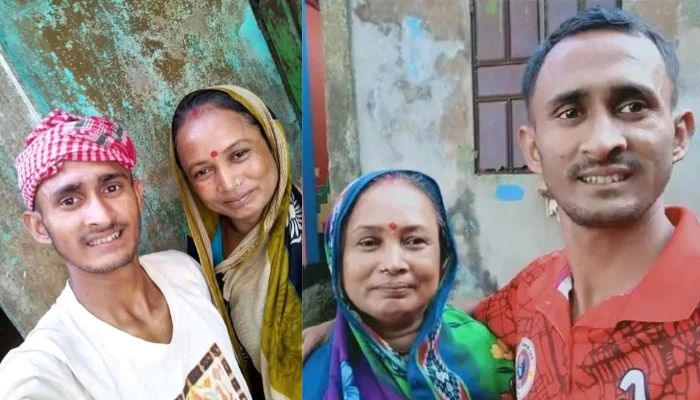
In Baniachong, Sylhet, Bangladesh, a Hindu teacher, Rahul Das, was discriminated against on account of his religious identity. He was denied appointment as an Assistant Teacher at a government primary school despite successfully passing the recruitment examination and qualifying for the post. Belonging to a peasant Hindu family, Rahul Das was excluded during the police verification process, preventing him from securing the government teaching position for which he had been selected. The incident came to light after Rahul Das took to Facebook to express his disappointment at being denied the appointment despite fulfilling the required qualifications. His post quickly went viral on social media, attracting widespread public attention and sympathy. The case triggered a wider controversy as several Hindu social media users highlighted religious discrimination in the recruitment process, stating that Hindu candidates were being denied government employment because of their faith. Following the public outcry, Rahul Das eventually received his appointment letter through an order issued by the Habiganj District Primary Education Office on Sunday, 27 September 2026. This paved the way for his appointment as an Assistant Teacher at a government primary school. His eventual appointment, however, did not erase the concerns surrounding his initial exclusion during the verification process. Rahul Das's case emerged amid a wider controversy over the exclusion of candidates from government primary school teaching appointments across Bangladesh in September 2026. As many as 351 candidates who had been finally recommended for appointment across at least 15 districts were denied their appointment letters following the verification process. Several candidates expressed concern over their exclusion despite submitting the required documents and successfully completing the recruitment procedure. The introduction of additional police verification and scrutiny by the National Security Intelligence Agency (NSI) also became a major point of contention. Among those who publicly raised concerns was Bikash Das, another Hindu candidate who questioned his exclusion despite having no political affiliation or association with any political party, either personally or through his family. He questioned why he should face the consequences merely because he resided in the same village as a former Member of Parliament whose verification had been treated as negative. Another candidate, Bahri Mallik, had secured second place on the Upazila-based merit list and completed both his graduation and post-graduation in pharmacy. He maintained that his academic documents were in order, his family had no political affiliations or criminal cases, and there were no discrepancies concerning his permanent address or land records. Despite fulfilling the eligibility requirements, he was denied his appointment letter and sought an explanation for his exclusion. The controversy also brought attention to the disproportionate exclusion of Hindu candidates from government teaching appointments. In Dumuria Upazila of Khulna, 71 Hindu candidates alone were excluded during the verification process. Similar concerns emerged from other parts of Bangladesh, where Hindu job seekers and social media users questioned the selective treatment of candidates belonging to the minority Hindu community. The pattern of exclusion raised serious concerns about religious discrimination against Hindus in Bangladesh's government employment system, particularly as qualified Hindu candidates faced barriers to appointment despite successfully clearing the recruitment process. Rahul Das's experience became a prominent example of the wider concerns surrounding the treatment of Hindu candidates and their access to equal employment opportunities in the country. Notably, Rahul Das's case was not an isolated incident of Hindu employees being targeted and discriminated against in Bangladesh or forced out of their professional positions. Hinduphobia Tracker had documented three previous major instances highlighting the discrimination and harassment faced by Hindu professionals in the country. In one such instance, on 5 August 2024, more than 49 Hindu teachers were forced to resign from their posts by Muslim extremist student groups and mobs. Gautam Chandra Pal, a Chemistry teacher at Azimpur Government College who was recognised as the best teacher, was forced to resign under pressure from Muslim students. Similarly, Sonali Rani Das, an Assistant Professor at Holy Red Crescent Nursing College in Dhaka, was forced to resign amid harassment. In another particularly distressing case, a 55-year-old Hindu teacher recounted how her Muslim students physically locked her inside her office and demanded her resignation. She described having to jump out of a window to escape, highlighting the betrayal she felt at the hands of students she had once taught, who subsequently labelled her a “Kafir” and “Malaun”. In another instance, a Hindu female teacher, Litu Rani, also known as Ritu Rani, who taught Islam and moral education at Sacherlapur School and College in Jhalokati district, was suspended from her position following protests by Muslim students over false accusations of blasphemy. The students accused her of making derogatory remarks about Islam, the Quran and Allah during a classroom lesson. They organised demonstrations and demanded punishment against her. Following the protests, the school authorities suspended the Hindu teacher, while the local administration monitored the situation. In another instance, in Pirojpur, a Hindu bank officer working at Dutch-Bangla Bank was targeted by a former Muslim employee, who falsely accused him of insulting Islam. The Hindu officer stated that the allegations were fabricated and deliberately circulated on Facebook to humiliate him, damage his professional reputation and put his job at risk. This incident occurred against the broader backdrop of the historical persecution faced by Hindus in Bangladesh. While the Hindu minority has endured discrimination, targeted violence and religious hostility over decades, such persecution has intensified in distinct spurts during periods of political and social instability. The latest major escalation began after the ouster of Sheikh Hasina’s government in August 2024, continued after the death of Sharif Osman Bin Hadi in December 2025, and resurfaced in the immediate aftermath of the 13th National Parliamentary Election in 2026. Following the ouster of Sheikh Hasina, multiple incidents involving attacks on Hindu homes, temples and religious institutions were documented, alongside intimidation, arson and mob violence targeting Hindu localities. The Hinduphobia Tracker recorded 336 incidents involving the Hindu minority during this period, reflecting the scale of the escalation and the continuing vulnerability of Hindus in Bangladesh. A further spurt of violence followed the death of Sharif Osman Bin Hadi, a Muslim political activist and student leader known for his anti-Hindu and anti-India rhetoric, in December 2025. In the aftermath, Hindu communities were subjected to retaliatory violence, with Hindu homes and properties selectively attacked and several families forced to flee. Among the victims was Dipu Chandra Das, who was lynched by a Muslim mob over false blasphemy allegations, after which his body was set ablaze. The Hinduphobia Tracker documented 51 incidents of anti-Hindu violence in the period following Hadi’s death alone, further illustrating how existing hostility towards the Hindu minority intensified during moments of communal mobilisation. During the same period, posters and written material calling for the extermination of Hindus were also displayed in public spaces. Such rhetoric, when viewed alongside incidents of arson, vandalism, assault and targeted intimidation, reflected an environment in which hostility towards Hindus was not merely episodic but repeatedly resurfaced in more intense forms during periods of unrest. The most recent escalation followed the 13th National Parliamentary Election in 2026. In the immediate aftermath of the election results, Hindu families in districts including Noakhali, Rangpur, Nilphamari, Sylhet, Thakurgaon and Dinajpur faced attacks involving arson, looting, assault and vandalism of Hindu homes and temples. In several instances, Hindu properties were selectively targeted, and families were threatened with displacement. The present incident therefore occurred within a much longer history of persecution of Hindus in Bangladesh, where hostility towards the community has persisted over time and intensified in repeated spurts. The latest cycle began after the ouster of Sheikh Hasina and continued through subsequent periods of political and communal upheaval, leaving the Hindu minority increasingly vulnerable to targeted violence, intimidation and religious hostility.
Why it is Hate Crime ?
This incident has been added under the category: Attack not resulting in death. Under this, the subcategory selected is: Attacked for Hindu identity. In several cases, Hindus are attacked merely for their Hindu identity without any perceived provocation. A classic example of this category of religiously motivated hate crime is a murder in 2016. 7 ISIS terrorists were convicted for shooting a school principal in Kanpur because they got ‘triggered’ seeing the Kalava on his wrist and tilak that he had put. In this, the Hindu victim had offered no provocation except for his Hindu religious identity. The motivation for the murder was purely religious, driven by religious supremacy. Such cases where Hindus are targeted merely for their religious identity would be documented as a hate crime under this category. In this case, a Hindu teacher, Rahul Das, was discriminated against on account of his religious identity and denied appointment to a government teaching post despite successfully clearing the recruitment examination and qualifying for the position. The denial of a hard-earned employment opportunity to a qualified Hindu candidate demonstrated how religious identity became a basis for discriminatory treatment in Bangladesh's public employment system. The exclusion deprived Rahul Das of the professional opportunity he had earned through merit and qualifications, undermined his professional dignity and economic security, and demonstrated that Hindu candidates were treated as less deserving of equal employment opportunities because of their faith. The incident therefore constituted an instance of religiously driven discrimination and showcased the hostility faced by Hindus in accessing equal opportunities in public institutions. This was not an isolated instance of Hindu employees being targeted and deprived of employment in Bangladesh. Hinduphobia Tracker has documented a wider pattern in which Hindu teachers, students, government employees and professionals across different sectors were selectively targeted, discriminated against, harassed and forced out of their positions on account of their religious identity. These included instances of Hindu teachers being intimidated and coerced into signing resignation papers, a Hindu female teacher being suspended following protests by Muslim students over false allegations of blasphemy, and a Hindu bank officer being targeted through a campaign accusing him of insulting Islam, which threatened his professional reputation and employment. These incidents demonstrated a recurring pattern in which Hindu individuals faced hostility in educational institutions and workplaces and were deprived of their professional opportunities under different pretexts. Rahul Das's exclusion was another instance of this wider pattern of anti-Hindu discrimination documented by Hinduphobia Tracker. Some might point out that a Muslim candidate was also denied an appointment during the same recruitment process. However, the exclusion of one Muslim candidate did not invalidate or erase the wider pattern of discrimination faced by Hindu candidates. An individual instance of administrative discrepancy involving another candidate did not negate the documented cases of Hindu professionals being selectively targeted, denied appointments, harassed and forced to resign. The presence of another excluded candidate did not absolve the discriminatory treatment faced by Hindu employees or diminish the significance of the repeated instances documented by Hinduphobia Tracker. Furthermore, the incident demonstrated how the police verification process became a barrier to public employment for Hindu candidates even after they had successfully completed the recruitment examination and secured selection. The exclusion of Hindu candidates at this subsequent stage displayed how administrative procedures can deprive qualified members of the Hindu community of employment opportunities. Such selective exclusion undermined the principles of merit-based recruitment, equal treatment and accountability in public institutions, leaving Hindu candidates vulnerable to discriminatory decisions even after fulfilling the prescribed eligibility requirements. The incident also unfolded against the backdrop of the longstanding persecution and systemic discrimination faced by Hindus in Bangladesh. Following the ouster of Sheikh Hasina's government on 5 August 2024 and her subsequent departure from the country, Hindu communities faced widespread violence, including attacks on Hindu homes, businesses and temples, desecration of religious sites, forced conversions and sexual violence against Hindu women. Hindu teachers, intellectuals and government employees were also targeted, intimidated and forced to resign from their positions. This wider environment of anti-Hindu hostility, alongside the repeated instances of discrimination in employment and public institutions, demonstrated that the exclusion of Hindu professionals occurred within a broader context of religious persecution and unequal treatment. The denial of appointment to Rahul Das despite his qualifications and successful selection deprived him of a rightful professional opportunity and demonstrated the discriminatory treatment Hindus faced on account of their religious identity. The incident displayed religious animosity through the exclusion of a Hindu candidate from public employment and reinforced the unequal position imposed on Hindu professionals in Bangladesh. Considering the circumstances of his exclusion, the wider pattern of employment-based discrimination and the broader environment of anti-Hindu hostility in the country, the incident could not be dismissed as an ordinary recruitment discrepancy. It constituted a case of religiously driven discrimination against a Hindu candidate and was therefore included in the Hinduphobia Tracker's Hate Crime Database. Disclaimer: The Hinduphobia Tracker records the incident date based on when the victim’s ordeal began rather than when the incident was reported by the media. The exact date on which the incident began was not specified in the available sources. Therefore, 25 September 2026, when it was reported in the media, has been selected as the indicative incident date for documentation purposes only.
Victim Details
Total Victim
1
Deceased
0
Gender
- Male 1
- Female 0
- Third Gender 0
- Unknown 0
Caste
- SC/ST 0
- OBC 0
- General 0
- Unknown 1
Age Group
- Minor 0
- Adult 1
- Senior Citizen 0
- Unknown 0


Case Status
Unknown


Perpetrators Details
Perpetrators
State and Establishment
Perpetrators Range
Unknown
Perpetrators Gender
unknown
 Sources



