Congress minister links Hindu Rashtra with exploitation, says caste system is rooted in Hinduism amid history of anti-Hindu remarks in Bidar, Karnataka
 Bidar, Karnataka, India
 5 August, 2026
Case Summary
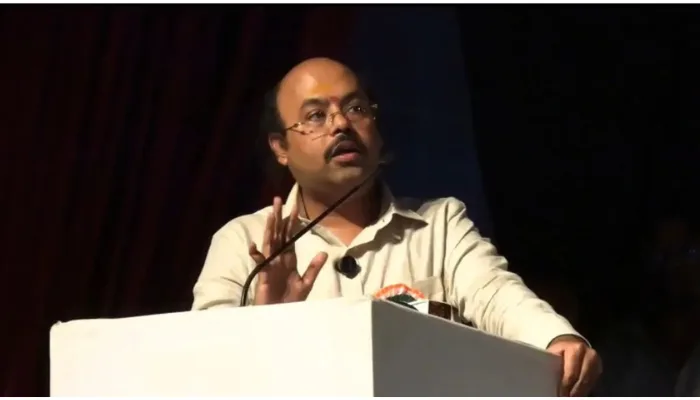
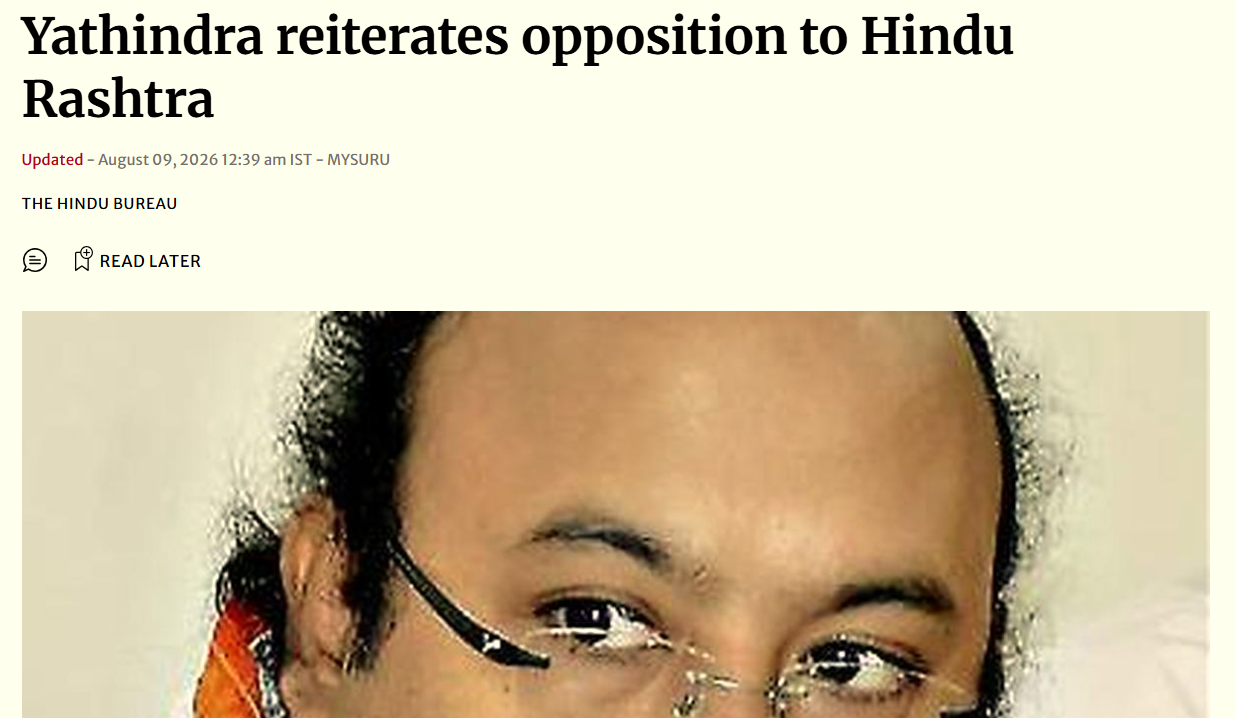
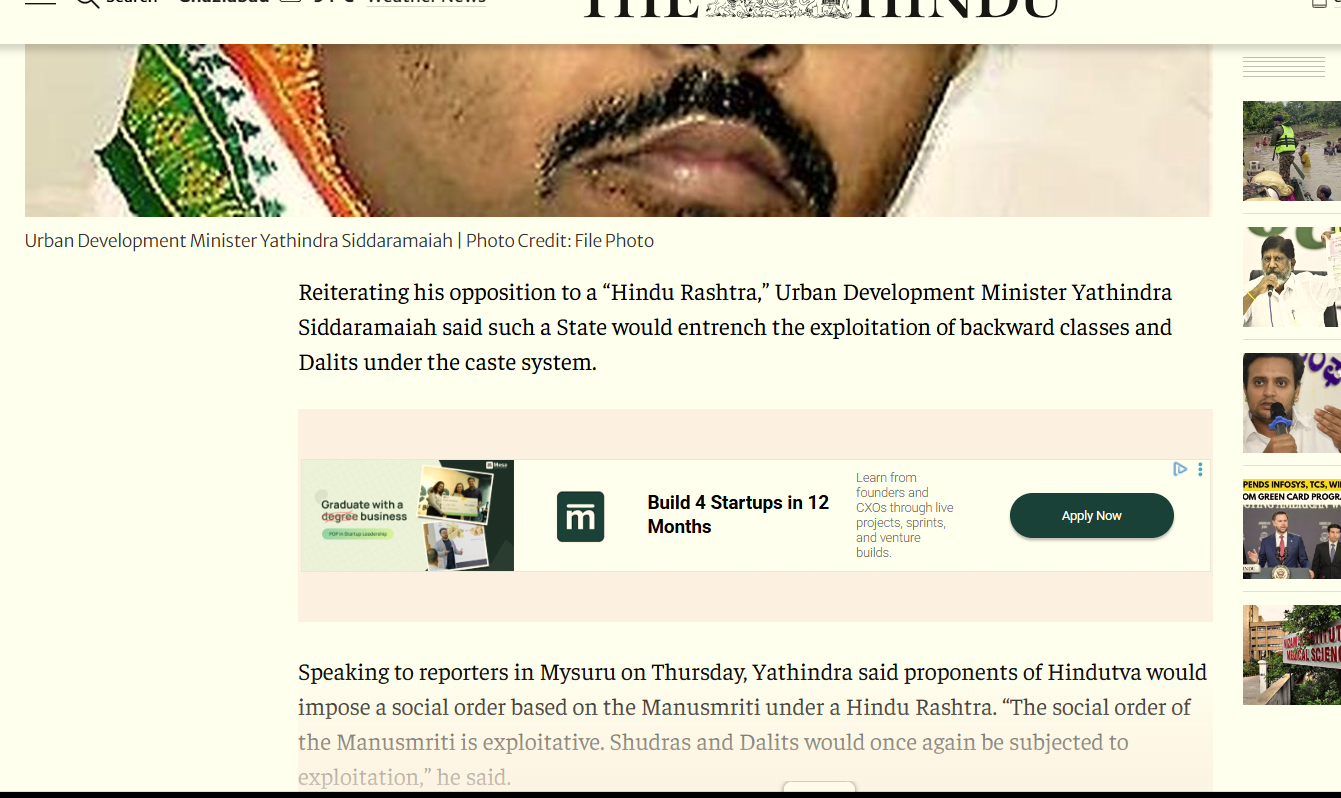
In Bidar, Karnataka, in August 2026, Karnataka Urban Development Minister Yathindra Siddaramaiah made a series of remarks linking Hinduism and the idea of a Hindu Rashtra with caste-based exploitation and social inequality. Addressing the Karnataka Oppressed Communities Federation conference, he said that the caste system was deeply rooted in Hinduism and argued that establishing a Hindu Rashtra would bring back an oppressive social order in which Shudras and Dalits would again face exploitation, and minorities would be reduced to second-class citizens. During the same address, Siddaramaiah went beyond opposing Hindu Rashtra as a political idea and directly connected the caste system with the Hindu religion itself. He said that the Hindu religion had given its “stamp of approval” to the caste system despite reform movements led by figures such as Buddha, Basava, Ambedkar and Kanakadasa. He also referred to the Bhagavad Gita and the phrase concerning Chaturvarnya while discussing the varna system. Siddaramaiah further attributed to Dr B.R. Ambedkar the view that there would be “no greater danger” than India becoming a Hindu nation, and called for resistance against what he described as communal forces using religion to divide society. The remarks formed part of a longer record of Siddaramaiah making strongly critical statements concerning Hindu Rashtra, Hindutva and Hindu-linked organisations. On 3rd January 2024, while speaking in Davanagere, he compared the possible consequences of India becoming a Hindu nation with Pakistan and Afghanistan. He said those countries had suffered because of dictatorship in the name of religion and argued that India could meet a similar fate if organisations seeking a Hindu nation succeeded. In November 2024, Siddaramaiah again opposed the idea of a Hindu nation. Speaking at an event in Bengaluru, he said that if India became a “Hindutva nation”, there would be “nothing more dangerous” for the country. He described efforts to turn India into a country based on one faith as dangerous and said such an outcome should not be allowed. The remarks drew criticism from BJP leaders, who said his comments hurt Hindu sentiments and demanded an apology. On 31st January 2025, while discussing criticism surrounding the Maha Kumbh, Siddaramaiah said people of faith should be free to attend the Hindu pilgrimage and that their devotional feelings should be respected. During the same interaction, however, he described “Hindu fundamentalists” attempting to impose one belief system as “real terrorists.” He argued that Hinduism contained multiple philosophies and traditions and opposed attempts to impose a single interpretation of the religion. The rhetoric continued in October 2025, when Siddaramaiah compared the Rashtriya Swayamsevak Sangh (RSS) with the Taliban. He said the RSS displayed a similar mindset because, in his view, it sought to enforce one interpretation of Hinduism in the same way that the Taliban imposed a particular interpretation of Islam. He also supported restrictions on RSS programmes and argued that the organisation should function within formal legal requirements. On 16th June 2026, Siddaramaiah again targeted the religious identity claimed by RSS members, saying that people in the RSS were “not Hindus” but only proponents of Hindutva. He further said that the RSS could not act in the name of Dharma and supported demands for greater legal and financial scrutiny of the organisation. Taken chronologically, the Bidar remarks therefore followed several earlier statements in which Siddaramaiah had compared the prospect of Hindu Rashtra with religious authoritarianism, described a Hindutva nation as dangerous, labelled certain Hindu fundamentalists “real terrorists”, compared the RSS with the Taliban, and denied that RSS members were Hindus. The August 2026 speech marked a further development because it directly attributed the continuation of caste hierarchy to Hinduism itself and presented Hindu Rashtra as a system that would institutionalise exploitation and inequality. The remarks were not the first time Yathindra Siddaramaiah had attracted attention for statements concerning Hindu identity and Hindu organisations. Hinduphobia Tracker had previously documented a June 2026 incident involving Siddaramaiah, recording his remarks that RSS members were “not Hindus” but “Hindutvavadis” as a case of denigration directed at members and leaders of a Hindu organisation. OpIndia had also previously covered Siddaramaiah’s statements concerning Hinduism and Hindu organisations, including his comparison of the RSS with the Taliban and his assertion that the organisation sought to impose a particular interpretation of Hinduism. These earlier documented remarks provide relevant background to the present case, as they show that his August 2026 comments concerning Hinduism and Hindu Rashtra did not emerge in isolation but followed a series of public statements in which Hindu religious, cultural and organisational identities had been targeted.
Case Images
Why it is Hate Crime ?
The primary category selected for this case is: Hate speech against Hindus. The subcategory selected is: Anti-Hindu slurs, mocking faith. Anti-Hindu slurs and the deliberate mocking of the Hindu faith owing to religious animosity involve the usage of derogatory terms, stereotypes, or offensive references to religious practices, symbols, or figures. One of the common anti-Hindu slurs used against Hindus is “cow-worshipper” and “cow piss drinker”. The intention of using this term is to demean and mock Hindus as a group and their religious beliefs since Hindus consider the cow holy. Additionally, some symbols and the slurs attached to them have a historical context that exacerbates the insult, hate, stereotyping, dehumanisation and oppression against Hindus. Cow worship has been used for centuries to denigrate Hindus, insult their faith and oppress Hindus specifically as a religious group. There has been overwhelming documentation about how cow slaughter has been used to persecute Hindus with cow meat being thrown in temples and places of worship. There has also been overwhelming documentation where cow meat (beef) has been force-fed to Hindus to either forcefully convert them to Islam or denigrate their faith. Apart from cow worship, the Swastika – which holds deep religious significance for the Hindus – has also been misinterpreted and distorted to use as a slur against Hindus. Similarly, the worship of the Shivling has been used by supremacist ideologies and religions to denigrate Hindus owing to religious animosity. Such slurs and denigration stem out of inherent animosity and hate towards Hindus and their faith, therefore, it is categorised as hate speech targeted at Hindus specifically owing to their religious identity. In this case, Yathindra Siddaramaiah went beyond criticising the political idea of a Hindu Rashtra and directly portrayed Hinduism itself as responsible for caste-based exploitation and social inequality. Addressing the Karnataka Oppressed Communities Federation conference in Bidar, he claimed that Hinduism had given its “stamp of approval” to the caste system and argued that the establishment of a Hindu Rashtra would restore an oppressive social order in which Shudras and Dalits would face exploitation, and minorities would become second-class citizens. By attributing the existence and continuation of caste discrimination to Hinduism as a whole, he presented the religion itself as a source of oppression. There is an important distinction between criticising caste discrimination, questioning the varna system or opposing a political model based on religion, and portraying an entire faith as inherently responsible for social injustice. Siddaramaiah could have confined his criticism to caste-based discrimination, historical social practices or organisations advocating a Hindu Rashtra. Instead, his remarks directly implicated Hinduism as a religion, suggesting that it had sanctioned and legitimised the oppression of certain communities. His reference to the Bhagavad Gita and Chaturvarnya further brought Hindu scripture into this characterisation, presenting Hindu religious teachings as evidence of an inherently oppressive social order. The remarks also need to be viewed against his repeated statements targeting Hindu religious and organisational identity. Over the years, Siddaramaiah has compared the prospect of a Hindu Rashtra with Pakistan and Afghanistan, described a Hindutva-based nation as dangerous, called Hindu fundamentalists “real terrorists”, compared the RSS with the Taliban and declared that RSS members were “not Hindus”. While criticism of the RSS, Hindutva or the political idea of a Hindu Rashtra is not, by itself, anti-Hindu, the repeated tendency to associate Hindu religious and cultural assertion with authoritarianism, terrorism and social oppression is significant. His latest remarks went further by directly extending this characterisation to Hinduism itself. The distinction between Hinduism and Hindutva is also relevant. Hindutva is a political and cultural ideology, while Hinduism is a diverse religious tradition encompassing numerous schools of philosophy, forms of worship and spiritual practices. Opposition to a particular political ideology does not justify treating the faith itself as responsible for every social injustice associated with its history. By repeatedly moving between criticism of Hindutva, the RSS and Hinduism, Siddaramaiah's rhetoric blurred these distinctions and placed Hindu religious identity within a broader narrative of extremism, exclusion and oppression. His remarks are particularly significant because they came from a senior public representative speaking at a social justice gathering. Criticism of caste discrimination is necessary, but attributing collective responsibility for it to an entire religion risks reinforcing prejudice against its followers. Hinduism cannot be reduced to a single interpretation of the varna system, nor can the beliefs of millions of Hindus be characterised through a sweeping accusation that their religion endorses the exploitation of entire communities. The fundamental concern in this case is the portrayal of Hinduism itself as an oppressive and discriminatory religion. By using the language of social justice to attribute caste-based exploitation to the faith as a whole, Siddaramaiah moved beyond criticism of specific practices or political organisations and directed his remarks at Hindu religious identity. His repeated association of Hinduism and Hindu religious assertion with oppression, terrorism and authoritarianism further reinforces this pattern. The issue is not his opposition to caste discrimination or Hindu Rashtra, but his sweeping characterisation of Hinduism as a religion that sanctions exploitation. This rhetoric contributes to prejudice against Hindus by portraying their faith as inherently oppressive and undeserving of respect.


Case Status
Unknown


Perpetrators Details
Perpetrators
State and Establishment
Perpetrators Range
One Person
Perpetrators Gender
male
 Sources



