Hindu women's suffering dismissed; Muslim author whitewashes 'Love Jihad', portrays it as 'political myth' and 'conspiracy theory'
 New Delhi, Delhi, India
  26 August, 2026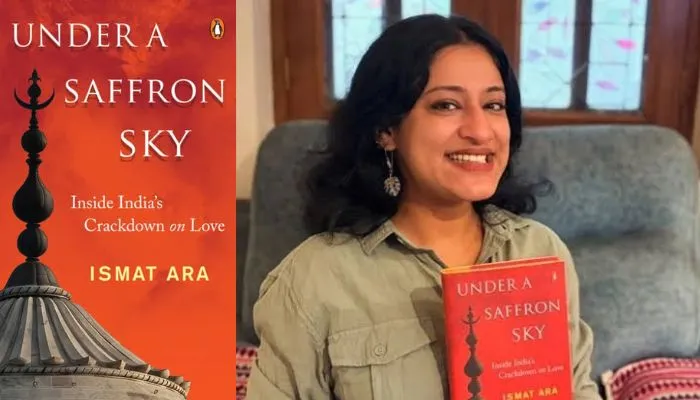
Case Summary
The suffering of Hindu women who were victims of religiously motivated crimes by Muslim men was trivialised by Muslim author and journalist Ismat Ara, who dismissed incidents of “love jihad” as a “political myth”. She described it as a conspiracy theory in which Muslim men are portrayed as part of an organised project to target Hindu women, enter into relationships or marriages with them, convert them to Islam, increase the Muslim population and eventually alter India’s demographic and religious character. She made the remarks in her book, "Under a Saffron Sky: Inside India’s Crackdown on Love", and during an interview with 'The Diplomat'. Notably, in India, the targeting of Hindu women in predatory relationships by non-Hindu men, mostly Muslim men, is commonly referred to in public discourse as “Love Jihad” or “Grooming Jihad”. These terms refer to incidents in which Hindu women and minor girls are lured into relationships through deception with the objective of religious conversion or other forms of exploitation. In such cases, non-Hindu men conceal or misrepresent their religious identity by posing as Hindus before entering into relationships or marriages with Hindu women. Once the relationship is established, the women are coerced into converting to another religion, abandoning their Hindu religious practices, or are subjected to sexual exploitation, blackmail, or other forms of coercion. This resulted in the introduction of anti-forced conversion laws in various states of India, including Arunachal Pradesh, Chhattisgarh, Gujarat, Haryana, Himachal Pradesh, Jharkhand, Karnataka, Madhya Pradesh, Odisha, Rajasthan, Uttar Pradesh and Uttarakhand. Ara described “love jihad” as a conspiracy theory in which Muslim men are portrayed as deliberately targeting Hindu women, entering into relationships or marriages with them, and converting them to Islam with the aim of bringing about demographic change. She dismissed this idea as an “elaborate example of political myth-making”, which she linked to what she called paranoia about “Muslim danger”. She said that while conducting fieldwork for her book, she was interested not only in whether individual cases involving deception or coercion existed. She acknowledged that such incidents “can” occur in relationships. However, her focus was on how these individual incidents were transformed into evidence of a vast conspiracy that came to define an entire community. By framing the issue in this way, Ara made the existence of a wider conspiracy central to the debate, while individual cases involving deception, coercion and pressure to convert became secondary to her broader argument. Ara claimed that the supposed leap from an individual Muslim man deceiving a woman to the assertion that Muslim men were conducting an organised campaign against Hindu women to “take over this country” was the crucial political leap. She said that once individual incidents were incorporated into a larger conspiracy narrative, the “myth” became powerful enough to influence families, communities, police action and even public policy. Her account thus presented the wider concern surrounding such incidents primarily as the product of a political narrative built around individual cases. Ara cited a few isolated incidents to illustrate what she described as opposition to interfaith relationships, including the 2023 Purola episode in Uttarakhand, where an attempt to abduct a 14-year-old girl was branded “love jihad” and later collapsed in court; a case from Uttar Pradesh in which a Hindu-Muslim couple faced threats and violent opposition to their marriage; and an incident in Gujarat where a stamp vendor informed a Hindu woman’s family about her interfaith marriage, escalating tensions. She presented these examples as evidence of how interfaith relationships, particularly those involving Hindu women and Muslim men, were subjected to family, social and political opposition. By placing these cases at the centre of her discussion, she portrayed the wider controversy largely through instances of opposition to interfaith relationships. A central premise of Ara’s book, according to her, was that “love jihad” was ultimately about controlling women. She argued that this control operated across communities, albeit in different forms. Ara said that when a Hindu woman was told that she could not choose her own partner because he belonged to another faith, her agency was taken away. She said such women were often treated as having been deceived or brainwashed rather than as adults capable of making their own decisions. At the same time, she said that her book examined the experiences of Muslim women facing family opposition to interfaith relationships. She cited the case of a Muslim woman whose parents opposed her marriage to a Hindu man because he belonged to a lower caste. According to Ara, the woman was told that her family might have accepted a Hindu man, but only if he belonged to an upper caste. Ara used this case to argue that the policing of women’s choices was not confined to one religious community. Through this comparison, she characterised “love jihad” primarily as an issue of women’s autonomy and community control rather than focusing on the specific circumstances surrounding cases of deception or coercion. Ara further said that while women’s choices had historically been made to represent the honour of an entire community, the distinctive feature of the “love jihad” campaign was that Hindu women were increasingly turned into symbols and tools of their community’s honour, purity and demographic future. She claimed that their personal choices were portrayed as collective threats and that Hindu women were considered incapable of making independent decisions, while simultaneously being portrayed as possessing the power to threaten the demographic future of an entire community. Ara claimed that Hindu organisations involved in “love jihad” cases maintained local networks, monitored interfaith relationships, received reports about Muslim men “luring” Hindu women, and ran rehabilitation programmes aimed at reinforcing women’s religious identity. She portrayed their activism and efforts at social protection as a form of mobilisation involving family intervention, public involvement, ideological reinforcement and street-level action. Her description therefore presented these organisations’ efforts to intervene in such cases primarily through the lens of ideological mobilisation surrounding interfaith relationships. When asked whether allegations of “love jihad” were also made against Muslim women marrying Hindu men, Ara said that they were. She referred to cases in Uttar Pradesh where Muslim women and their male relatives faced criminal complaints under anti-conversion laws, with families alleging that conversions were being orchestrated through promises of marriage. She further said that in some cases Muslim women had been sent to custody in connection with such allegations, and argued that the idea of a Muslim woman acting as an agent of conversion therefore also existed in some cases. She used these examples to suggest that similar allegations could be applied across religious lines. On whether the absence of religious conversion would reduce the anxieties surrounding “love jihad”, Ara argued that it would not necessarily do so. She said that suspicion could exist even when no conversion had taken place and that a Hindu woman simply being in a relationship with a Muslim man could itself trigger a “love jihad” allegation. Ara claimed that there had been no substantial body of cases establishing an organised “love jihad” conspiracy behind forced conversions. At the same time, she acknowledged that individual cases involving coercion or deception could occur and said that such cases should be investigated on their individual merits, distinguishing them from what she described as the unproven existence of a larger organised conspiracy. Overall, she presented “love jihad” as a political construct and sought to portray real and legitimate concerns over the targeting of Hindu women as a mere conspiracy theory.
Why it is Hate Crime ?
The primary category selected in this case is: Hate Speech against Hindus. The subcategory selected is: Anti-Hindu subversion and prejudice. The tertiary category selected is: Anti-Hindu fake news or downplaying. Hate speech is defined as any speech, gesture, conduct, writing, or display that is prejudicial against a specific individual and/or group of people, which is leading to or may lead to violence, prejudicial action or hate against that individual and/or group. Media plays a specific and overarching reach in perpetuating prejudicial attitudes towards a community owing to unfair, untrue coverage and/or misrepresentation/misinterpretation, selective coverage and/or omission of facts of/pertaining to issues affecting a specific religious group. This type of bias can dehumanise the victim group, making it easier for others to justify harmful actions against them, which aligns with the objectives of hate speech laws aimed at preventing such harm. It is often observed that the media takes a prejudicial stand against the Hindu community driven by their need to shield the aggressor community which happens to be a numeric minority, however, is the one perpetrating violence against Hindus. For example, the media is often quick to contextualise religiously motivated crimes against Hindus, omit or misrepresent facts that point towards religiously motivated hate crimes, justify and/or downplay religiously motivated hate crimes or simply present fake news to stereotype Hindus. Such media bias leads to the denial of persecution and is often used to dehumanise Hindus, leading to justification for violence against them. For example, the media covered several fake allegations of Hindus targeting Muslims and forcing them to chant Jai Shree Ram. Most of these cases were proved false and fabricated after police investigation. These fake news reports were subsequently never retracted or clarified. Such fake news led to the justification of violence and dehumanisation of Hindus based on the argument that since Hindus targeted Muslims and forced them to chant Jai Shree Ram, the dehumanisation of Hindus and violence against them was par for the course and merely a retaliation. Such media bias leads to prejudicial portrayal of Hindus and offers a justification for violence against them and therefore, is considered hate speech under this category. This is a clear example of anti-Hindu rhetoric that dismissed the experiences and suffering of Hindu women who had been victims of deception, coercion, forced conversion, sexual exploitation and other forms of abuse in relationships with non-Hindu men, mostly Muslim men. By dismissing “Love Jihad” as a “political myth” and portraying concerns about the targeting of Hindu women as part of a conspiracy theory, Muslim author and journalist Ismat Ara trivialised their experiences. She sought to portray “Love Jihad” primarily as a political construct associated with Hindu nationalist discourse, while treating individual cases of deception, coercion and conversion pressure as isolated incidents that were supposedly used to support a larger conspiracy narrative. This effectively dismissed a documented pattern of victimisation involving Hindu women and girls and obscured the religious dimension of cases in which they were specifically targeted and pressured to abandon their faith. “Love Jihad”, also known as “Grooming Jihad”, is a commonly used term in public discourse referring to religiously motivated crimes targeting Hindu women. In such crimes, Hindu women and minor Hindu girls are profiled on the basis of their religious identity and subsequently lured into relationships or marriages by non-Hindu men, mostly Muslim men. In several documented cases, non-Hindu men, mostly Muslim men, concealed their religious identity and presented themselves as Hindus by adopting Hindu names, using forged or misleading documents, wearing Hindu religious symbols, and participating in Hindu festivals and traditions in order to gain the trust of the victims. These crimes are not isolated incidents but reflect a recurring pattern in which Hindu women are specifically targeted through deception, exploitation, coercion and pressure to convert. The religious profiling of victims and the targeting of a particular community transformed such offences from ordinary crimes into acts motivated by hostility towards the Hindu community. However, it is important to note that Hinduphobia Tracker does not document such crimes under the terms “Love Jihad” or “Grooming Jihad”. Instead, such cases are recorded under the category “Crimes against women in relationships or other sexual crimes”. Ara’s attempt to frame “Love Jihad” primarily as a political construct placed disproportionate emphasis on whether individual incidents could be linked to a larger, organised conspiracy. By making the existence of such a conspiracy the central question, she gave considerably less weight to cases in which Hindu women were deceived, sexually exploited, pressured to convert or otherwise targeted by non-Hindu men. Hinduphobia Tracker documented 1,437 cases between 1 January 2023 and 30 September 2026 involving Hindu women and girls subjected to such forms of deception, exploitation, coercion and conversion pressure. The actual scale is likely to be higher, as many incidents do not meet the evidentiary threshold for documentation because of the absence of definitive evidence, reliable media reports or sufficient details. These limitations do not lessen the seriousness of the cases that can be established, each of which represents an individual victim whose experience deserves recognition rather than being reduced to political myth-making. By repeatedly shifting the focus from these victims and their experiences to the question of whether a nationwide conspiracy existed, Ara displayed a disregard for the suffering of Hindu women and minimised the religious dimension of their victimisation. Such a portrayal reflects anti-Hindu prejudice by treating serious cases affecting Hindu women as secondary to a political argument, rather than giving due consideration to the harm they experienced. Ara also portrayed “Love Jihad” as a hoax promoted by Hindu nationalists to create a narrative that Muslims were seeking to alter India’s religious demography. However, the scale of cases documented by Hinduphobia Tracker presents a different picture. It has recorded 633 cases in Uttar Pradesh, 258 in Madhya Pradesh, 83 in Uttarakhand, 72 in Maharashtra and 57 in Gujarat, making these the five states with the highest number of cases in the dataset of 1,437 cases. These figures, alongside the recurring targeting of Hindu women and girls through deception, relationships, sexual exploitation and subsequent pressure or attempts to convert them to Islam, indicate that religious conversion is a recurring feature of these cases rather than an incidental element. When Hindu women are repeatedly targeted for conversion on such a large scale, the cumulative pattern provides a basis for examining whether such activities contribute to efforts to increase the Muslim population and alter India’s religious demography. Thus, portraying concerns about demographic change as merely propaganda overlooks the scale and recurring religious character of the documented cases. Ara’s suggestion that the absence of an organised network undermines the “Love Jihad” narrative is also contradicted by documented instances of organised conversion networks targeting Hindu women. Hinduphobia Tracker has documented multiple such networks, including the one operated by Islamic preacher "Chhangur Baba", for which it has documented 31 cases. The Uttar Pradesh Anti-Terrorism Squad (ATS), which investigated and dismantled the network, found that Chhangur Baba provided money to Muslim men to lure Hindu women, often by posing as Hindus, and pressure them into conversion. The investigation uncovered a structured incentive system in which ₹15–16 lakh was offered for the conversion of Brahmin, Sikh or Kshatriya women, ₹10–12 lakh for OBC women, and ₹8–10 lakh for women from other castes. The Anti-Terrorism Squad also confirmed that the network had received nearly ₹100 crore in foreign funds for carrying out conversions and recovered a diary containing the names of more than 100 potential targets from Chhangur Baba’s residence. These findings provide concrete evidence of an organised network in which Hindu women were specifically identified, targeted and offered for conversion, directly challenging the portrayal of organised targeting as merely a political construction. Hinduphobia Tracker has documented multiple instances linked to Chhangur Baba’s conversion network. One such case involved Rashmi (name changed), a Hindu woman from Karnataka, who was lured to Saudi Arabia under the false promise of marriage and employment after a Muslim man posing as a Hindu gained her trust. She was subsequently sexually assaulted, forced to convert to Islam and subjected to prolonged exploitation. She later learned that the man had been paid ₹15 lakh by Chhangur Baba to bring her from India, highlighting the financial and organised nature of the network’s targeting of Hindu women. In another case, a 13-year-old Hindu girl from Faridabad, Haryana, was lured by her Muslim neighbours, taken to religious sites and eventually introduced to Chhangur Baba, who gave her a tabeez and pressured her to accept Islam. She was subsequently forced to adopt a Muslim identity, wear a burqa, perform Islamic rituals and eat meat, while being sexually exploited, blackmailed and pushed into prostitution. The case further illustrates the targeting of Hindu minors through a network involving deception, religious indoctrination, sexual exploitation and forced conversion. Another organised conversion racket was exposed in Agra, where a separate Muslim gang targeted Hindu women and was connected to Chhangur Baba’s conversion network. In March 2025, two Hindu sisters, aged 33 and 18, went missing after the elder sister was gradually influenced into adopting Islamic practices and then drew her younger sister into the same situation. The sisters were taken to a Muslim-majority area of Kolkata and later recovered by police. The investigation found that the gang befriended Hindu women through online platforms, manipulated them into relationships, isolated them from their families and subjected them to religious indoctrination and conversion. The suffering of the two sisters, who were persuaded to abandon their Hindu identity and leave their home, further exposes the organised nature of such conversion activities and undermines Ara’s portrayal of organised efforts to convert Hindus as merely a political construct. Ara also placed considerable emphasis on opposition to interfaith relationships and marriages, presenting “Love Jihad” as a means through which women’s personal choices were allegedly controlled by families and communities. While opposition to interfaith relationships can occur across religious communities, this does not explain away cases in which Hindu women were specifically targeted through deception, concealment of religious identity and subsequent pressure to convert. The existence of cases involving Muslim women facing opposition to relationships with Hindu men does not negate documented cases in which Hindu women were targeted for conversion. These are distinct circumstances and cannot be treated as interchangeable merely because both involve opposition to interfaith relationships. Her portrayal of Hindu women as symbols of community honour, purity and demographic anxiety similarly overlooked their position as individual victims of documented crimes. In cases where a Hindu woman was deceived about a Muslim man’s religious identity, sexually exploited and subsequently pressured to abandon Hinduism, her Hindu identity itself formed a significant part of the circumstances surrounding the abuse. The repeated presence of demands to abandon Hindu religious practices, convert to Islam or adopt Islamic practices cannot simply be reduced to a dispute over personal choice. By presenting Hindu women primarily as symbols within a political and demographic narrative, Ara overlooked the individual suffering of women who had been subjected to such conduct. These cases are significant not because every individual incident by itself proves the existence of a nationwide conspiracy, but because they demonstrate that deception, concealment of religious identity, sexual exploitation and conversion pressure have occurred in identifiable cases involving Hindu women. The documented existence of organised networks such as the one associated with Chhangur Baba further establishes that instances of religious conversion through relationships cannot categorically be treated as nothing more than a political construction. The appropriate question is therefore not whether every interfaith relationship constitutes “Love Jihad”, but whether documented cases involving deliberate targeting, deception and conversion pressure can reasonably be dismissed merely because they do not all form part of one centrally coordinated conspiracy. By dismissing these documented experiences as part of a political narrative, Ara trivialised the suffering of Hindu women who had faced such crimes and diminished the religious dimension of their victimisation. On this basis, the case is being documented in the Hate Crime Database of the Hinduphobia Tracker. Disclaimer: Hinduphobia Tracker records incident dates based on when the incident or relevant conduct occurred, rather than the date on which it was reported by the media. The remarks by Ismat Ara dismissing “Love Jihad” as a political myth were reported by the media on 28 September 2026. However, her book, "Under a Saffron Sky: Inside India’s Crackdown on Love", published by Penguin Viking, was released on 27 August 2026. Therefore, 27 August 2026 is being considered the indicative incident date for documentation purposes. As the specific location of the perpetrator at the time of the incident is not known, publicly available records identify Ismat Ara as a New Delhi-based journalist. Therefore, ''Delhi, India'' is being considered the location for documentation purposes.


Case Status
Unknown


Perpetrators Details
Perpetrators
Muslim Extremists
Perpetrators Range
One Person
Perpetrators Gender
female
 Sources




